Rice Breeding Platform, International Rice Research Institute, Los Baños, Manila, Philippines.
Strategic Innovation Platform, International Rice Research Institute, Los Baños, Manila, Philippines.
PLoS One. 2019 Jul 23;14(7):e0220066. doi: 10.1371/journal.pone.0220066. eCollection 2019.
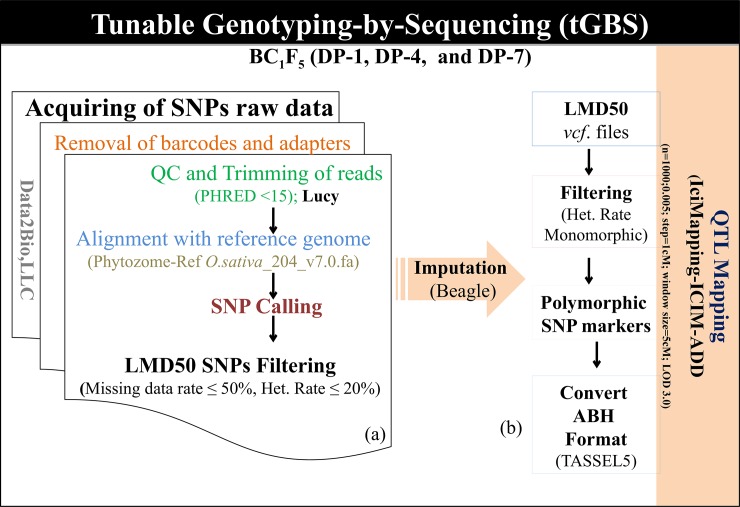
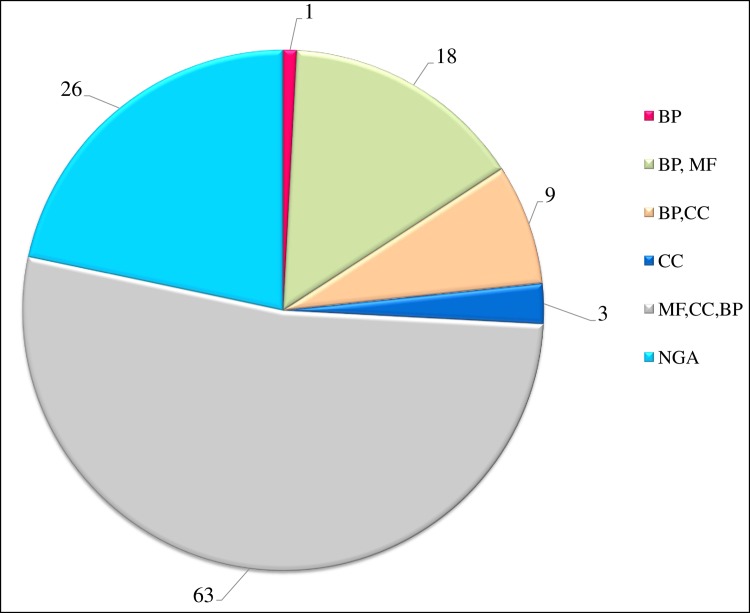
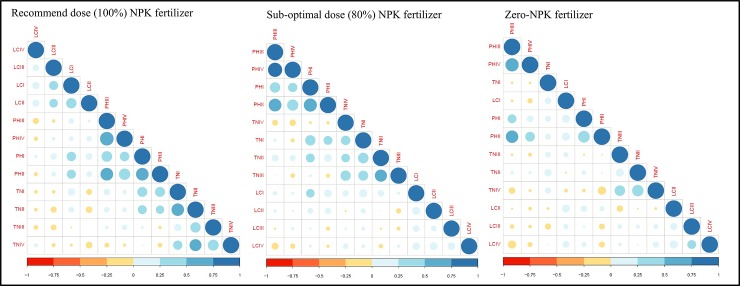
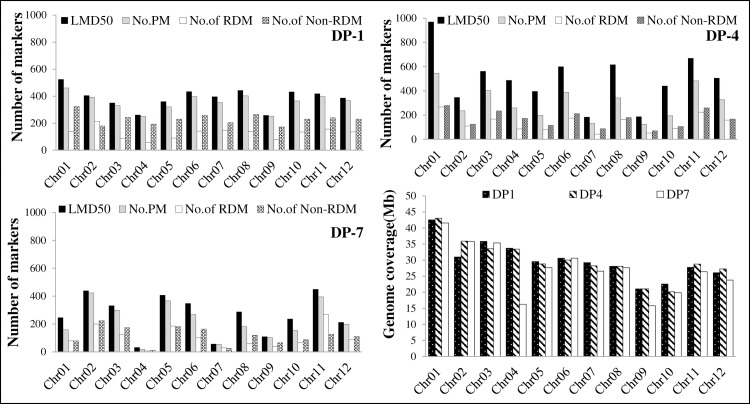
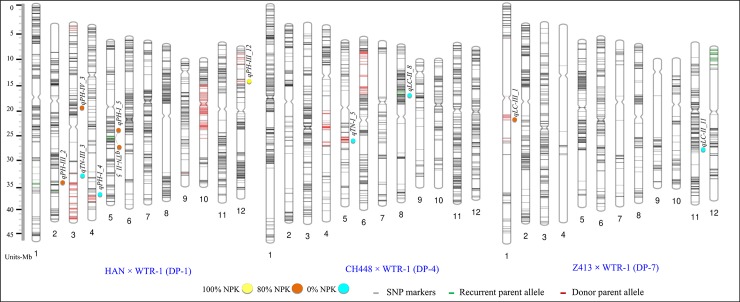
The production and productivity of rice (Oryza sativa L.) are primarily influenced by the application of the critical nutrients nitrogen (N), phosphorus (P), and potassium (K). However, excessive application of these fertilizers is detrimental to the environment and increases the cost of production. Hence, there is a need to develop varieties that simultaneously increase yields under both optimal and suboptimal rates of fertilizer application by maximizing nutrient use efficiency (NuUE). To unravel the hidden genetic variation and understand the molecular and physiological mechanisms of NuUE, three different mapping populations (MPs; BC1F5) derived from three donors (Haoannong, Cheng-Hui 448, and Zhong 413) and recipient Weed Tolerant Rice 1 were developed. A total of three favorable agronomic traits (FATs) were considered as the measure of NuUE. Analysis of variance and descriptive statistics indicated the existence of genetic variation for NuUE and quantitative inheritance of FATs. The genotypic data from single-nucleotide polymorphism (SNP) markers from Tunable Genotyping-By-Sequencing (tGBS) and phenotypic values were used for locating the genomic regions conferring NuUE. A total of 19 quantitative trait loci (QTLs) were detected, out of which 11 QTLs were putative on eight chromosomes, which individually explained 17.02% to 34.85% of the phenotypic variation. Notably, qLC-II_1 and qLC-II_11 detected at zero fertilizer application showed higher performance for LC under zero percentage of NPK fertilizer. The remarkable findings of the present study are that the detected QTLs were associated in building tolerance to low/no nutrient application and six candidate genes on chromosomes 2 and 5 within these putative QTLs were found associated with low nutrient tolerance and related to several physiological and metabolic pathways involved in abiotic stress tolerance. The identified superior introgressed lines (ILs) and trait-associated genetic regions can be effectively used in marker-assisted selection (MAS) for NuUE breeding programs.
水稻(Oryza sativa L.)的产量和生产力主要受氮(N)、磷(P)和钾(K)等关键养分的应用影响。然而,这些肥料的过量应用不利于环境,并增加了生产成本。因此,需要开发能够在最佳和次优施肥率下同时提高产量的品种,以最大限度地提高养分利用效率(NuUE)。为了揭示 NuUE 的隐藏遗传变异并理解其分子和生理机制,利用三个不同的供体(豪安南、成恢 448 和中 413)和受体耐草 1 衍生的三个不同作图群体(BC1F5),共鉴定到三个有利农艺性状(FATs)作为 NuUE 的衡量标准。方差分析和描述性统计表明,NuUE 存在遗传变异,且 FATs 具有数量遗传。来自 Tunable Genotyping-By-Sequencing(tGBS)的单核苷酸多态性(SNP)标记的基因型数据和表型值用于定位赋予 NuUE 的基因组区域。共检测到 19 个数量性状位点(QTL),其中 11 个 QTL 位于 8 条染色体上,分别解释了 17.02%至 34.85%的表型变异。值得注意的是,在不施氮肥的情况下检测到的 qLC-II_1 和 qLC-II_11 在不施氮肥的情况下对 LC 表现出更高的性能。本研究的显著发现是,检测到的 QTL 与低/无养分应用的耐受性有关,在这些假定的 QTL 中,位于 2 号和 5 号染色体上的 6 个候选基因与低养分耐受性有关,并且与参与非生物胁迫耐受性的几个生理和代谢途径有关。鉴定出的优良导入系(ILs)和与性状相关的遗传区域可有效用于 NuUE 育种计划的标记辅助选择(MAS)。