Cervinara Francesca, Cianci Claudia, De Cillis Francesco, Pappalettera Giovanni, Pappalettere Carmine, Siciliani Giuseppe, Lombardo Luca
School of Orthodontics, University of Ferrara, 44121 Ferrara, Italy.
Department of Mechanics, Mathematics and Management, Polytechnic University of Bari, 70120 Bari, Italy.
Nanomaterials (Basel). 2019 Jul 12;9(7):1010. doi: 10.3390/nano9071010.
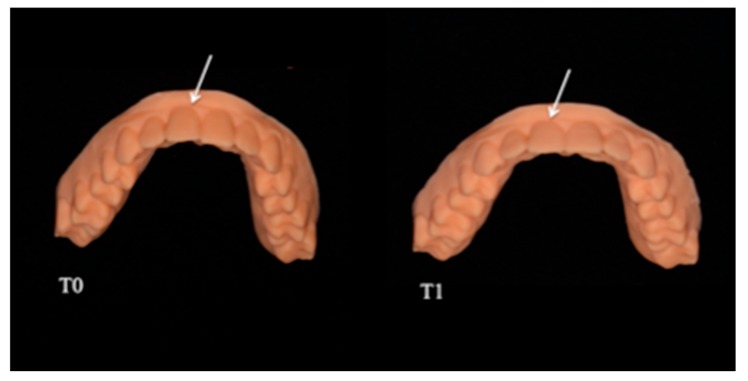
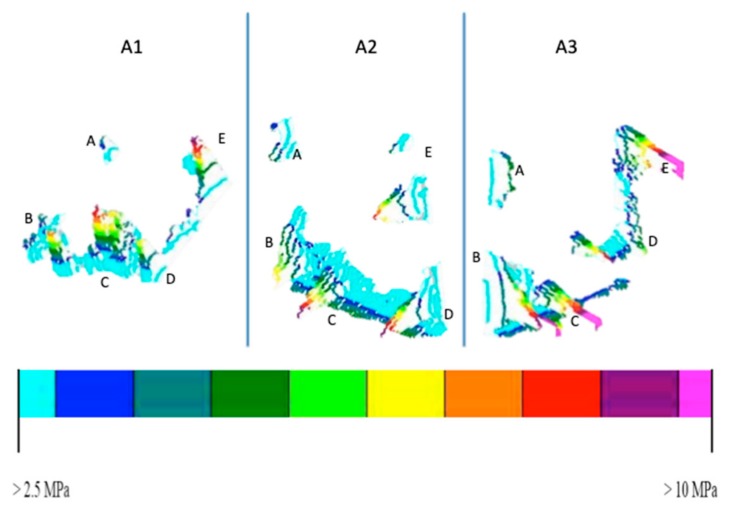
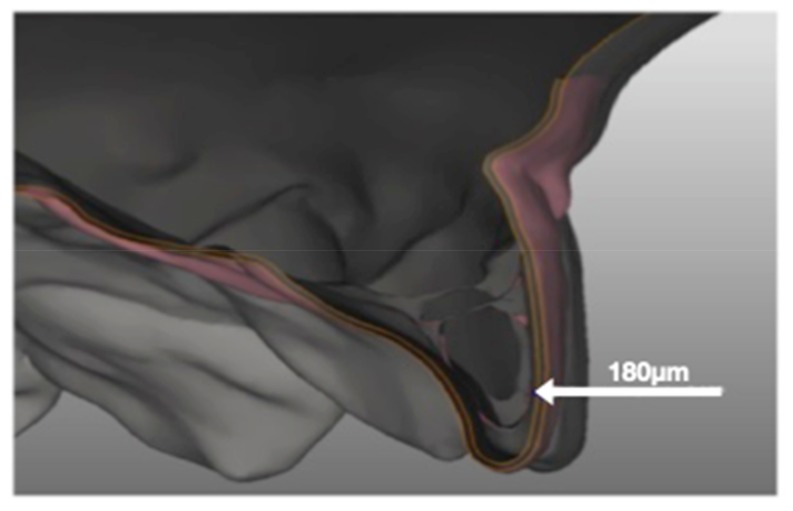
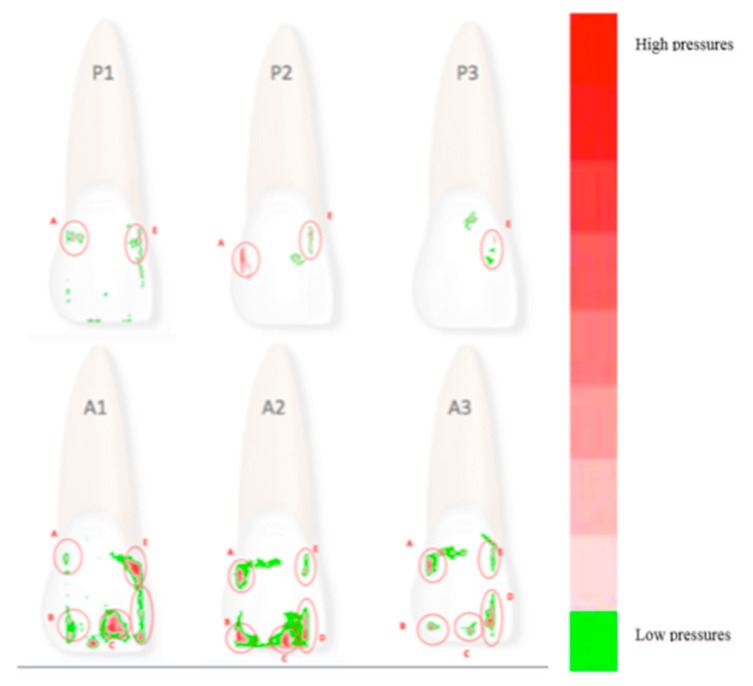
The analysis of forces, moments and pressure points has long been of great interest in orthodontics. Hence, we set out to define a method for measuring the pressure exerted by aligners on the teeth, and specifically to identify the precise points of pressure exertion. Intraoral scans were performed on a patient with optimal alignment and levelling before and after 2º vestibularisation of the upper central incisor. Pressure sensor film was placed in a dedicated housing between the aligner and teeth in order to record the pressure exerted after 15 s of aligner application. The images captured by the film were scanned, digitised, and subsequently analysed. Areas and amounts of pressure generated by the aligners were evaluated, and the net force of each was calculated, adjusted to take into consideration passive values. The method revealed the areas of contact by which the aligner transmits force on the teeth, and the pressures at which it does so. The pressure exerted by an aligner is not evenly distributed across the entire surface of the tooth during lingual tipping of an upper incisor. The areas of force concentration were not identical, as these are influenced by factors resulting from the manufacturing and casting processes.
在正畸学中,对力、力矩和压力点的分析一直备受关注。因此,我们着手定义一种测量矫治器对牙齿施加压力的方法,特别是要确定施加压力的确切位置。在上颌中切牙进行2°前庭化前后,对一位牙齿排列和整平效果最佳的患者进行口腔内扫描。将压力传感器薄膜放置在矫治器和牙齿之间的专用外壳中,以记录矫治器施加15秒后的压力。对薄膜捕获的图像进行扫描、数字化,随后进行分析。评估矫治器产生的压力面积和大小,并计算每个矫治器的净力,同时考虑到被动值进行调整。该方法揭示了矫治器在牙齿上传递力的接触区域以及传递力时的压力。在上颌切牙舌倾过程中,矫治器施加的压力并非均匀分布在牙齿的整个表面。力的集中区域并不相同,因为这些区域受到制造和铸造过程中各种因素的影响。