National Cancer Institute, National Institutes of Health, Bethesda, MD, USA.
Division of Health Policy and Management, College of Health Sciences, Korea University, Seoul, Republic of Korea.
Breast Cancer Res. 2019 Jul 23;21(1):81. doi: 10.1186/s13058-019-1162-8.
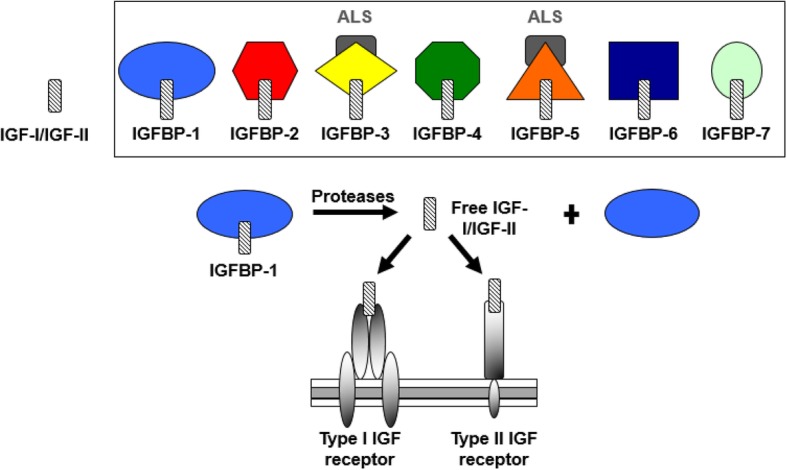
Mammographic density (MD) is a strong breast cancer risk factor that reflects fibroglandular and adipose tissue composition, but its biologic underpinnings are poorly understood. Insulin-like growth factor binding proteins (IGFBPs) are markers that may be associated with MD given their hypothesized role in breast carcinogenesis. IGFBPs sequester IGF-I, limiting its bioavailability. Prior studies have found positive associations between circulating IGF-I and the IGF-I:IGFBP-3 ratio and breast cancer risk. We evaluated the associations of IGF-I, IGFBP-3, and six other IGFBPs with MD.
Serum IGF measures were quantified in 296 women, ages 40-65, undergoing diagnostic image-guided breast biopsy. Volumetric density measures (MD-V) were assessed in pre-biopsy digital mammograms using single X-ray absorptiometry. Area density measures (MD-A) were estimated by computer-assisted thresholding software. Age, body mass index (BMI), and BMI-adjusted linear regression models were used to examine associations of serum IGF measures with MD. Effect modification by BMI was also assessed.
IGF-I and IGFBP-3 were not strongly associated with MD after BMI adjustment. In multivariable analyses among premenopausal women, IGFBP-2 was positively associated with both percent MD-V (β = 1.49, p value = 0.02) and MD-A (β = 1.55, p value = 0.05). Among postmenopausal women, positive relationships between IGFBP-2 and percent MD-V (β = 2.04, p = 0.003) were observed; the positive associations between IGFBP-2 and percent MD-V were stronger among lean women (BMI < 25 kg/m) (β = 5.32, p = 0.0002; p interaction = 0.0003).
In this comprehensive study of IGFBPs and MD, we observed a novel positive association between IGFBP-2 and MD, particularly among women with lower BMI. In concert with in vitro studies suggesting a dual role of IGFBP-2 on breast tissue, promoting cell proliferation as well as inhibiting tumorigenesis, our findings suggest that further studies assessing the role of IGFBP-2 in breast tissue composition, in addition to IGF-1 and IGFBP-3, are warranted.
乳腺密度(MD)是乳腺癌的一个重要危险因素,它反映了纤维腺体和脂肪组织的组成,但它的生物学基础知之甚少。胰岛素样生长因子结合蛋白(IGFBPs)是一种标志物,它们可能与 MD 有关,因为它们在乳腺癌发生中的假设作用。IGFBPs 可以隔离 IGF-I,从而限制其生物利用度。先前的研究发现,循环 IGF-I 与 IGF-I:IGFBP-3 比值与乳腺癌风险呈正相关。我们评估了 IGF-I、IGFBP-3 和其他六种 IGFBPs 与 MD 的相关性。
在接受诊断性影像引导下乳房活检的 296 名 40-65 岁女性中,定量检测了血清 IGF 指标。在术前数字乳腺 X 光片上使用单 X 射线吸收法评估容积密度测量值(MD-V)。使用计算机辅助阈值软件估计面积密度测量值(MD-A)。采用年龄、体重指数(BMI)和 BMI 调整的线性回归模型来研究血清 IGF 指标与 MD 的相关性。还评估了 BMI 的效应修饰作用。
在 BMI 调整后,IGF-I 和 IGFBP-3 与 MD 无明显相关性。在绝经前妇女的多变量分析中,IGFBP-2 与 MD-V 百分比(β=1.49,p 值=0.02)和 MD-A(β=1.55,p 值=0.05)呈正相关。在绝经后妇女中,IGFBP-2 与 MD-V 百分比之间存在正相关关系(β=2.04,p=0.003);在瘦女性(BMI<25kg/m)中,IGFBP-2 与 MD-V 百分比之间的正相关关系更强(β=5.32,p=0.0002;p 交互作用=0.0003)。
在这项关于 IGFBPs 和 MD 的综合研究中,我们观察到 IGFBP-2 与 MD 之间存在新的正相关关系,特别是在 BMI 较低的女性中。与体外研究表明 IGFBP-2 对乳腺组织具有双重作用,既能促进细胞增殖,又能抑制肿瘤发生的结果一致,我们的研究结果表明,需要进一步研究 IGFBP-2 在乳腺组织组成中的作用,除了 IGF-1 和 IGFBP-3 之外。