Department of Neonatology, Emma Children's Hospital, Amsterdam UMC, Vrije Universiteit Amsterdam, Amsterdam, The Netherlands.
Department of Medical Psychology, Emma Children's Hospital, Amsterdam UMC, Vrije Universiteit Amsterdam, Amsterdam, The Netherlands.
PLoS One. 2019 Jul 24;14(7):e0220044. doi: 10.1371/journal.pone.0220044. eCollection 2019.
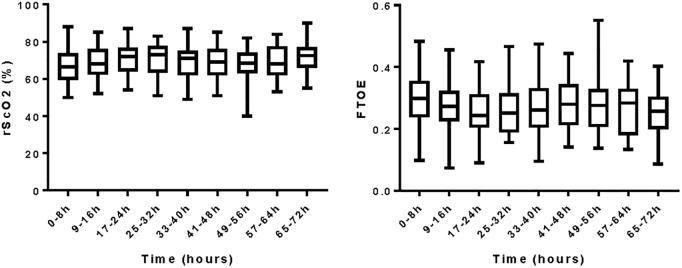
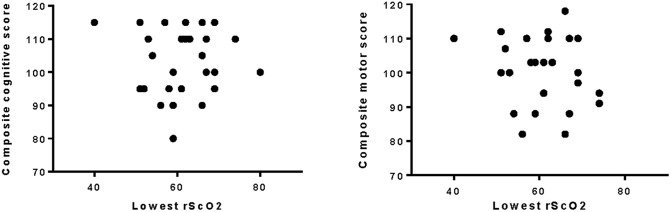
Late-onset sepsis is frequently seen in preterm infants and is associated with poor neurodevelopmental outcome. White matter damage is proposed as substrate of poor outcome, with contributing factors as regional hypoxia and effects of cytokines on oligodendrocytes. We investigated the relation between cerebral oxygenation during (suspected) late-onset sepsis and neurodevelopmental outcome. Prospective cohort study, including preterm infants (gestational age <32 weeks and/or birthweight <1500 grams) with (suspected) late-onset sepsis underwent NIRS registration during the first 72 hours of suspected late-onset sepsis. At two years corrected age neurodevelopment was scored using the Bayley Scales of Infant Development-II. Thirty-two infants were included. Twenty-seven infants were identified with proven late-onset sepsis and five infants had clinical sepsis without positive blood culture. In this study, late-onset sepsis was predominantly caused by coagulase negative staphylococci (CoNS) (72%). All NIRS values were within normal limits. No association was found between NIRS and impaired neurodevelopmental outcome (n = 4) at corrected age two years: composite cognitive score 105 (80-115), composite motor score 103 (82-118) (median and range). In this pilot study, late-onset sepsis (predominantly caused by CoNS with a relatively mild clinical course), was not associated with aberrant NIRS values, nor with impaired neurodevelopmental outcome. Further research might establish our findings and elucidate effects of other micro-organisms on cerebral perfusion.
晚发型败血症在早产儿中较为常见,与不良神经发育结局相关。白质损伤被认为是不良结局的基础,区域性缺氧和细胞因子对少突胶质细胞的影响是促成因素。我们研究了(疑似)晚发型败血症期间脑氧合与神经发育结局之间的关系。前瞻性队列研究纳入了(疑似)晚发型败血症的早产儿(胎龄<32 周和/或出生体重<1500 克),在疑似晚发型败血症的最初 72 小时内进行近红外光谱(NIRS)监测。在纠正年龄 2 岁时,使用贝利婴幼儿发展量表第二版评估神经发育情况。共纳入 32 名婴儿。其中 27 名婴儿确诊为晚发型败血症,5 名婴儿有临床败血症但血培养阳性。在这项研究中,晚发型败血症主要由凝固酶阴性葡萄球菌(CoNS)引起(72%)。所有 NIRS 值均在正常范围内。在纠正年龄 2 岁时,NIRS 与神经发育不良结局(n=4)之间无相关性:综合认知评分 105(80-115),综合运动评分 103(82-118)(中位数和范围)。在这项初步研究中,晚发型败血症(主要由 CoNS 引起,临床过程相对较轻)与异常的 NIRS 值或不良的神经发育结局无关。进一步的研究可能会证实我们的发现,并阐明其他微生物对脑灌注的影响。