Department of Pediatrics, Division of Infectious Disease, Emory University School of Medicine, Atlanta, GA, USA; Emory Vaccine Center, Emory University School of Medicine, Atlanta, GA, USA.
Department of Cell Biology, Emory University, Atlanta, GA, USA; Department of Dermatology, Emory University School of Medicine, Atlanta, GA, USA.
Cell Rep. 2019 Jul 23;28(4):909-922.e6. doi: 10.1016/j.celrep.2019.06.066.
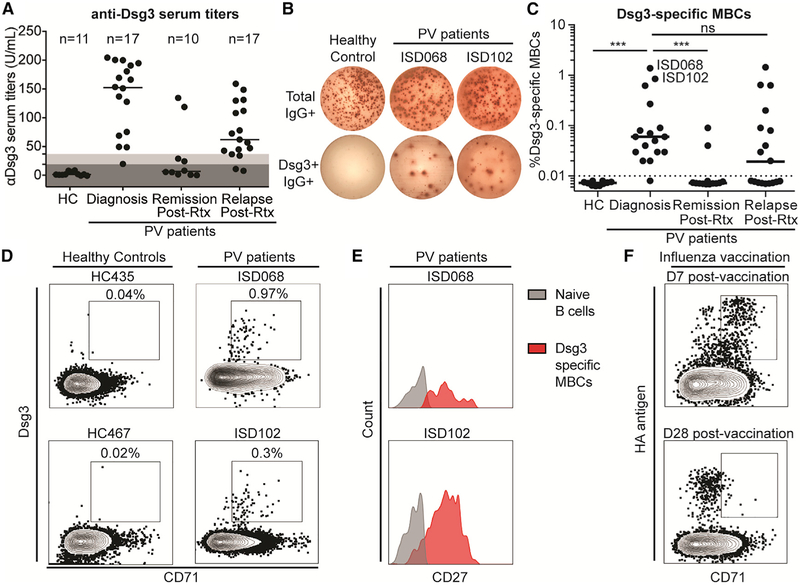
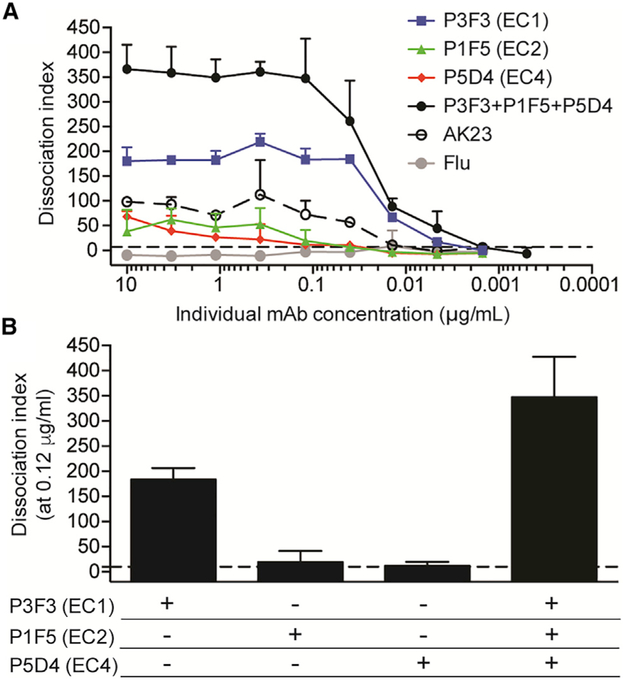
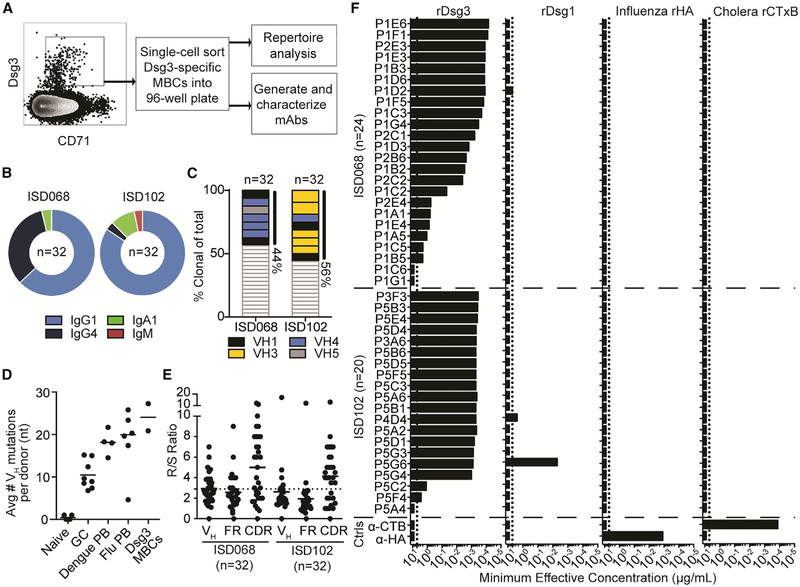
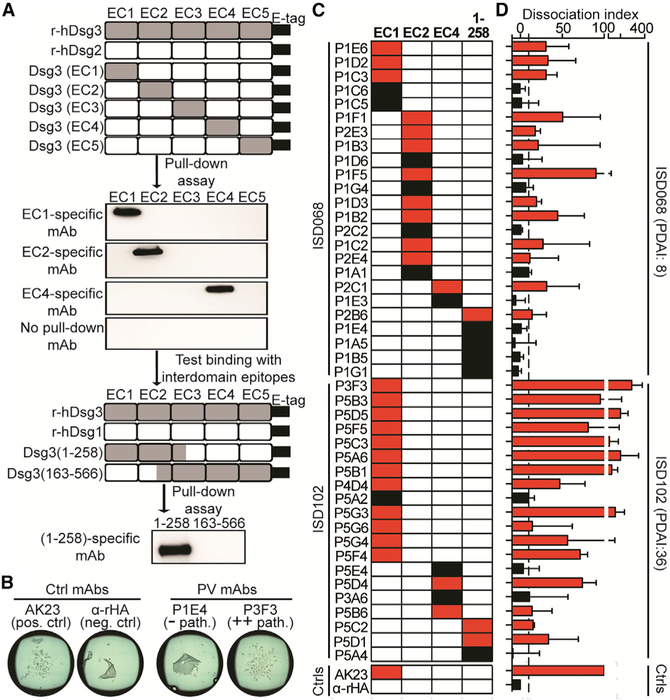
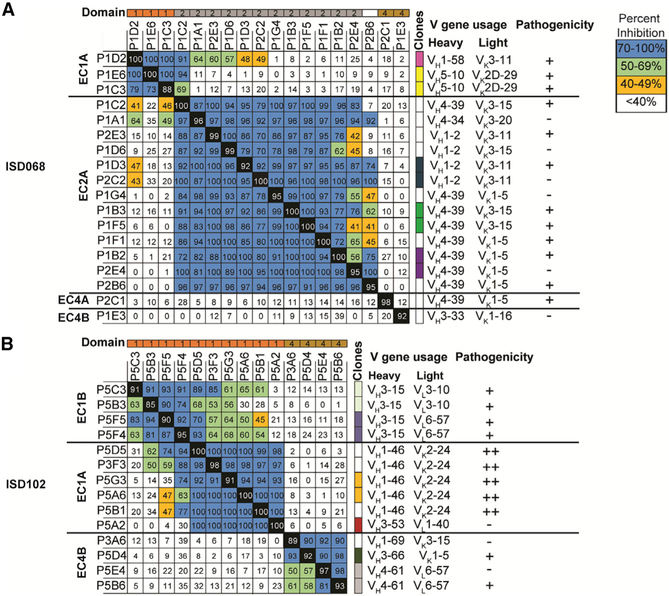
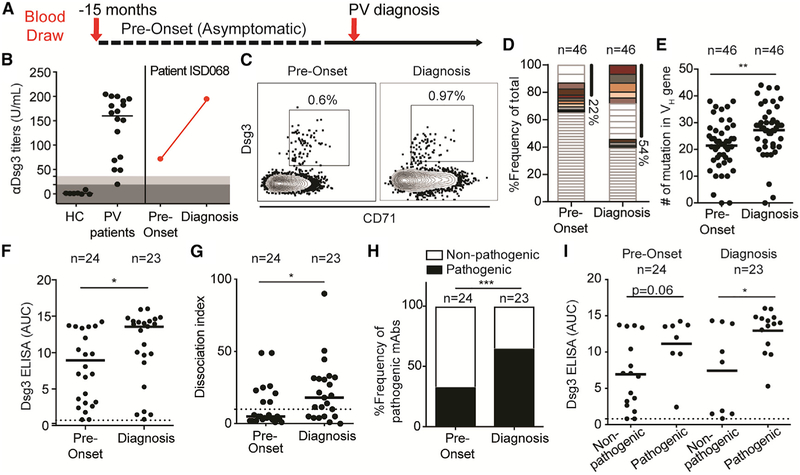
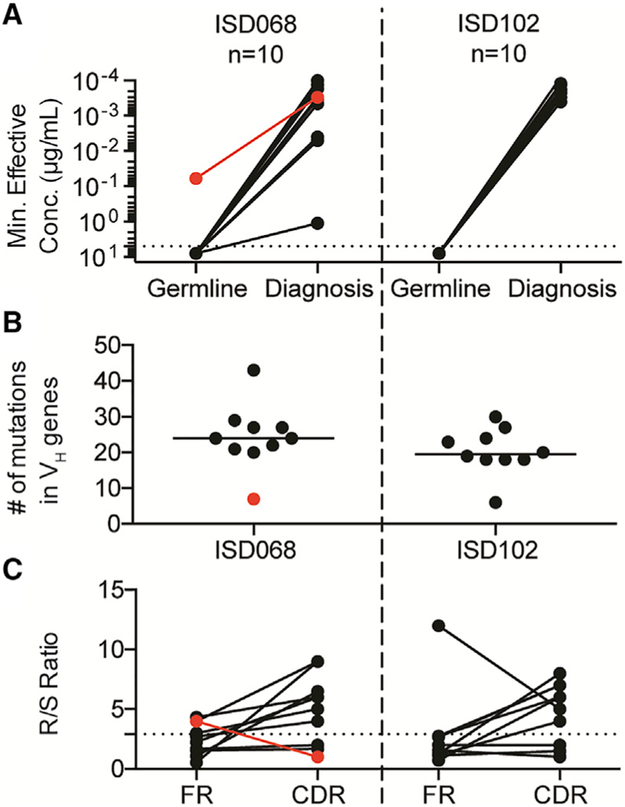
Pemphigus vulgaris (PV) is an autoimmune disease characterized by blistering sores on skin and mucosal membranes, caused by autoantibodies primarily targeting the cellular adhesion protein, desmoglein-3 (Dsg3). To better understand how Dsg3-specific autoantibodies develop and cause disease in humans, we performed a cross-sectional study of PV patients before and after treatment to track relevant cellular responses underlying disease pathogenesis, and we provide an in-depth analysis of two patients by generating a panel of mAbs from single Dsg3-specific memory B cells (MBCs). Additionally, we analyzed a paired sample from one patient collected 15-months prior to disease diagnosis. We find that Dsg3-specific MBCs have an activated phenotype and show signs of ongoing affinity maturation and clonal selection. Monoclonal antibodies (mAbs) with pathogenic activity primarily target epitopes in the extracellular domains EC1 and EC2 of Dsg3, though they can also bind to the EC4 domain. Combining antibodies targeting different epitopes synergistically enhances in vitro pathogenicity.
寻常型天疱疮(PV)是一种自身免疫性疾病,其特征是皮肤和黏膜上出现水疱性溃疡,由主要针对细胞黏附蛋白桥粒芯糖蛋白-3(Dsg3)的自身抗体引起。为了更好地了解 Dsg3 特异性自身抗体在人类中是如何发展并导致疾病的,我们在治疗前后对 PV 患者进行了横断面研究,以追踪疾病发病机制背后的相关细胞反应,并通过从单个 Dsg3 特异性记忆 B 细胞(MBC)生成抗体面板,对两名患者进行了深入分析。此外,我们还分析了一名患者在疾病诊断前 15 个月采集的配对样本。我们发现 Dsg3 特异性 MBC 具有激活表型,并表现出持续亲和力成熟和克隆选择的迹象。具有致病性的单克隆抗体(mAb)主要针对 Dsg3 的细胞外结构域 EC1 和 EC2 中的表位,但也可以结合 EC4 结构域。结合靶向不同表位的抗体可协同增强体外致病性。