Department of Surgery, University of Maryland School of Medicine, Baltimore, MD.
Center for Vascular and Inflammatory Diseases, University of Maryland School of Medicine, Baltimore, MD.
Transplantation. 2019 Oct;103(10):2075-2089. doi: 10.1097/TP.0000000000002774.
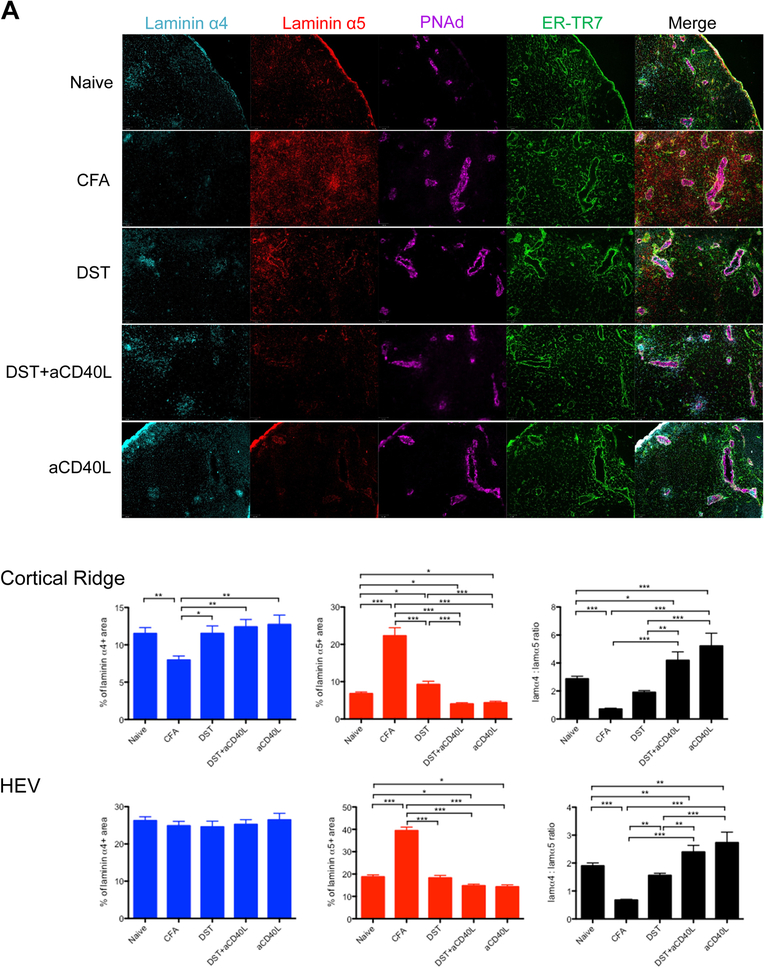
Stromal laminins α4 and α5 are differentially regulated in transplant tolerance and immunity, respectively, resulting in altered T-cell trafficking. We hypothesized that laminins directly regulated T-cell activation and polarization.
Human and mouse CD4 T cells were activated in Th1, Th2, Th17, or regulatory T cell (Treg) environments with/without laminin α4 and/or α5. Laminin α5 receptors were blocked with anti-α6 integrin or anti-α-dystroglycan (αDG) monoclonal antibodies, and T-cell polarization was determined. T-cell receptor transgenic TEa CD4 cells that recognized donor alloantigen were transferred into C57BL/6 mice that received alloantigen or cardiac allografts. Laminin receptors were blocked, and TEa T-cell migration and differentiation were assessed. Laminin expression was measured in several models of immunity and tolerance.
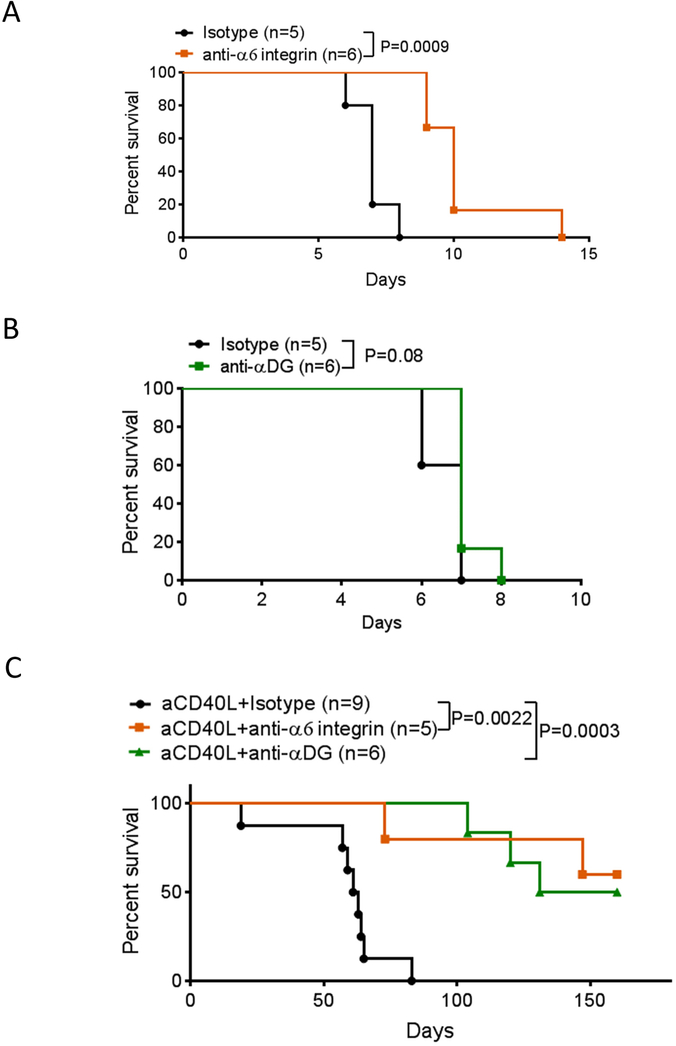
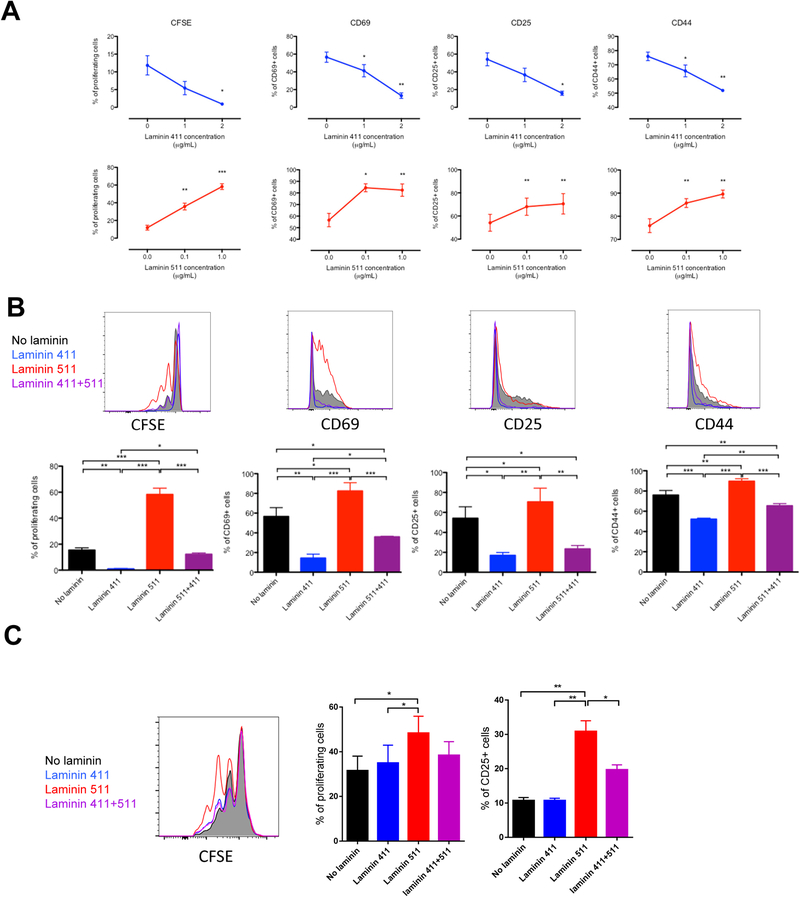
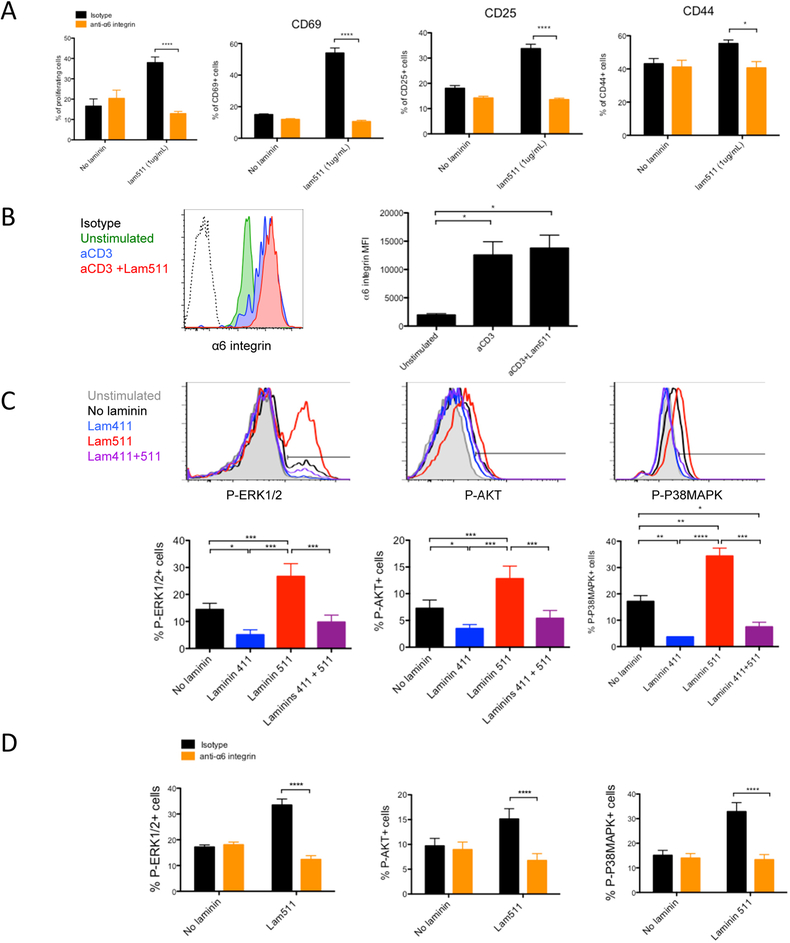
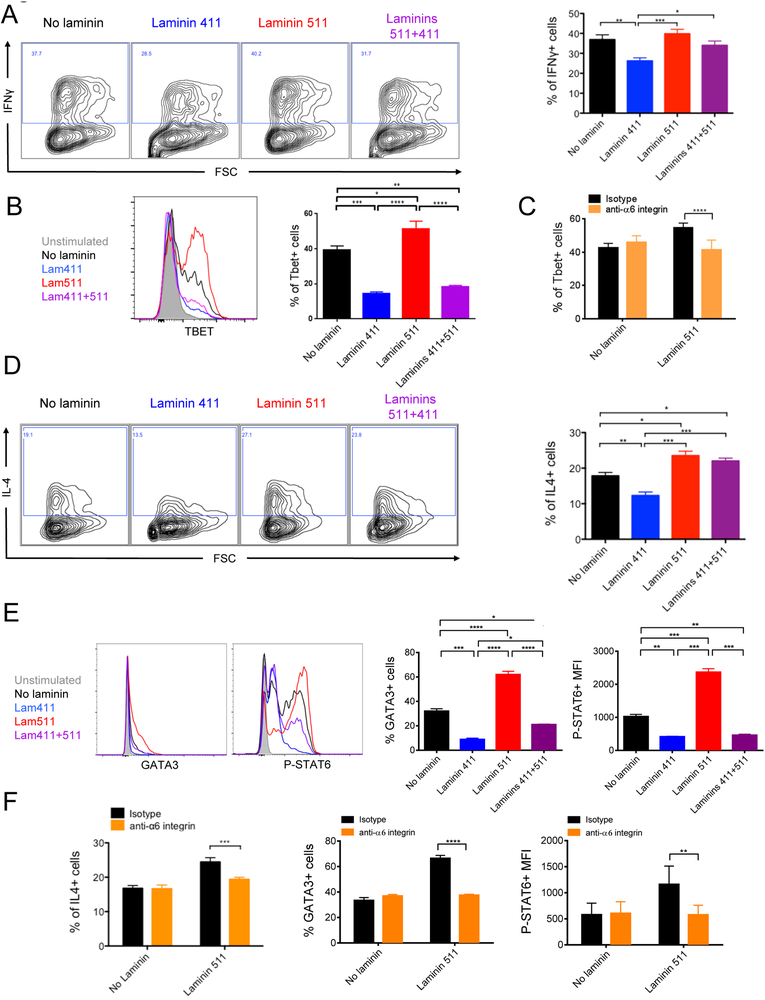
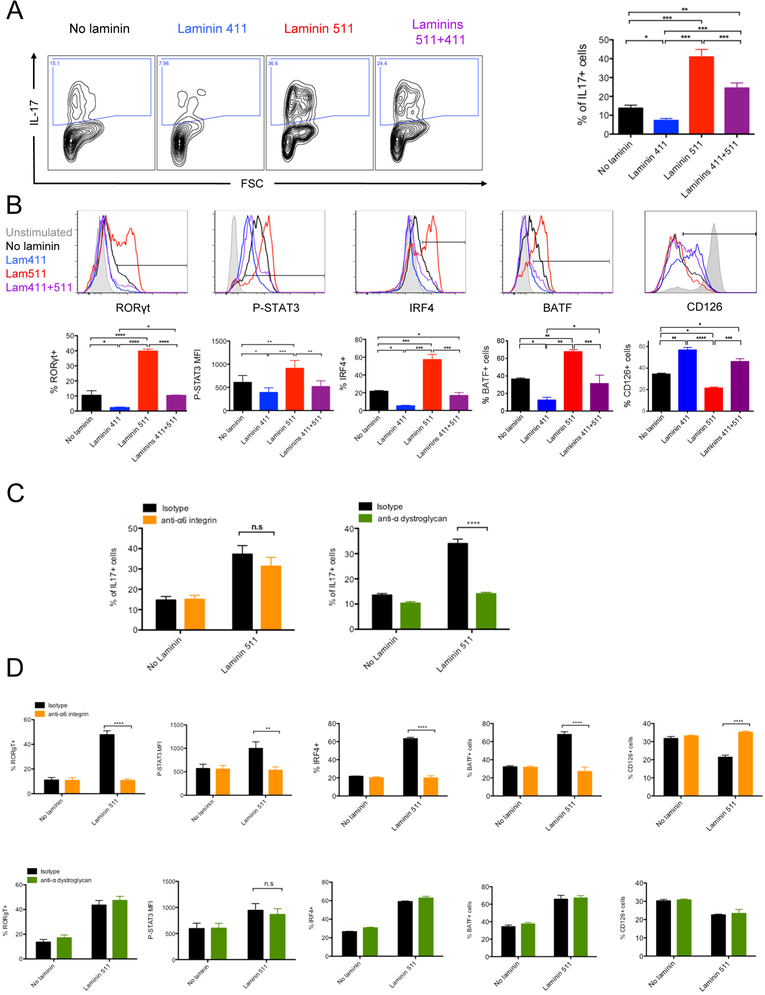
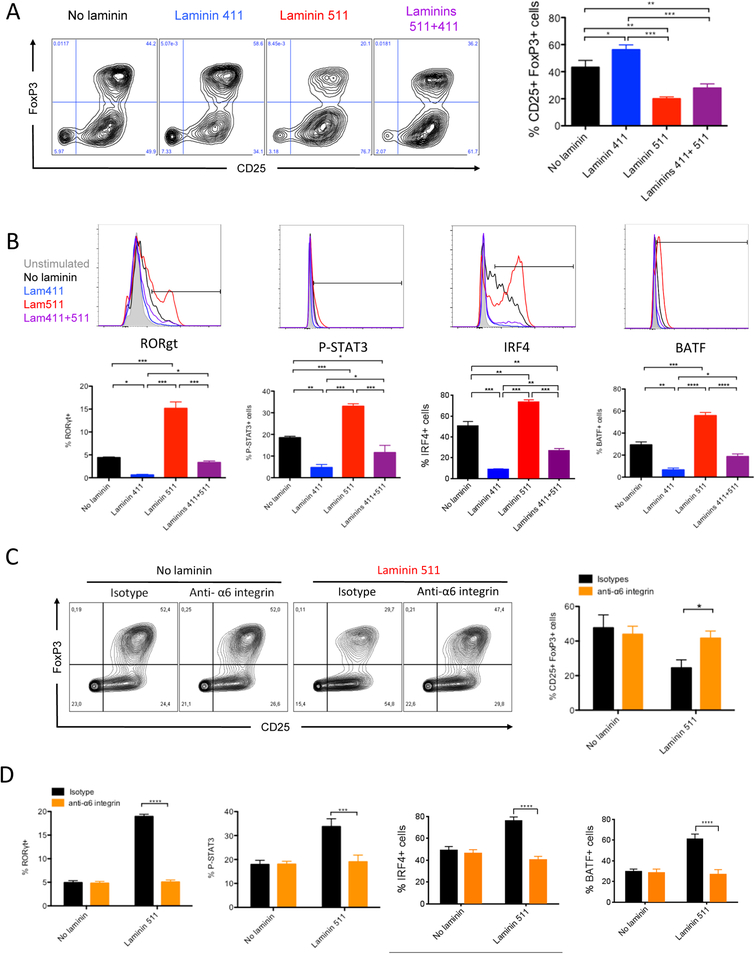
In diverse models, laminins α4 and α5 were differentially regulated. Immunity was associated with decreased laminin α4:α5 ratio, while tolerance was associated with an increased ratio. Laminin α4 inhibited CD4+ T-cell proliferation and Th1, Th2, and Th17 polarization but favored Treg induction. Laminin α5 favored T-cell activation and Th1, Th2, and Th17 polarization and inhibited Treg. Laminin α5 was recognized by T cell integrin α6 and is important for activation and inhibition of Treg. Laminin α5 was also recognized by T cell α-DG and required for Th17 differentiation. Anti-α6 integrin or anti-DG prolonged allograft survival.
Laminins α4 and α5 are coinhibitory and costimulatory ligands for human and mouse CD4 T cells, respectively. Laminins and their receptors modulate immune responses by acting as one of the molecular switches for immunity or suppression.
基质层粘连蛋白 α4 和 α5 在移植耐受和免疫中分别受到不同调节,导致 T 细胞迁移发生改变。我们假设层粘连蛋白可直接调节 T 细胞的激活和极化。
用/不用层粘连蛋白 α4 和/或 α5 将人源和鼠源 CD4 T 细胞在 Th1、Th2、Th17 或调节性 T 细胞(Treg)环境中激活。用抗α6 整合素或抗α- 二聚糖(αDG)单克隆抗体阻断层粘连蛋白 α5 受体,并确定 T 细胞的极化情况。将识别供体同种抗原的 TCR 转基因 TEa CD4 细胞转移到接受同种抗原或心脏同种异体移植的 C57BL/6 小鼠中。阻断层粘连蛋白受体,评估 TEa T 细胞的迁移和分化。在几种免疫和耐受模型中测量层粘连蛋白的表达。
在不同模型中,层粘连蛋白 α4 和 α5 的表达受到不同的调节。免疫与层粘连蛋白 α4:α5 比值降低相关,而耐受与比值增加相关。层粘连蛋白 α4 抑制 CD4+T 细胞增殖和 Th1、Th2 和 Th17 的极化,但有利于 Treg 的诱导。层粘连蛋白 α5 有利于 T 细胞的激活和 Th1、Th2 和 Th17 的极化,并抑制 Treg。层粘连蛋白 α5 被 T 细胞整合素 α6 识别,对 Treg 的激活和抑制很重要。层粘连蛋白 α5 也被 T 细胞 α-DG 识别,并且是 Th17 分化所必需的。抗 α6 整合素或抗 DG 延长同种异体移植物的存活时间。
层粘连蛋白 α4 和 α5 分别为人源和鼠源 CD4 T 细胞的共抑制和共刺激配体。层粘连蛋白及其受体通过作为免疫或抑制的分子开关之一来调节免疫反应。