Tan Si Heng Sharon, Wu Cheng Han, Wong Keng Lin, Hui James Hoipo
Department of Orthopaedic Surgery, University Orthopaedic, Hand and Reconstructive Microsurgery Cluster, National University Health System (NUHS), Singapore.
Ultrasonography. 2019 Oct;38(4):43-51. doi: 10.14366/usg.18064. Epub 2019 Mar 16.
The study aimed to investigate the utility of ultrasonographic findings in predicting the subsequent radiographic parameters of developmental dysplasia of the hips.
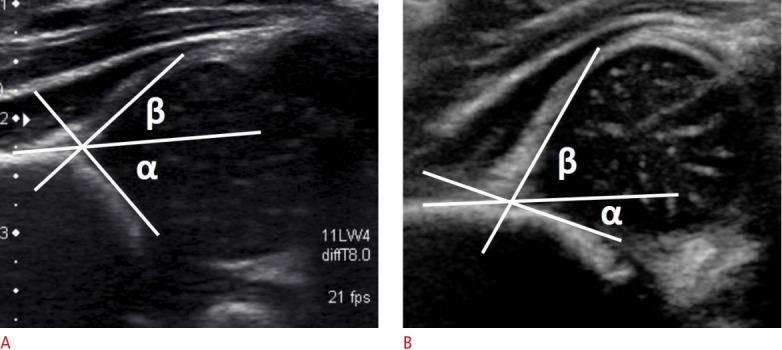
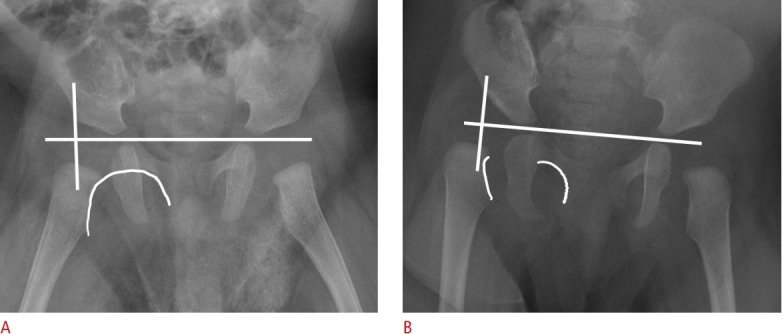
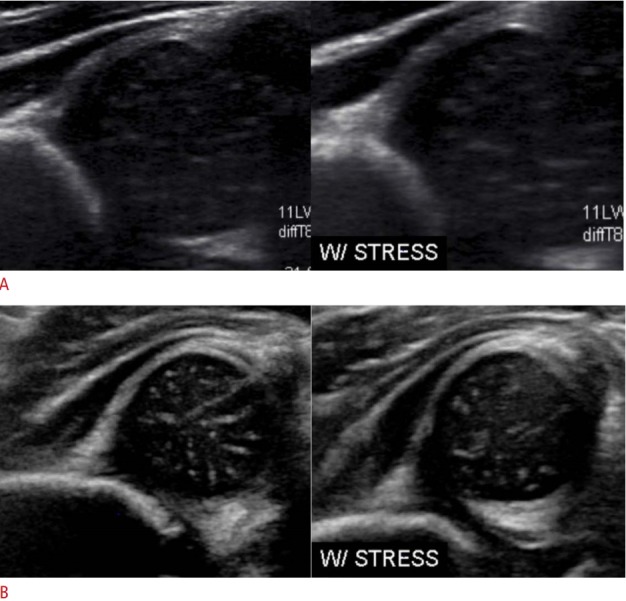
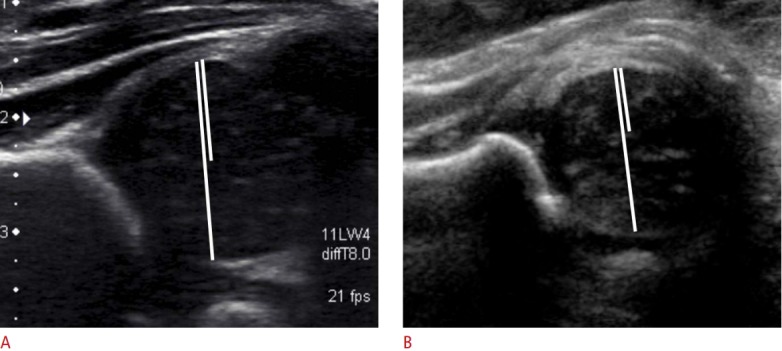
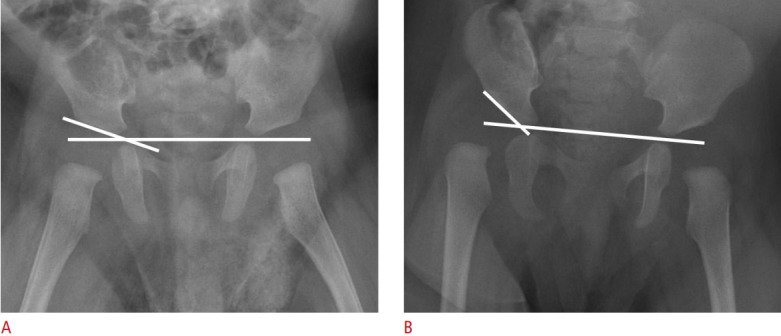
In this 12-year retrospective cohort study, all new-born infants with a positive clinical examination or risk factors were included. They were scheduled for hip ultrasonography in the first 3 months, and subsequent radiographs at 1 year of life. The ultrasonographic images were evaluated using the Graf classification, Harcke's dynamic screening method, and Terjesen's femoral head coverage method. The radiographic images were evaluated using the acetabular index and femoral head position. The overall ultrasonographic or radiographic findings were considered abnormal if they were classified as abnormal for any of their respective parameters. The overall ultrasonographic and radiographic parameters were correlated.
A total of 160 patients were included. The overall ultrasonographic and radiographic parameters showed no statistically significant difference (P=0.050). The sensitivity, specificity, and accuracy of the overall ultrasonographic parameters were 57.1%, 84.9%, and 81.3%, respectively. All three individual ultrasonographic parameters showed close correlations, with no statistically significant differences, with the overall radiographic findings and acetabular index (P>0.050). However, they showed a poor correlation, with a statistically significant difference, with the position of the femoral head (P<0.001), with the ultrasonographic parameters having an excellent negative predictive value of 100.0% for identifying an abnormal femoral head position.
The current study suggests that ultrasonographic findings evaluated in the first 3 months of life have a close correlation with radiographic findings evaluated at 1 year of life. The ultrasonographic parameters showed an excellent negative predictive value for abnormal femoral head position on radiographs.
本研究旨在探讨超声检查结果在预测发育性髋关节发育不良后续X线参数方面的效用。
在这项为期12年的回顾性队列研究中,纳入了所有临床检查阳性或有危险因素的新生儿。他们在出生后的前3个月接受髋关节超声检查,并在1岁时接受后续X线检查。超声图像采用Graf分类法、Harcke动态筛查法和Terjesen股骨头覆盖率法进行评估。X线图像采用髋臼指数和股骨头位置进行评估。如果整体超声或X线检查结果在各自参数中被分类为异常,则认为其整体检查结果异常。对整体超声和X线参数进行相关性分析。
共纳入160例患者。整体超声和X线参数无统计学显著差异(P = 0.050)。整体超声参数的敏感性、特异性和准确性分别为57.1%、84.9%和81.3%。所有三个单独的超声参数与整体X线检查结果和髋臼指数均显示出密切相关性,无统计学显著差异(P>0.050)。然而,它们与股骨头位置的相关性较差,有统计学显著差异(P<0.001),超声参数在识别异常股骨头位置方面具有100.0%的出色阴性预测价值。
本研究表明,出生后前3个月评估的超声检查结果与1岁时评估的X线检查结果密切相关。超声参数在预测X线片上异常股骨头位置方面具有出色的阴性预测价值。