Spiegelaar Nicole, Martin Ian D, Tsuji Leonard J S
University of Toronto Scarborough, Toronto, Canada.
Int J Food Sci. 2019 Jun 27;2019:7096416. doi: 10.1155/2019/7096416. eCollection 2019.
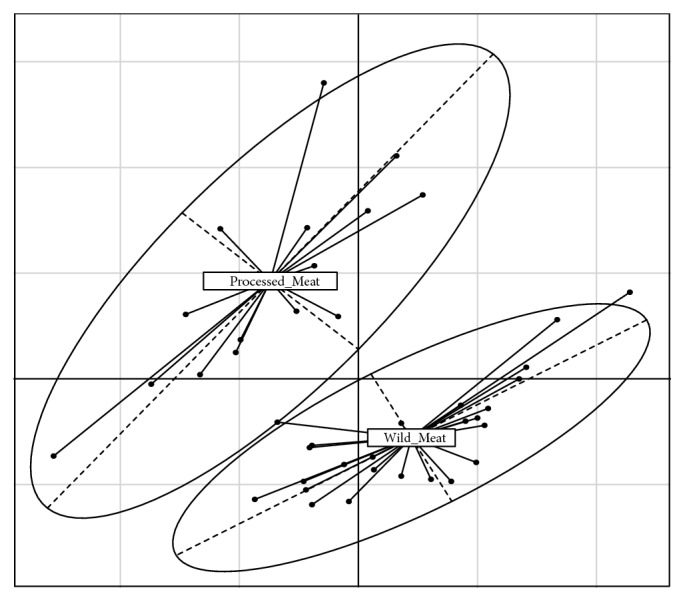
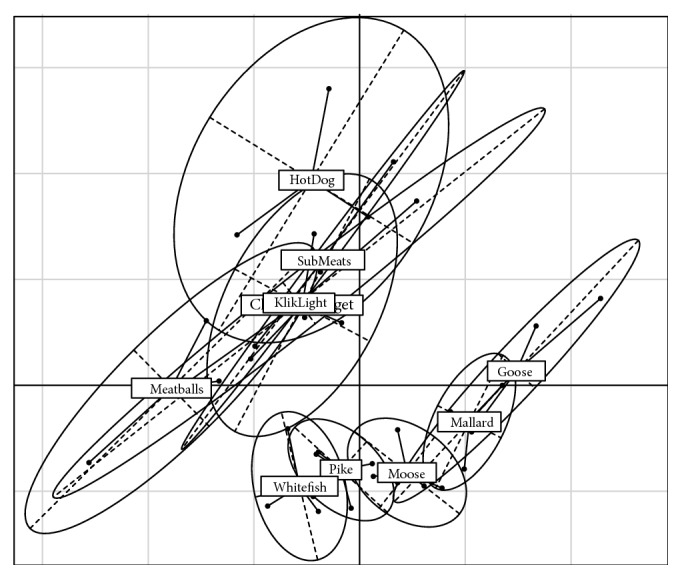
Indigenous people of northern Canada traditionally lived a nomadic lifestyle subsisting on wild game and fish for thousands of years. With colonization came an increasing dependence on imported processed foods. This dietary change has often been reported to be one of the factors leading to Indigenous health and wellbeing disparities worldwide. We determined the amino acid (AA) profile including tryptophan (Trp) of wild meats (game and fish) and processed meats found in the traditional and modern diets of Indigenous subarctic communities in Canada. Trp is a limited essential AA necessary for synthesis of serotonin (5-HT), an important neurotransmitter and homeostatic regulator. The dietary ratio of Trp relative to other large neutral AAs (LNAA) can alter Trp transport and 5-HT synthesis in the brain. We determined AA composition of wild meats and processed meats using standardized NaOH and HCl hydrolysis for Trp and other AAs, respectively, followed by ultraperformance liquid chromatography. A Principal Components Analysis revealed that overall AA composition is significantly different between wild and processed meats. (M)ANOVA showed significantly higher protein in wild meats (wet weight, ww). Trp was significantly lower in processed meat samples (n=15; 0.18g/100g ± 0.02 ww) compared to wild meat samples (n=25; 0.24g/100g ± 0.06 ww). The proportion of Trp:LNAA and Trp in sample protein were not significantly different between wild (1:21-1:27, 0.92-1.27 g/100g protein) and processed (1:20-1:24, 1.03-1.27 g/100g protein) meats. Within wild meats, AA composition is significantly different between fish and waterfowl, fish and moose, and moose and goose. (M)ANOVA results indicate significantly higher protein in goose compared to moose and fish and in moose compared to fish. We compared our Trp findings to previous analyses and discuss the substantial gap in human nutritional studies of Trp.
数千年来,加拿大北部的原住民传统上过着游牧生活,以野生动物和鱼类为食。随着殖民化的到来,他们对进口加工食品的依赖日益增加。据报道,这种饮食变化常常是导致全球原住民健康和福祉差距的因素之一。我们测定了加拿大亚北极地区原住民社区传统和现代饮食中野生肉类(野味和鱼类)及加工肉类的氨基酸(AA)谱,包括色氨酸(Trp)。Trp是合成血清素(5-HT)所需的一种有限必需氨基酸,血清素是一种重要的神经递质和稳态调节剂。Trp与其他大型中性氨基酸(LNAA)的饮食比例可改变Trp在大脑中的转运及5-HT的合成。我们分别使用标准化的NaOH和HCl水解法测定野生肉类和加工肉类中Trp及其他氨基酸的AA组成,随后进行超高效液相色谱分析。主成分分析表明,野生肉类和加工肉类的总体AA组成存在显著差异。(多因素)方差分析显示,野生肉类的蛋白质含量显著更高(湿重)。与野生肉类样本(n = 25;0.24g/100g ± 0.06湿重)相比,加工肉类样本(n = 15;0.18g/100g ± 0.02湿重)中的Trp显著更低。野生肉类(1:21 - 1:27,0.92 - 1.27 g/100g蛋白质)和加工肉类(1:20 - 1:24,1.03 - 1.27 g/100g蛋白质)中Trp:LNAA的比例及样本蛋白质中Trp的含量无显著差异。在野生肉类中,鱼类与水禽、鱼类与驼鹿、驼鹿与鹅之间的AA组成存在显著差异。(多因素)方差分析结果表明,鹅的蛋白质含量显著高于驼鹿和鱼类,驼鹿的蛋白质含量显著高于鱼类。我们将我们的Trp研究结果与之前的分析进行了比较,并讨论了Trp人体营养研究中的巨大差距。