Niwa Koichiro
Cardiovascular Center, Department of Cardiology, St. Luke's International Hospital, Tokyo, Japan.
Korean Circ J. 2019 Aug;49(8):691-708. doi: 10.4070/kcj.2019.0187. Epub 2019 Jul 5.
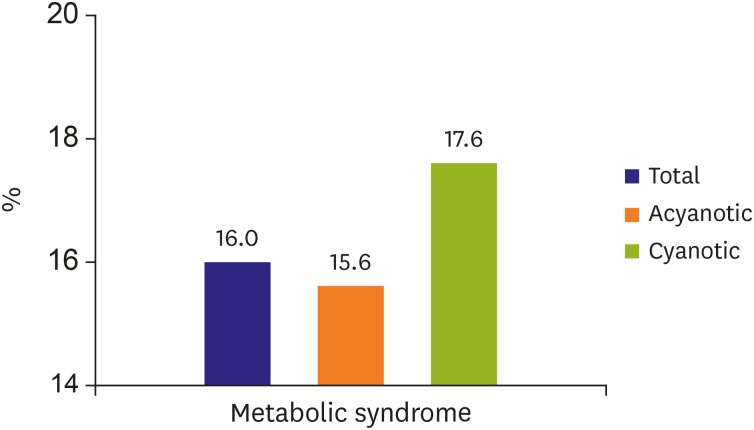
In adult congenital heart disease (ACHD), residua and sequellae after initial repair develop late complications such as cardiac failure, arrhythmias, thrombosis, aortopathy, pulmonary hypertension and others. Acquired lesions with aging such as hypertension, diabetes mellitus, obesity can be negative influence on original cardiovascular disease (CVD). Also, atherosclerosis may pose an additional health problem to ACHD when they grow older and reach the age at which atherosclerosis becomes clinically relevant. In spite of the theoretical risk of atherosclerosis in ACHD due to above mentioned factors, cyanotic ACHDs even after repair are noted to have minimal incidence of coronary artery disease (CAD). Acyanotic ACHD has similar prevalence of CAD as the general population. However, even in cyanotic ACHD, CAD can develop when they have several risk factors for CAD. The prevalence of risk factor is similar between ACHD and the general population. Risk of premature atherosclerotic CVD in ACHD is based, 3 principal mechanisms: lesions with coronary artery abnormalities, obstructive lesions of left ventricle and aorta such as coarctation of the aorta and aortopathy. Coronary artery abnormalities are directly affected or altered surgically, such as arterial switch in transposition patients, may confer greater risk for premature atherosclerotic CAD. Metabolic syndrome is more common among ACHD than in the general population, and possibly increases the incidence of atherosclerotic CAD even in ACHD in future. Thus, ACHD should be screened for metabolic syndrome and eliminating risk factors for atherosclerotic CAD.
在成人先天性心脏病(ACHD)中,初次修复后的残留病变和后遗症会引发诸如心力衰竭、心律失常、血栓形成、主动脉病变、肺动脉高压等晚期并发症。随着年龄增长出现的后天性病变,如高血压、糖尿病、肥胖等,可能会对原有的心血管疾病(CVD)产生负面影响。此外,当ACHD患者年龄增长至动脉粥样硬化具有临床相关性的阶段时,动脉粥样硬化可能会给他们带来额外的健康问题。尽管由于上述因素,ACHD存在动脉粥样硬化的理论风险,但即使是修复后的青紫型ACHD,冠状动脉疾病(CAD)的发病率也很低。非青紫型ACHD的CAD患病率与普通人群相似。然而,即使是青紫型ACHD,当存在多种CAD危险因素时也可能发生CAD。ACHD与普通人群中危险因素的患病率相似。ACHD发生过早动脉粥样硬化性CVD的风险基于3种主要机制:冠状动脉异常病变、左心室和主动脉的阻塞性病变,如主动脉缩窄和主动脉病变。冠状动脉异常可能会直接受到影响或通过手术改变,例如大动脉转位患者的动脉调转术,可能会增加过早发生动脉粥样硬化性CAD的风险。代谢综合征在ACHD中比在普通人群中更常见,甚至可能在未来增加ACHD患者动脉粥样硬化性CAD的发病率。因此,应对ACHD进行代谢综合征筛查,并消除动脉粥样硬化性CAD的危险因素。