Department of Immunogenetics, Graduate School of Medical Sciences, Kumamoto University, Kumamoto, Japan.
Department of Clinical Investigation, Kumamoto University Hospital, Kumamoto, Japan.
Cancer Sci. 2019 Oct;110(10):3027-3037. doi: 10.1111/cas.14144. Epub 2019 Aug 7.
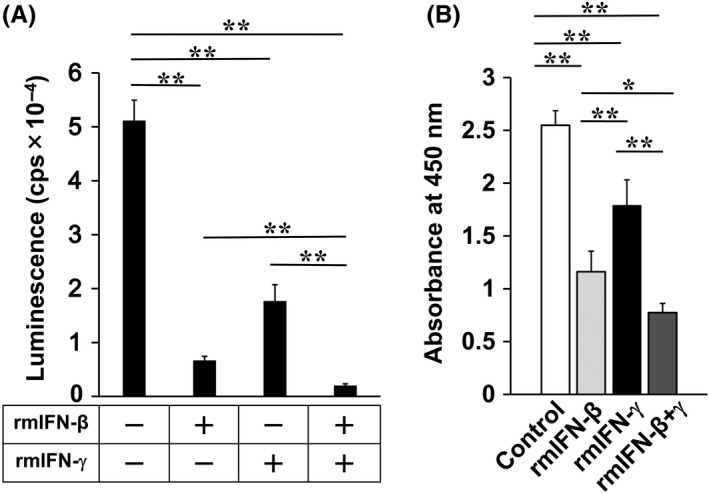
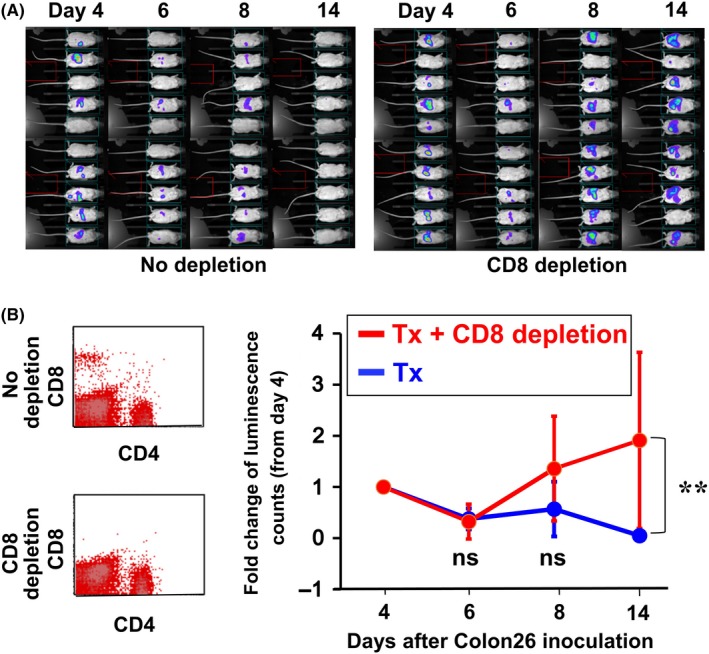
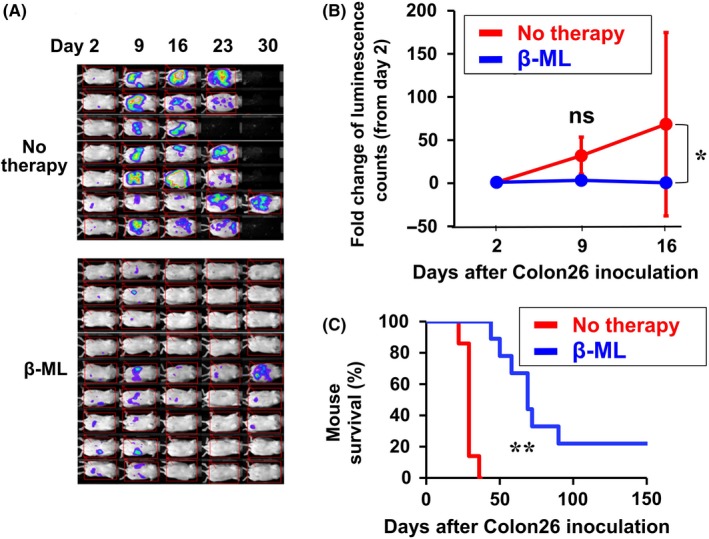
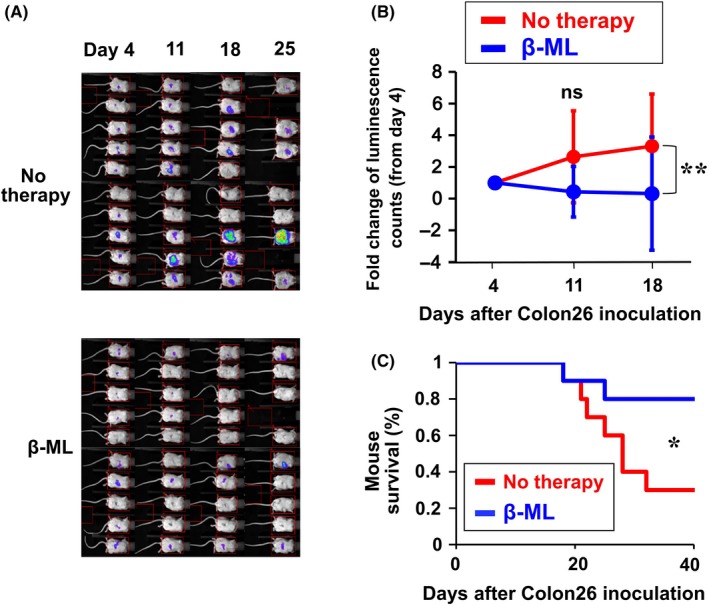
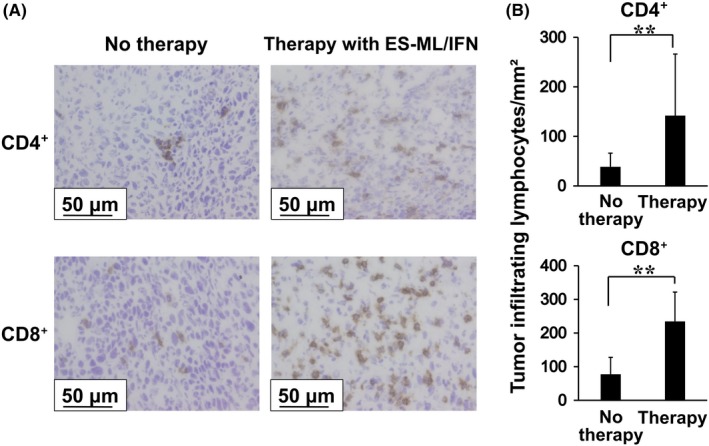
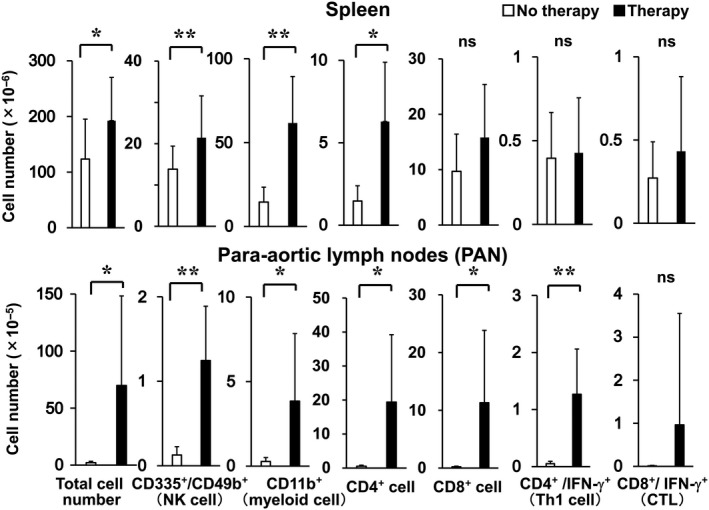
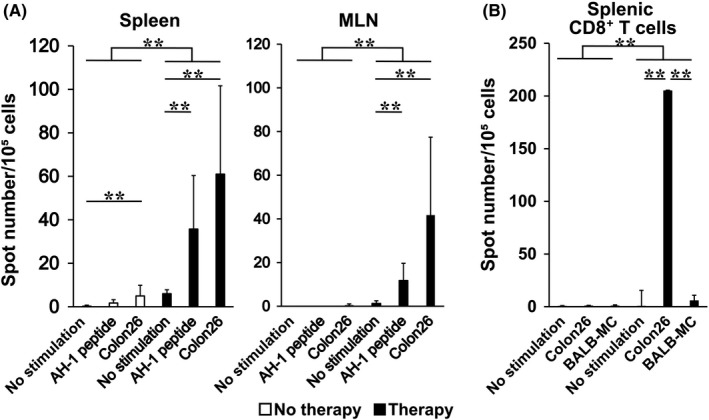
We previously established a method to generate myeloid cells with a proliferative capability from pluripotent stem cells and designated them iPS-ML. Human iPS-ML cells share features with physiological macrophages including the capability to infiltrate into cancer tissues. We observed therapeutic effects of human iPS-ML cells expressing interferon β (iPS-ML/interferon (IFN)-β) in xenograft cancer models. However, assessment of host immune system-mediated therapeutic and adverse effects of this therapy is impossible by xenograft models. We currently evaluated the therapeutic effects of a mouse equivalent of human iPS-ML/IFN, a mouse embryonic stem (ES) cell-derived myeloid cell line producing IFN (ES-ML/IFN). The ES-MLs producing IFN-β (β-ML) and IFN-γ (γ-ML) and originating from E14 ES cells derived from the 129 mouse strain (H-2 ) were generated, and the MHC (H-2K , D , and I-A ) genes of the ES-ML/IFN were disrupted using the clustered regularly interspaced short palindromic repeats (CRISPR)/CAS9 method. We used the ES-ML/IFN to treat allogeneic BALB/c mice (H-2 ) transplanted with Colon26 cancer cells. Treatment with β-ML but not with γ-ML cells repressed the growth of colon cancer in the peritoneal cavity and liver. The transferred ES-ML/IFN infiltrated into cancer tissues and enhanced infiltration of T cells into cancer tissues. ES-ML/IFN therapy increased the number of immune cells in the lymphoid organs. Sensitization of both cancer antigen-specific CD8 T cells and natural killer (NK) cells were enhanced by the therapy, and CD8 T cells were essential for the therapeutic effect, implying that donor MHC-deficient β-ML exhibited a therapeutic effect through the activation of host immune cells derived from allogeneic recipient mice. The results suggested the usefulness of HLA-deficient human iPS-ML/IFN-β cells for therapy of HLA-mismatched allogeneic cancer patients.
我们之前建立了一种从多能干细胞中生成具有增殖能力的髓样细胞的方法,并将其命名为 iPS-ML。人 iPS-ML 细胞具有与生理巨噬细胞相似的特征,包括浸润癌症组织的能力。我们观察到表达干扰素 β(iPS-ML/IFN-β)的人 iPS-ML 细胞在异种移植癌症模型中的治疗效果。然而,异种移植模型无法评估这种治疗方法对宿主免疫系统介导的治疗效果和不良反应。我们目前评估了一种与人 iPS-ML/IFN 相当的小鼠模型的治疗效果,即产生 IFN 的小鼠胚胎干细胞(ES)细胞衍生的髓样细胞系(ES-ML/IFN)。生成了产生 IFN-β(β-ML)和 IFN-γ(γ-ML)的 ES-ML,并源自源自 129 小鼠品系(H-2)的 E14 ES 细胞,使用簇状规则间隔短回文重复(CRISPR)/CAS9 方法破坏了 ES-ML/IFN 的 MHC(H-2K、D 和 I-A)基因。我们使用 ES-ML/IFN 治疗接受 Colon26 癌细胞同种异体移植的 BALB/c 小鼠(H-2)。用β-ML 而不是γ-ML 细胞处理可抑制腹腔和肝脏中结肠癌的生长。转移的 ES-ML/IFN 浸润到癌症组织中,并增强 T 细胞浸润到癌症组织中。ES-ML/IFN 治疗增加了淋巴器官中免疫细胞的数量。该治疗增强了癌症抗原特异性 CD8 T 细胞和自然杀伤(NK)细胞的敏感性,并且 CD8 T 细胞是治疗效果所必需的,这表明供体 MHC 缺陷的β-ML 通过激活来自同种异体受者小鼠的宿主免疫细胞发挥治疗作用。结果表明,HLA 缺陷的人 iPS-ML/IFN-β 细胞可用于治疗 HLA 错配的同种异体癌症患者。