Center for Experimental and Molecular Medicine (CEMM), Academic Medical Center, Amsterdam, The Netherlands.
Tytgat Institute for Liver and Intestinal Research, Academic Medical Center, Amsterdam, The Netherlands.
PLoS One. 2019 Jul 26;14(7):e0220050. doi: 10.1371/journal.pone.0220050. eCollection 2019.
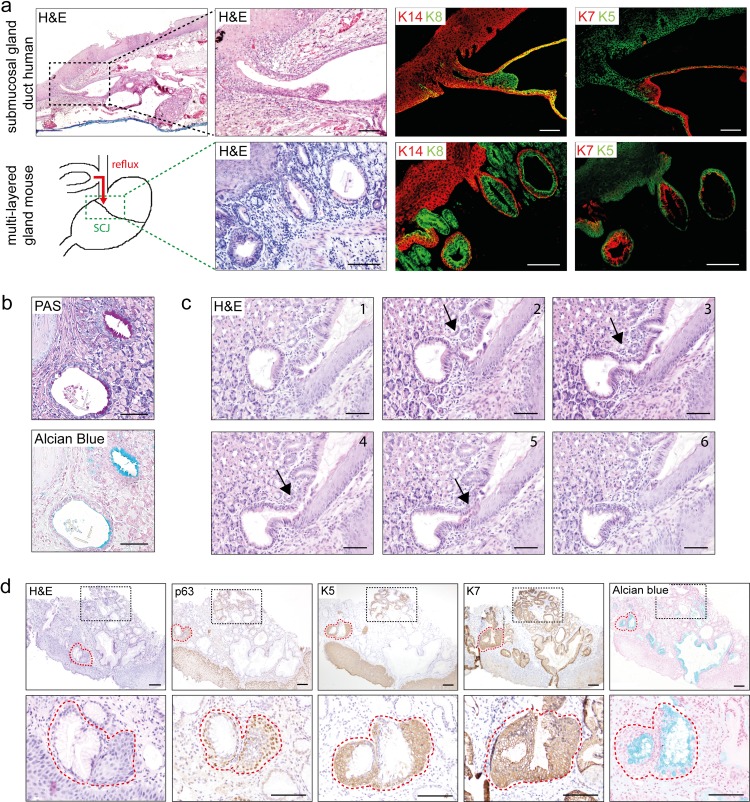
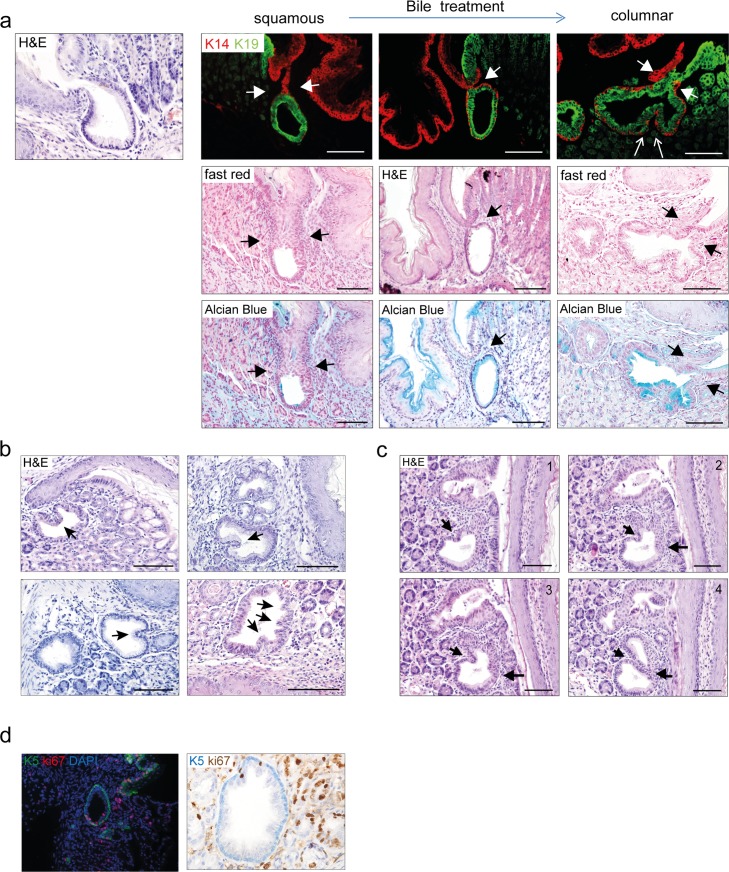
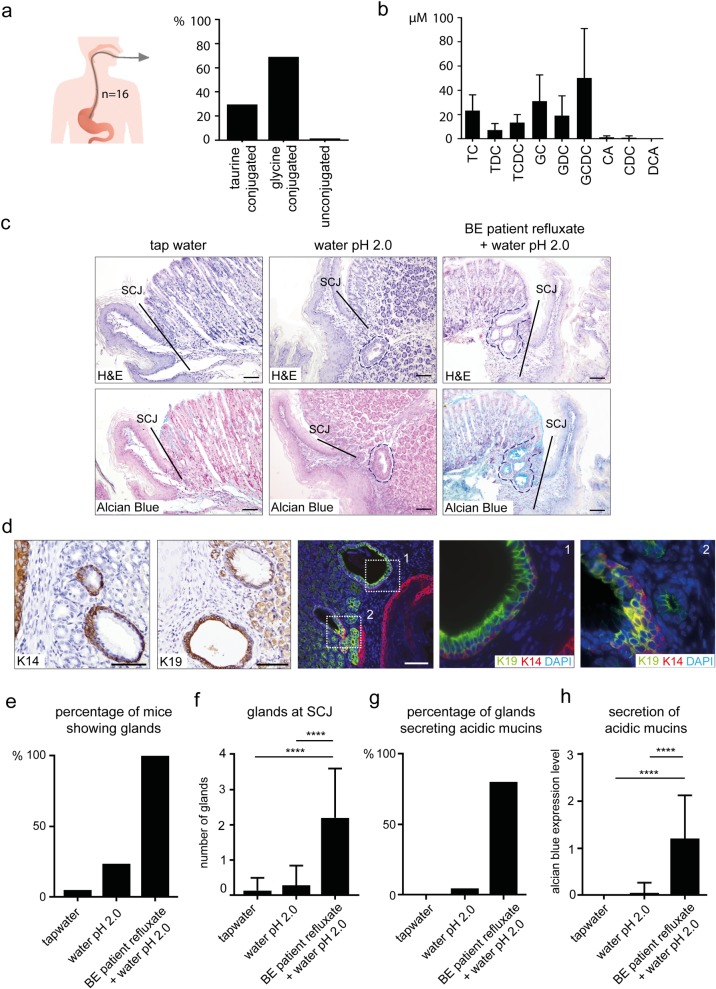
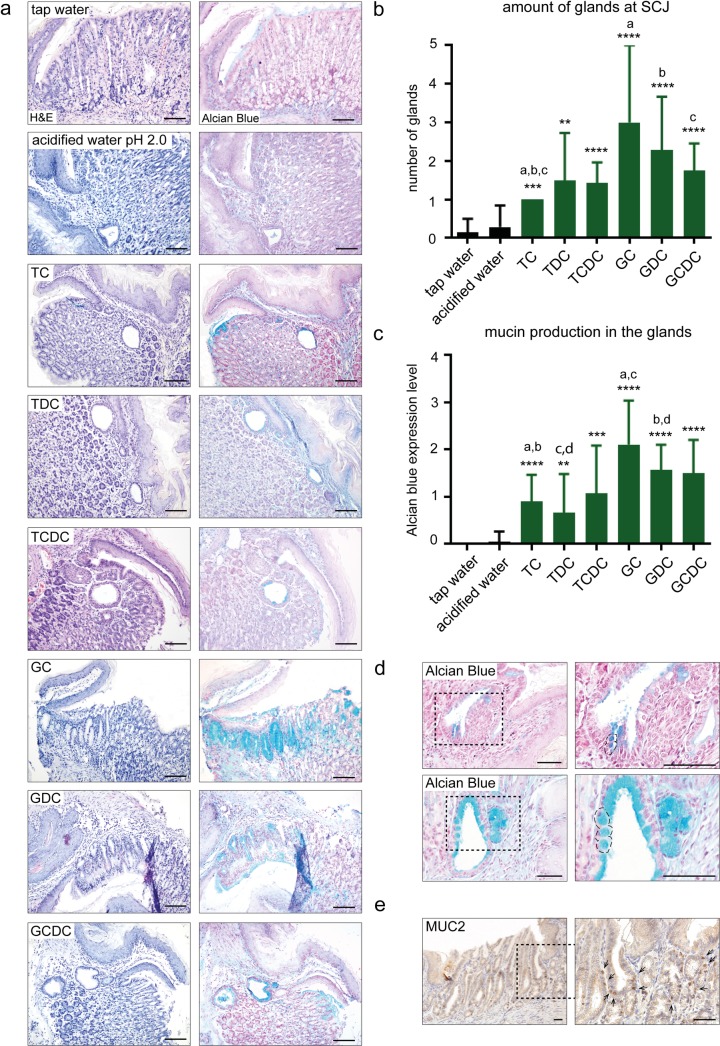
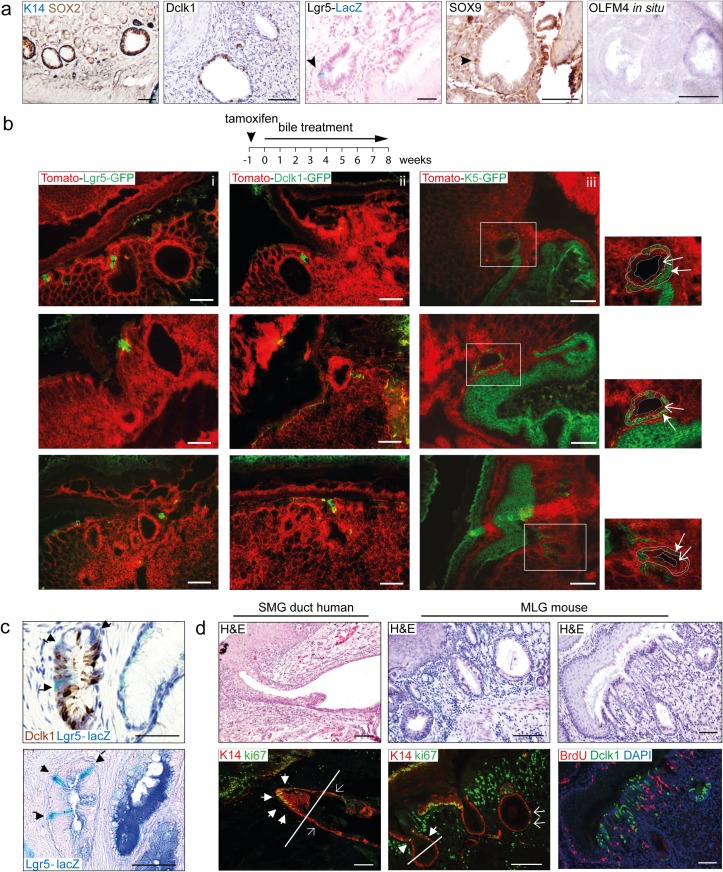
Bile acid reflux is known to be associated with the development of Barrett's esophagus and esophageal adenocarcinoma (EAC), yet the role of specific bile acids and the mechanism behind the metaplastic changes is unclear. Here, we demonstrate that multi-layered glandular structures at the squamo-columnar junction in mice contain multiple cell lineages, which resemble the human esophageal submucosal gland ducts. Exposing mice to patient's refluxates induced expansion of multi-layered glandular structures and development of columnar metaplasia at the squamo-columnar junction. The glycine conjugated bile acids induced an intestinal type of metaplasia more typical for Barrett's esophagus. Through lineage tracing, we excluded the involvement of K5+, DCLK1+, and LGR5+ progenitor cells as the primary source in the development of the glandular metaplastic epithelium. We show that the mechanism behind development of metaplasia involves crypt fission and may be independent of stem cell proliferation. Our findings support the hypothesis that in humans, BE arises from non-squamous cells residing in submucosal gland ducts and that induction of intestinal type of metaplasia is most effectively induced by glycine-conjugated bile acids. These novel insights may lead to more effective strategies to prevent development of Barrett's esophagus and esophageal adenocarcinoma.
胆汁酸反流已知与 Barrett 食管和食管腺癌(EAC)的发展有关,但特定胆汁酸的作用及其化生变化背后的机制尚不清楚。在这里,我们证明了小鼠鳞柱状交界处的多层腺状结构包含多种细胞谱系,类似于人类食管黏膜下腺导管。将患者的反流物暴露于小鼠中会诱导多层腺状结构的扩张,并在鳞柱状交界处发展出柱状化生。甘氨酸结合的胆汁酸诱导出更类似于 Barrett 食管的肠型化生。通过谱系追踪,我们排除了 K5+、DCLK1+和 LGR5+祖细胞作为腺性化生上皮发育的主要来源。我们表明,化生发展背后的机制涉及隐窝分裂,并且可能与干细胞增殖无关。我们的发现支持这样一种假说,即在人类中,BE 源自位于黏膜下腺导管中的非鳞状细胞,并且甘氨酸结合的胆汁酸最有效地诱导肠型化生。这些新的见解可能会导致更有效的策略来预防 Barrett 食管和食管腺癌的发展。