Klarman Cell Observatory, Broad Institute, Cambridge, MA, USA.
Klarman Cell Observatory, Broad Institute, Cambridge, MA, USA; Department of Molecular Biology, MGH, Boston, MA, USA.
Cell. 2019 Jul 25;178(3):714-730.e22. doi: 10.1016/j.cell.2019.06.029.
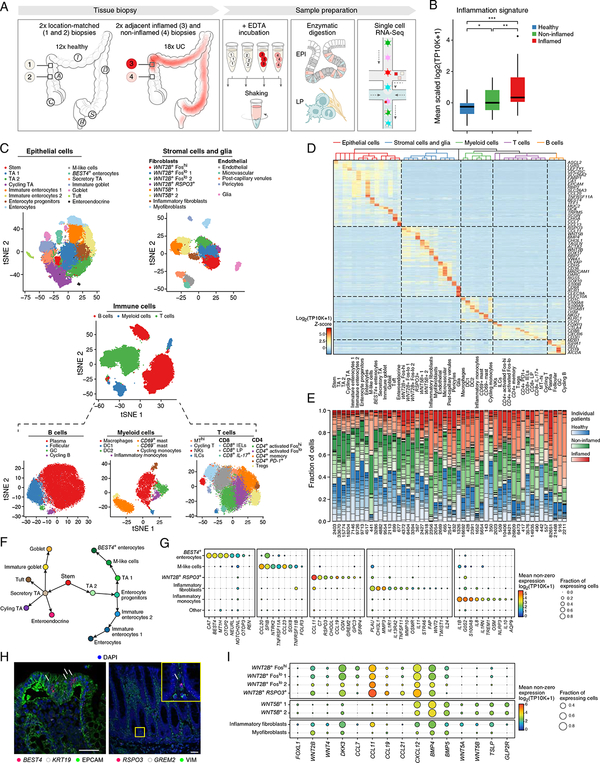
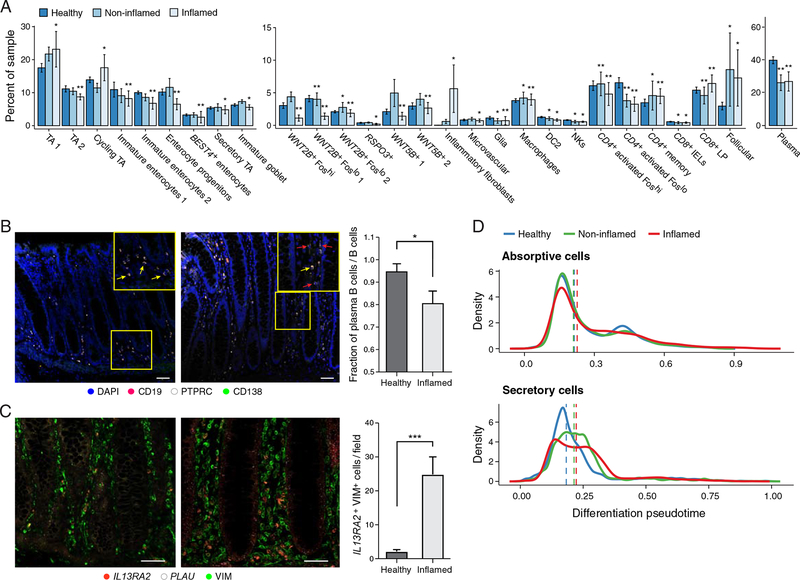
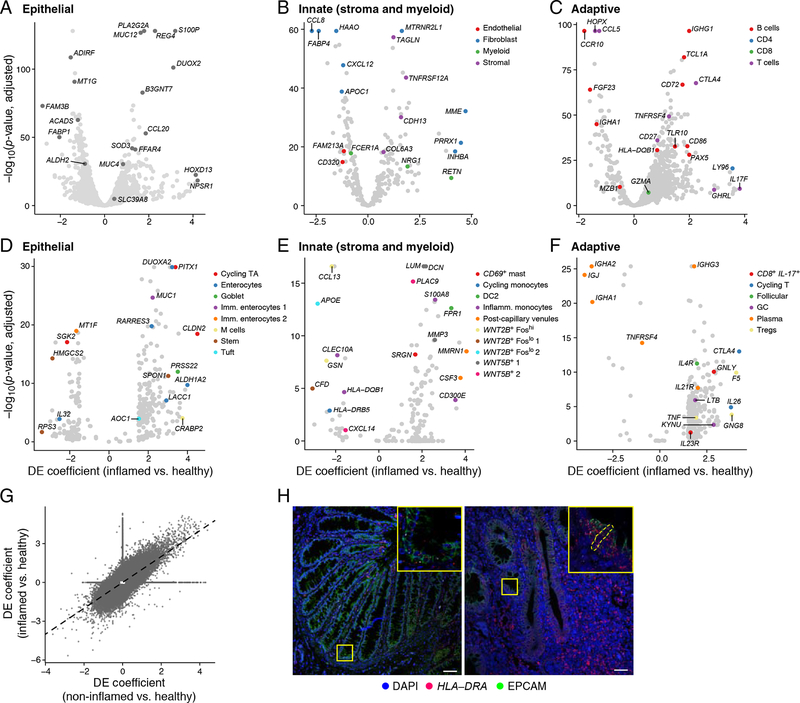
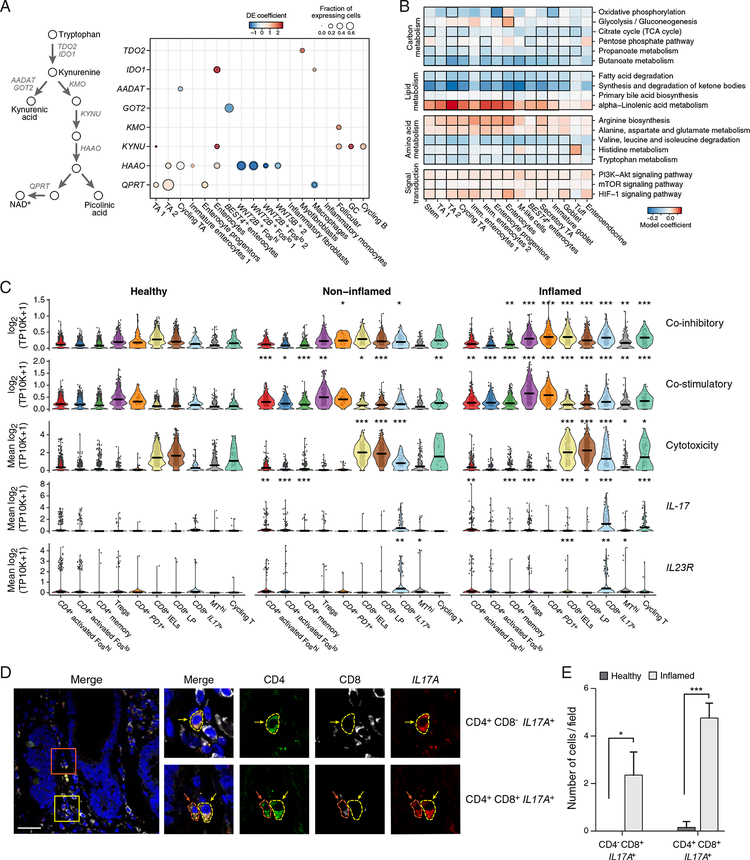
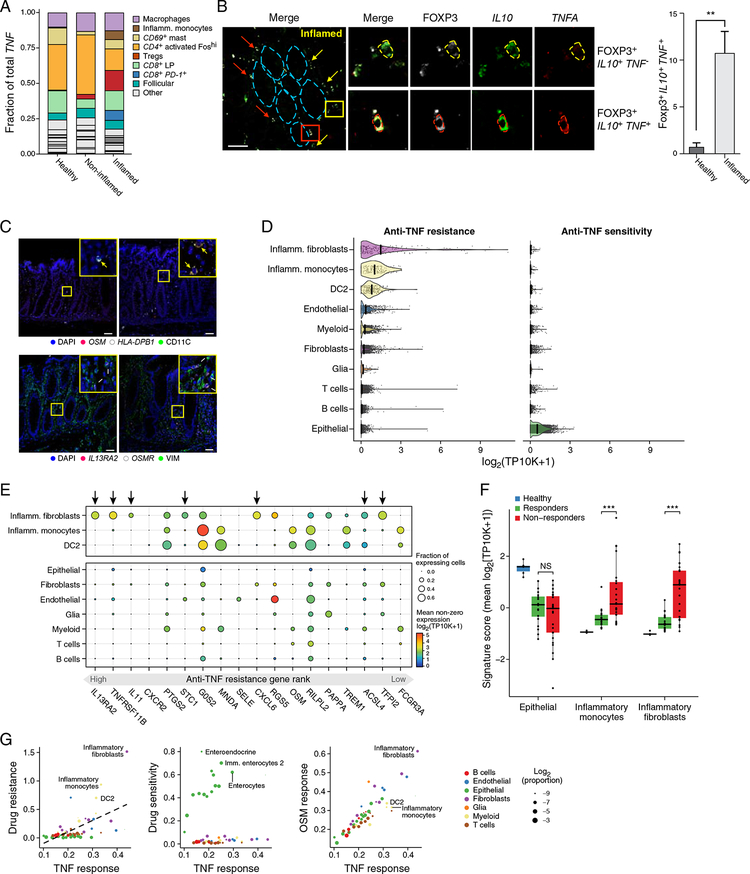
Genome-wide association studies (GWAS) have revealed risk alleles for ulcerative colitis (UC). To understand their cell type specificities and pathways of action, we generate an atlas of 366,650 cells from the colon mucosa of 18 UC patients and 12 healthy individuals, revealing 51 epithelial, stromal, and immune cell subsets, including BEST4 enterocytes, microfold-like cells, and IL13RA2IL11 inflammatory fibroblasts, which we associate with resistance to anti-TNF treatment. Inflammatory fibroblasts, inflammatory monocytes, microfold-like cells, and T cells that co-express CD8 and IL-17 expand with disease, forming intercellular interaction hubs. Many UC risk genes are cell type specific and co-regulated within relatively few gene modules, suggesting convergence onto limited sets of cell types and pathways. Using this observation, we nominate and infer functions for specific risk genes across GWAS loci. Our work provides a framework for interrogating complex human diseases and mapping risk variants to cell types and pathways.
全基因组关联研究(GWAS)已经揭示了溃疡性结肠炎(UC)的风险等位基因。为了了解它们的细胞类型特异性和作用途径,我们从 18 名 UC 患者和 12 名健康个体的结肠黏膜中生成了一个包含 366650 个细胞的图谱,揭示了 51 个上皮细胞、基质细胞和免疫细胞亚群,包括 BEST4 肠细胞、微褶皱样细胞和 IL13RA2IL11 炎症成纤维细胞,我们将其与抗 TNF 治疗的耐药性相关联。炎症成纤维细胞、炎症单核细胞、微褶皱样细胞和共表达 CD8 和 IL-17 的 T 细胞在疾病中扩增,形成细胞间相互作用枢纽。许多 UC 风险基因是细胞类型特异性的,并且在相对较少的基因模块中共同调控,表明它们集中在有限的细胞类型和途径上。利用这一观察结果,我们在全基因组关联研究位点上对特定风险基因进行提名和推断功能。我们的工作为研究复杂的人类疾病和将风险变异映射到细胞类型和途径提供了一个框架。