Jerem Paul, Jenni-Eiermann Susanne, McKeegan Dorothy, McCafferty Dominic J, Nager Ruedi G
Department of Evolution, Behaviour and Environment, School of Life Sciences, University of Sussex, Falmer, UK.
Swiss Ornithological Institute, Sempach, Switzerland.
Physiol Behav. 2019 Oct 15;210:112627. doi: 10.1016/j.physbeh.2019.112627. Epub 2019 Jul 23.
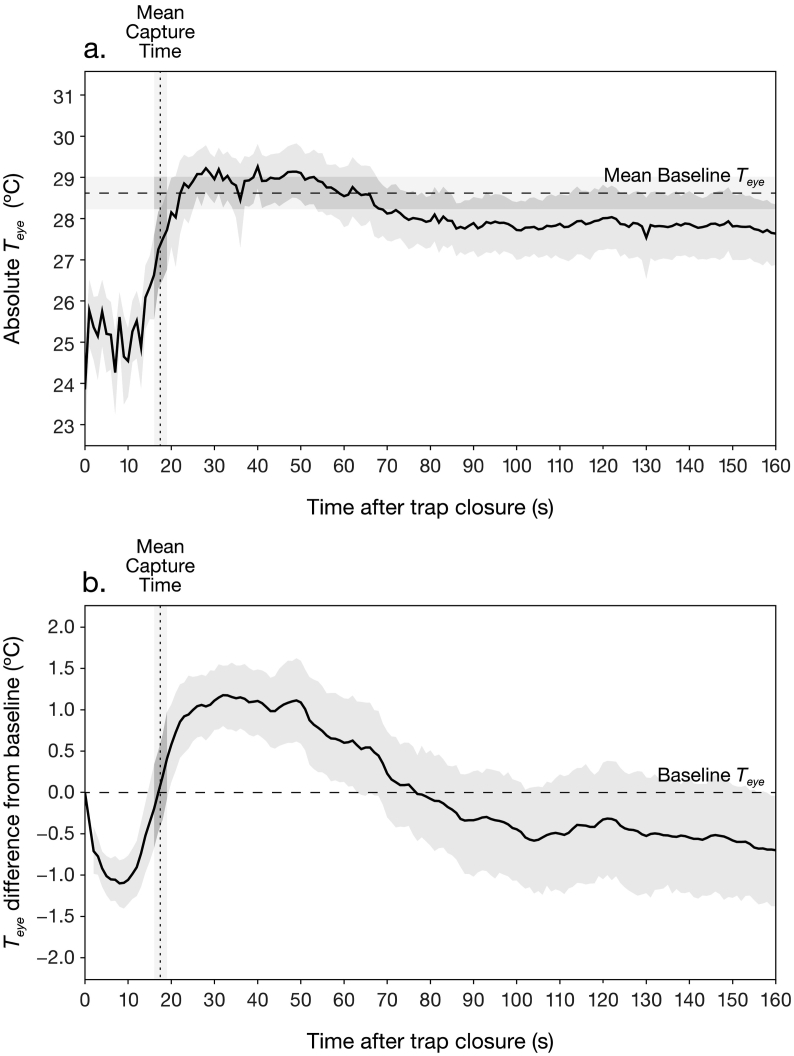
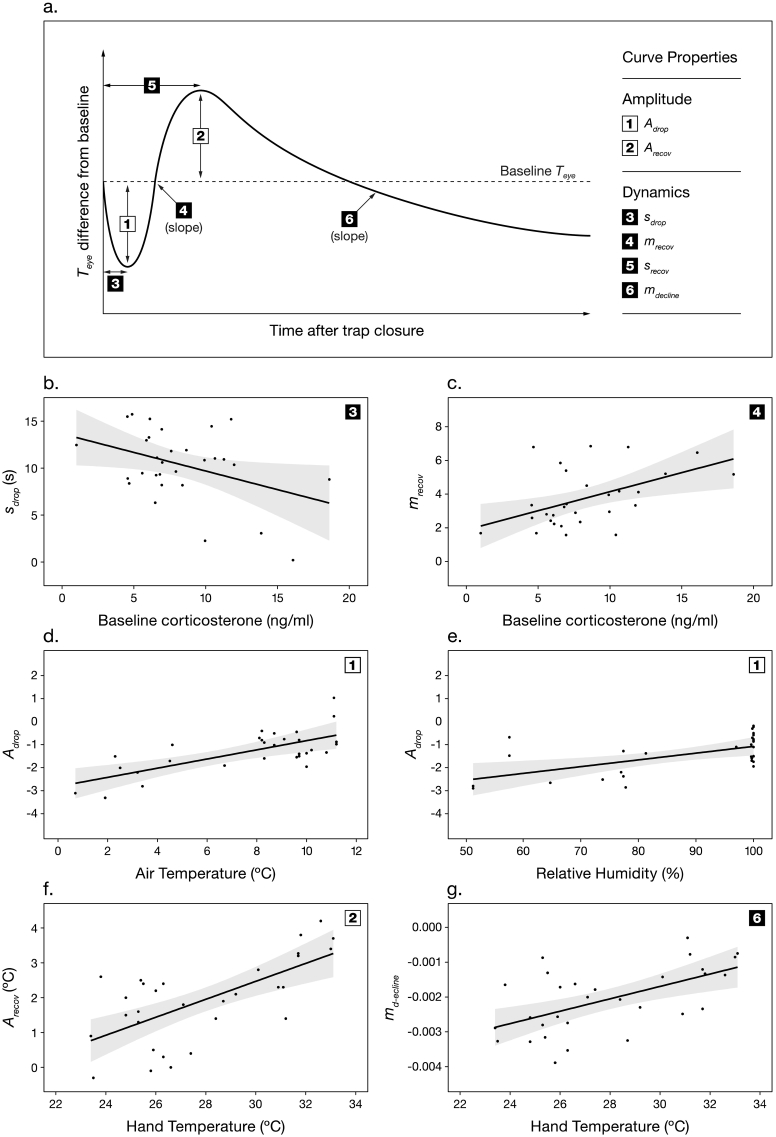
Reactions to acute stressors are critical for survival. Yet, the challenges of assessing underlying physiological processes in the field limit our understanding of how variation in the acute stress response relates to fitness in free-living animals. Glucocorticoid secretion during acute stress can be measured from blood plasma concentrations, but each blood sample can only provide information for one point in time. Also, the number of samples that can be extracted from an individual in the field is usually limited to avoid compromising welfare. This restricts capacity for repeated assessment, and therefore temporal resolution of findings within- and between-acute stress responses - both of which are important for determining links between acute stress and fitness. Acute stress induces additional body surface temperature changes that can be measured non-invasively, and at high frequencies using thermal imaging, offering opportunities to overcome these limitations. But, this method's usefulness in the field depends on the extent that environmental conditions affect the body surface temperature response, which remains poorly understood. We assessed the relative importance of individual physiology (baseline glucocorticoid concentrations) and environmental conditions (air temperature and relative humidity) in determining the eye region surface temperature (T) response to acute stress, in wild blue tits (Cyanistes caeruleus) during trapping, handling and blood sampling. When controlling for between-individual baseline variation, T initially dropped rapidly below, and then recovered above baseline, before declining more slowly until the end of the test, 160 s after trap closure. One measure of the amplitude of this response - the size of the initial drop in T - was dependent on environmental conditions, but not baseline corticosterone. Whereas, two properties defining response dynamics - the timing of the initial drop, and the slope of the subsequent recovery - were related to baseline corticosterone concentrations, independently of environmental conditions. This suggests inferring the acute stress response using thermal imaging of T will be practical under fluctuating environmental conditions in the field.
对急性应激源的反应对生存至关重要。然而,在野外评估潜在生理过程面临的挑战限制了我们对急性应激反应的变化如何与自由生活动物的适应性相关联的理解。急性应激期间的糖皮质激素分泌可以通过血浆浓度来测量,但每个血样只能提供一个时间点的信息。此外,在野外从个体身上采集的样本数量通常受到限制,以避免损害其健康。这限制了重复评估的能力,从而限制了急性应激反应内部和之间结果的时间分辨率——这两者对于确定急性应激与适应性之间的联系都很重要。急性应激会引起额外的体表温度变化,可以使用热成像进行非侵入性且高频的测量,这为克服这些限制提供了机会。但是,这种方法在野外的有用性取决于环境条件对体表温度反应的影响程度,而这一点仍知之甚少。我们评估了个体生理特征(基线糖皮质激素浓度)和环境条件(气温和相对湿度)在确定野生蓝山雀(蓝冠山雀)在诱捕、处理和采血过程中对急性应激的眼部区域表面温度(T)反应方面的相对重要性。在控制个体间基线差异时,T最初迅速下降到基线以下,然后恢复到基线以上,之后下降得更缓慢,直到测试结束,即诱捕结束后160秒。这种反应幅度的一个衡量指标——T最初下降的幅度——取决于环境条件,而不是基线皮质酮。然而,定义反应动态的两个特性——最初下降的时间以及随后恢复的斜率——与基线皮质酮浓度相关,与环境条件无关。这表明在野外环境条件波动的情况下,使用T的热成像来推断急性应激反应是可行的。