Florida Medical Entomology Laboratory, University of Florida, IFAS, 200 9th St. SE, Vero Beach, FL, 32962, USA.
University of California Davis, One Shields Ave, Davis, CA, 95616, USA.
Parasit Vectors. 2019 Jul 26;12(1):367. doi: 10.1186/s13071-019-3626-1.
Biting midges in the genus Culicoides (Diptera: Ceratopogonidae) transmit bluetongue virus (BTV) and epizootic hemorrhagic disease virus (EHDV) to ruminants, thus exerting a significant economic impact on animal agriculture worldwide. However, very little is known about the larval habitat characteristics of Culicoides species associated with BTV/EHDV transmission, particularly in southeastern USA, limiting the establishment of effective midge control strategies. In this study, we examined the habitat associations of Culicoides species abundant on a commercial cervid farm in Florida, USA and quantified several environmental variables of their habitat to identify the key variables associated with midge abundance.
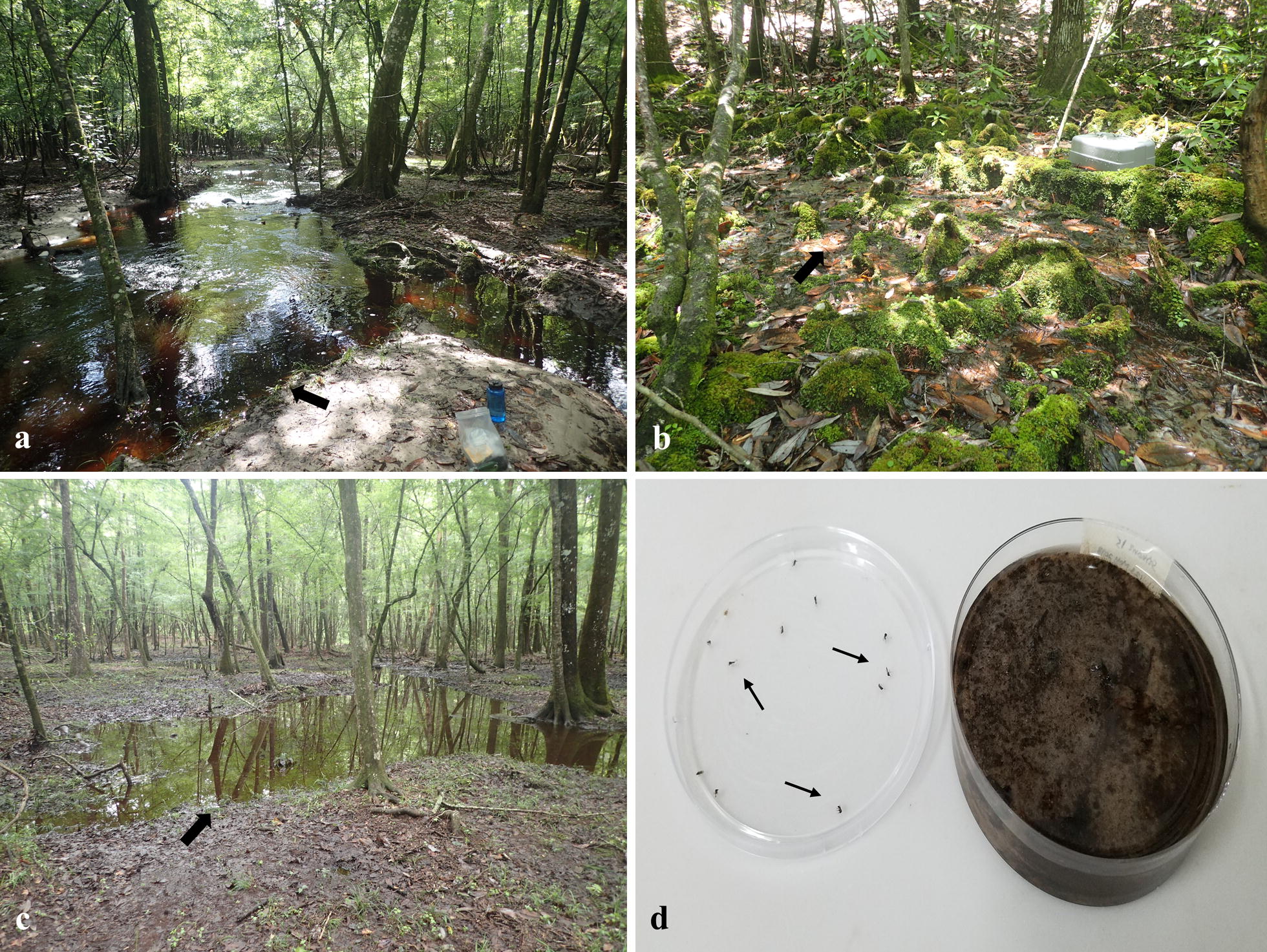
Mud/substrate samples from three potential larval habitats on the farm (edges of streams, puddles and seepages) were brought to the laboratory and incubated for adult emergence, and the percentage organic matter, macronutrients, micronutrients, pH, electrical conductivity, moisture and microbial concentrations of the substrate were quantified.
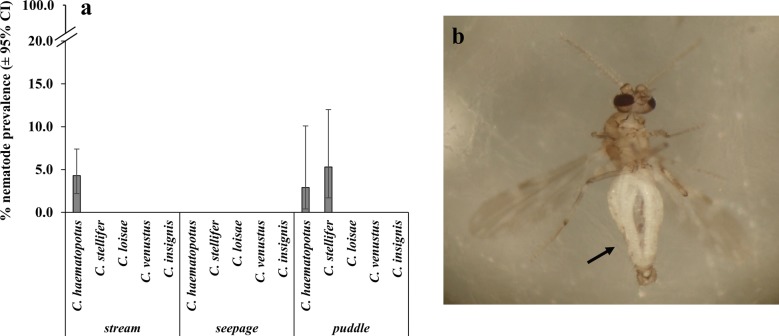
Strong habitat associations were observed for Culicoides haematopotus (Malloch) (stream edge), Culicoides stellifer (Coquillett) (puddles) and Culicoides loisae (Jamnback) (stream edge), the most commonly emerging midge species from the samples. Suspected vector species of BTV/EHDV on the property, C. stellifer and Culicoides venustus (Hoffman), emerged mainly from habitats with moderate-high levels of pollution (edges of puddles and seepages) as indicated by the relatively higher concentrations/levels of organic matter, nutrients and other environmental variables in these samples. The emergence of C. insignis was too low to form any meaningful conclusions. For each Culicoides species, only weak positive or negative associations were detected between midge abundance and the various environmental variables quantified.
Habitat associations of Culicoides species abundant on a local cervid/animal farm vary, most likely as a function of certain biotic/abiotic characteristics of the habitat. Further studies across a larger spatial and temporal scale will be needed to experimentally evaluate/identify the key factors more strongly associated with the abundance of target Culicoides species. This information, in the long term, can be potentially exploited to render local habitats unsuitable for midge oviposition/larval development.
蠓科(双翅目:蠓科)中的致倦库蠓属(库蠓)传播蓝舌病病毒(BTV)和传染性牛鼻气管炎病毒(EHDV)给反刍动物,从而对全球动物农业造成重大经济影响。然而,对于与 BTV/EHDV 传播相关的致倦库蠓属物种的幼虫栖息地特征,人们知之甚少,特别是在美国东南部,这限制了有效控制媒介蠓的策略的建立。在这项研究中,我们检查了美国佛罗里达州一个商业鹿场中丰富的致倦库蠓属物种的栖息地关联,并量化了其栖息地的几个环境变量,以确定与媒介数量相关的关键变量。
从农场的三个潜在幼虫栖息地(溪流边缘、水坑和渗出物)采集泥/基质样本并带到实验室进行成虫孵化,并量化了基质的有机物百分比、宏量营养素、微量营养素、pH 值、电导率、水分和微生物浓度。
观察到致倦库蠓属(溪流边缘)、致倦库蠓属(水坑)和致倦库蠓属(溪流边缘)强烈的栖息地关联,这是从样本中最常出现的三种致倦库蠓属物种。该物业上疑似 BTV/EHDV 的传播媒介物种,致倦库蠓属和库蠓属,主要从污染程度中等至高等的栖息地中出现(水坑和渗出物的边缘),这表明这些样本中的有机物、养分和其他环境变量的浓度/水平相对较高。致倦库蠓属的出现率太低,无法得出任何有意义的结论。对于每种致倦库蠓属物种,仅检测到媒介数量与量化的各种环境变量之间存在微弱的正或负关联。
在当地鹿/动物养殖场中丰富的致倦库蠓属物种的栖息地关联不同,这很可能是栖息地某些生物/非生物特征的函数。还需要在更大的空间和时间范围内进行进一步的研究,以实验评估/确定与目标致倦库蠓属物种丰度更密切相关的关键因素。从长远来看,这些信息可用于使当地栖息地不适合媒介蠓产卵/幼虫发育。