Department of Pediatrics, School of Medicine, Case Western Reserve University, University Hospitals Rainbow Babies & Children's Hospital, Cleveland, OH.
Department of Pharmacology, University of Colorado, Aurora, CO.
Diabetes. 2019 Oct;68(10):2004-2015. doi: 10.2337/db19-0026. Epub 2019 Jul 26.
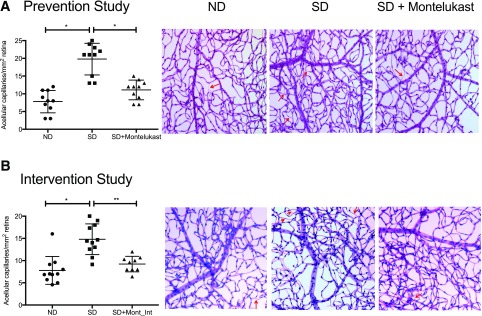
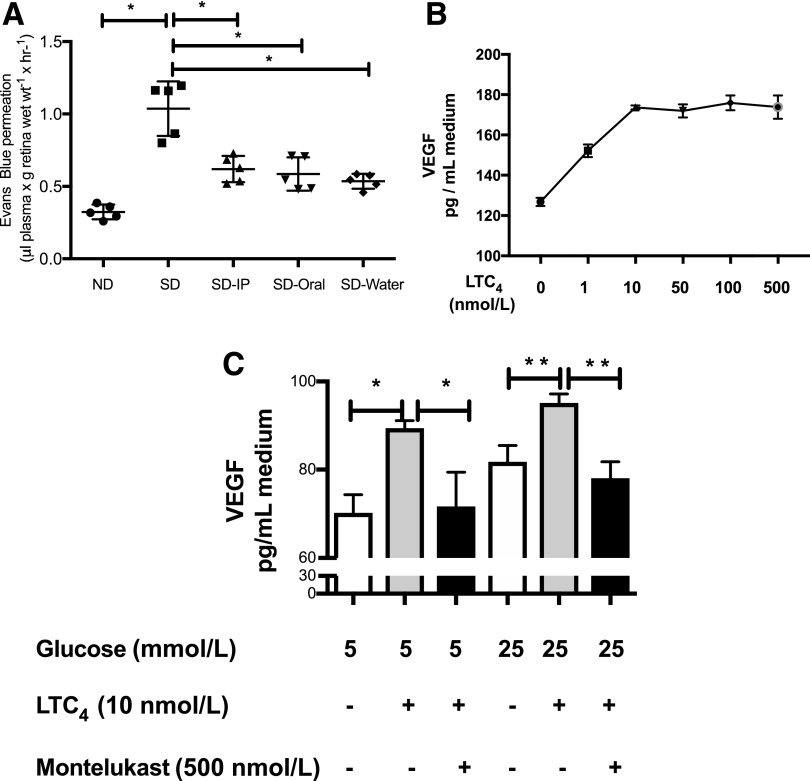
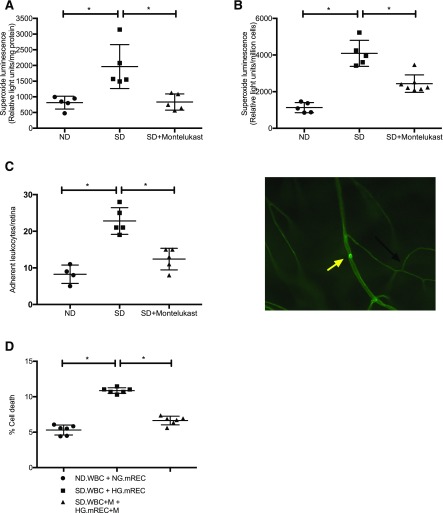
Chronic inflammation and oxidative stress are critical components in the pathogenic cascade of early diabetic retinopathy, characterized by neuronal and vascular degeneration. We investigated pharmacologic inhibition of the proinflammatory leukotriene cascade for therapeutic benefit in early diabetic retinopathy. Using the streptozotocin-induced diabetes mouse model, we administered montelukast, a leukotriene receptor antagonist, and diabetes-related retinal pathology was assessed. Early biochemical and cellular function measures were evaluated at 3 months' diabetes duration and included vascular permeability, superoxide production, leukotriene generation, leukocyte-induced microvascular endothelial cell death, and retinal function by electroretinography. Histopathology assessments at 9 months' diabetes duration included capillary degeneration and retinal ganglion cell loss. Leukotriene receptor antagonism resulted in a significant reduction of early, diabetes-induced retinal capillary leakage, superoxide generation, leukocyte adherence, and leukotriene generation. After 9 months of diabetes, the retinal microvasculature from untreated diabetic mice demonstrated a nearly threefold increase in capillary degeneration compared with nondiabetic mice. Montelukast inhibited the diabetes-induced capillary and neuronal degeneration, whether administered as a prevention strategy, immediately after induction of diabetes, or as an intervention strategy starting at 4.5 months after confirmation of diabetes. Pharmacologic blockade of the leukotriene pathway holds potential as a novel therapy to prevent or slow the development of diabetic retinopathy.
慢性炎症和氧化应激是早期糖尿病性视网膜病变发病机制中的关键组成部分,其特征为神经元和血管退化。我们研究了抑制致炎白三烯级联反应的药物治疗对早期糖尿病性视网膜病变的益处。我们使用链脲佐菌素诱导的糖尿病小鼠模型,给予白三烯受体拮抗剂孟鲁司特,并评估糖尿病相关的视网膜病变。在糖尿病持续 3 个月时,评估早期生化和细胞功能指标,包括血管通透性、超氧化物产生、白三烯生成、白细胞诱导的微血管内皮细胞死亡以及视网膜功能(通过视网膜电图评估)。在糖尿病持续 9 个月时进行组织病理学评估,包括毛细血管退化和视网膜神经节细胞丢失。白三烯受体拮抗作用可显著减少早期糖尿病诱导的视网膜毛细血管渗漏、超氧化物生成、白细胞黏附以及白三烯生成。未经治疗的糖尿病小鼠的视网膜微血管在糖尿病 9 个月后与非糖尿病小鼠相比,毛细血管退化增加了近三倍。孟鲁司特抑制了糖尿病诱导的毛细血管和神经元退化,无论是作为预防策略、在糖尿病诱导后立即给药,还是在确诊糖尿病后 4.5 个月开始作为干预策略给药。白三烯途径的药物阻断具有作为一种预防或减缓糖尿病性视网膜病变发展的新疗法的潜力。