Department of Pharmacology and Toxicology, Faculty of Pharmacy, Mansoura University, Mansoura, Egypt.
Department of Ophthalmology, University of Tennessee Health Science Center, Memphis, Tennessee, United States.
Invest Ophthalmol Vis Sci. 2024 Nov 4;65(13):15. doi: 10.1167/iovs.65.13.15.
Diabetic macular edema (DME) is the primary cause of vision impairment in diabetic retinopathy (DR) patients. A previous study has shown the efficacy of montelukast, a cysteinyl leukotriene receptor (CysLTR)1 antagonist, in a diabetic mouse model. This study aims to understand the CysLTR1 signaling in retinal endothelial cells and the impact of montelukast.
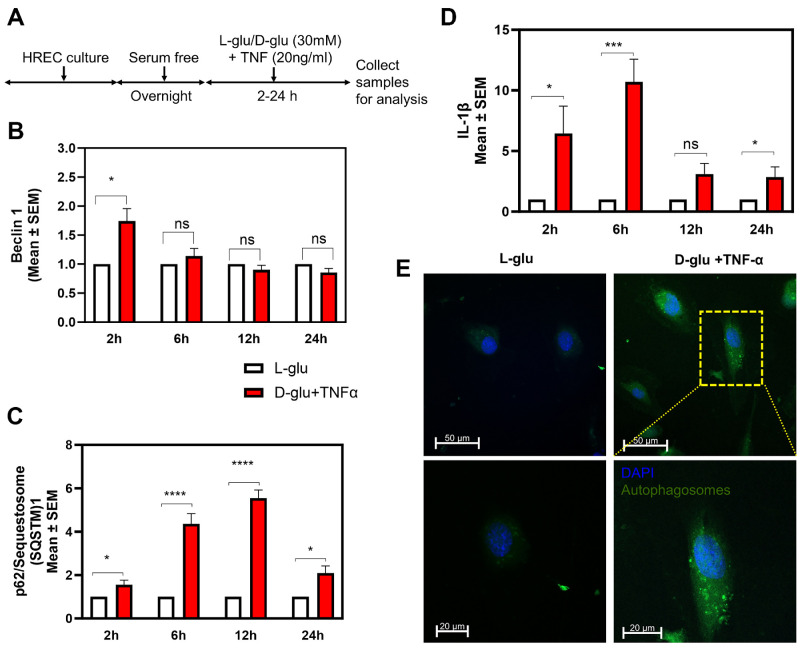
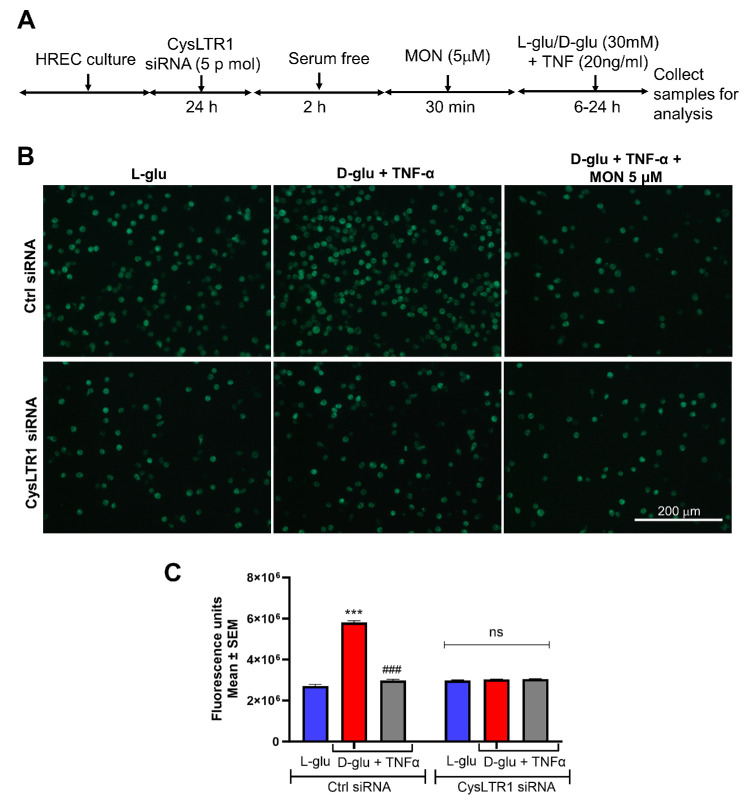
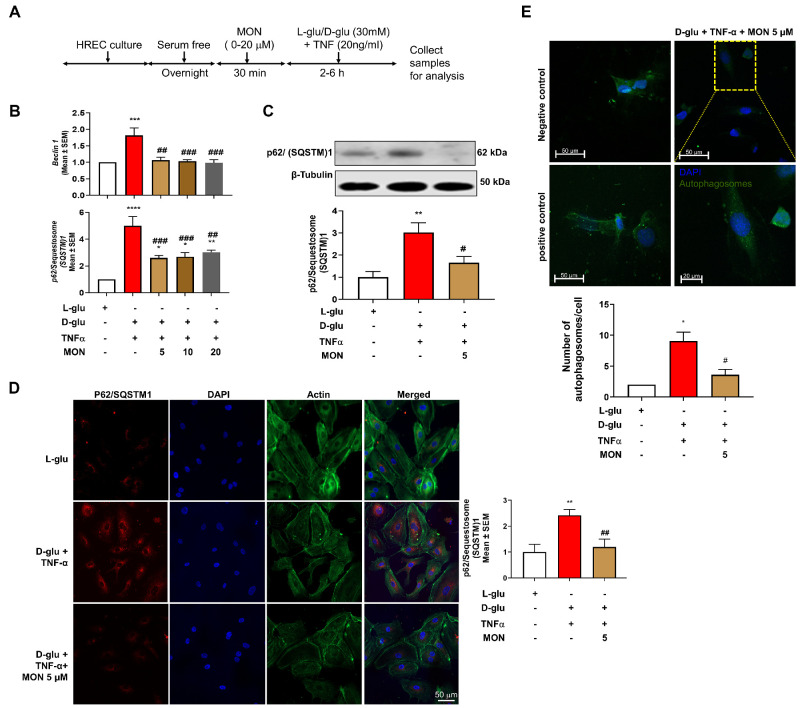
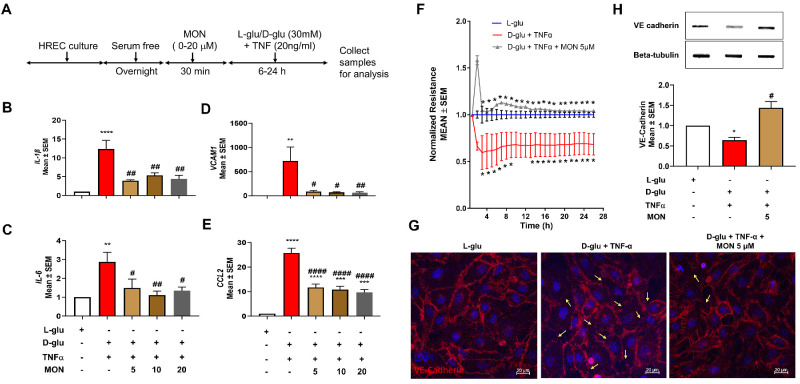
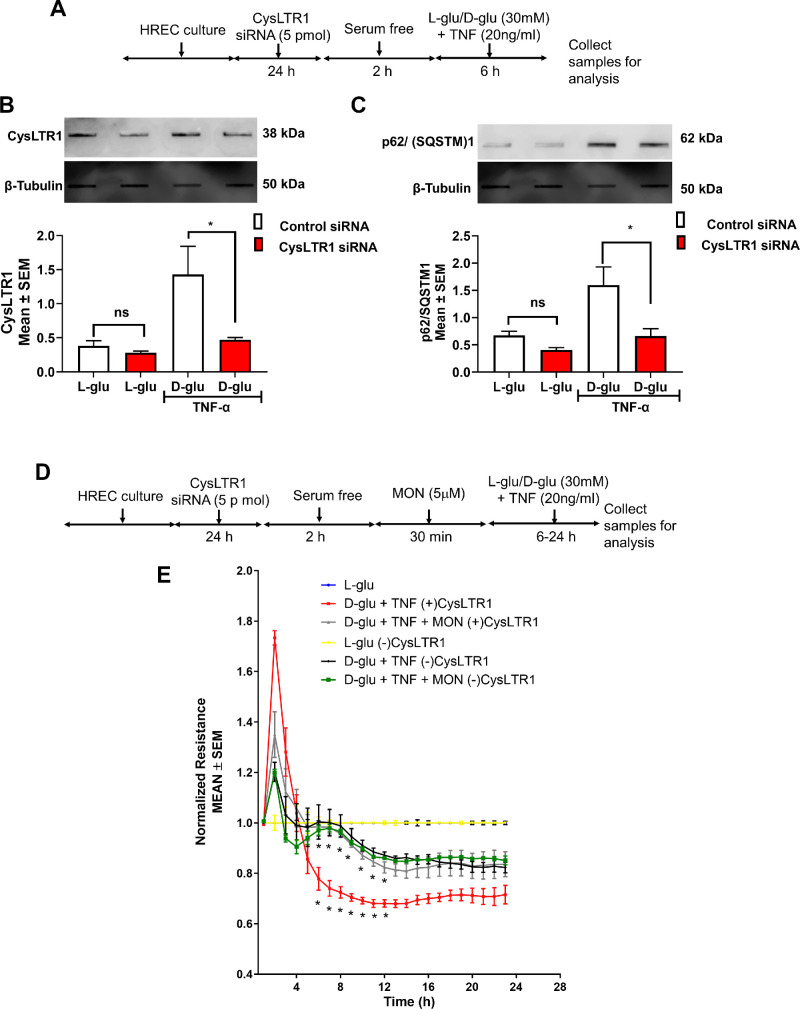
Primary human retinal microvascular endothelial cells (HRECs) challenged with 20 ng/mL TNF-α and 30 mM D-glucose (D-glu) for six to 24 hours served as a model of endothelial activation. HRECs were incubated with L-glucose (L-glu) as an osmotic control. CysLTR1 knockdown and montelukast pretreatment assessed CysLTR1 antagonism. Gene expression, protein expression, and cell-permeable dyes were utilized to measure autophagy and inflammation. Transendothelial electrical resistance (TER) and transendothelial migration of mononuclear leukocytes across HRECs monolayer were measured as a functional assessment of vascular permeability.
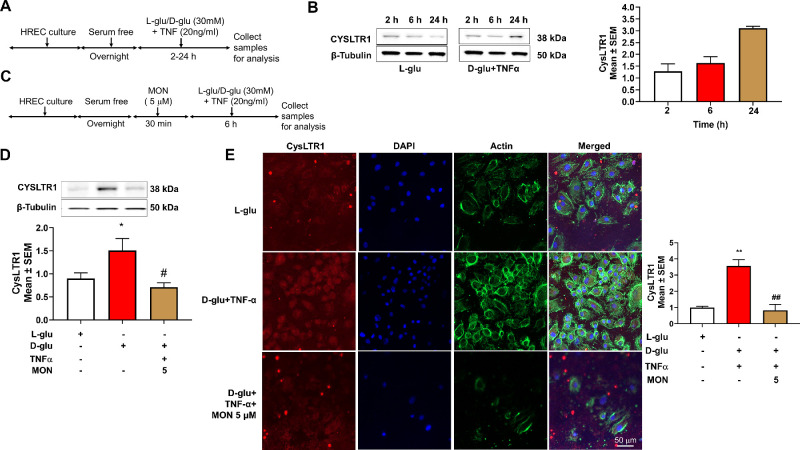
Endothelial activation induced by hyperglycemia and inflammation increased CysLTR1 expression, triggering autophagy within two to six hours, IL-1β production, loss of junction integrity, decreased TER, and increased leukocyte migration within six to 24 hours. Pretreatment with montelukast effectively alleviated these effects, demonstrating its dependence on CysLTR1.
Dysfunctional retinal endothelium initiates a self-reinforcing loop of inflammation, autophagy, and compromised integrity associated with heightened CysLTR1 levels. The antagonistic effect of montelukast against CysLTR1 effectively mitigates these detrimental changes. This study reveals CysLTR1 as a potential therapeutic target in treating DME and offers a novel strategy to mitigate detrimental changes in DR.
糖尿病性黄斑水肿(DME)是糖尿病性视网膜病变(DR)患者视力损害的主要原因。先前的研究表明,半胱氨酰白三烯受体(CysLTR)1 拮抗剂孟鲁司特在糖尿病小鼠模型中具有疗效。本研究旨在了解 CysLTR1 在视网膜内皮细胞中的信号转导作用以及孟鲁司特的影响。
用 20ng/mL TNF-α和 30mM D-葡萄糖(D-glu)刺激原代人视网膜微血管内皮细胞(HRECs)6-24 小时作为内皮细胞激活模型。用 L-葡萄糖(L-glu)孵育 HRECs 作为渗透对照。用 CysLTR1 敲低和孟鲁司特预处理评估 CysLTR1 拮抗作用。用基因表达、蛋白表达和细胞通透性染料测量自噬和炎症。通过测量跨 HRECs 单层单核白细胞的跨内皮电阻(TER)和迁移来评估血管通透性的功能。
高血糖和炎症诱导的内皮激活增加了 CysLTR1 的表达,在 2-6 小时内引发自噬,6-24 小时内产生 IL-1β,破坏连接完整性,降低 TER,并增加白细胞迁移。孟鲁司特预处理可有效缓解这些作用,表明其依赖于 CysLTR1。
功能失调的视网膜内皮细胞启动了一个自我强化的炎症、自噬和完整性受损的循环,与 CysLTR1 水平升高有关。孟鲁司特对 CysLTR1 的拮抗作用可有效减轻这些不利变化。本研究揭示了 CysLTR1 作为治疗 DME 的潜在治疗靶点,并为减轻 DR 中的有害变化提供了一种新策略。