Newcastle Fibrosis Research Group, Institute of Cellular Medicine, Faculty of Medical Sciences, Newcastle University, Newcastle upon Tyne, United Kingdom.
Newcastle Fibrosis Research Group, Institute of Cellular Medicine, Faculty of Medical Sciences, Newcastle University, Newcastle upon Tyne, United Kingdom.
Gastroenterology. 2019 Nov;157(5):1398-1412.e9. doi: 10.1053/j.gastro.2019.07.029. Epub 2019 Jul 25.
BACKGROUND & AIMS: Methyl-CpG binding protein 2, MECP2, which binds to methylated regions of DNA to regulate transcription, is expressed by hepatic stellate cells (HSCs) and is required for development of liver fibrosis in mice. We investigated the effects of MECP2 deletion from HSCs on their transcriptome and of phosphorylation of MECP2 on HSC phenotype and liver fibrosis.
We isolated HSCs from Mecp2 mice and wild-type (control) mice. HSCs were activated in culture and used in array analyses of messenger RNAs and long noncoding RNAs. Kyoto Encyclopedia of Genes and Genomes pathway analyses identified pathways regulated by MECP2. We studied mice that expressed a mutated form of Mecp2 that encodes the S80A substitution, MECP2S80, causing loss of MECP2 phosphorylation at serine 80. Liver fibrosis was induced in these mice by administration of carbon tetrachloride, and liver tissues and HSCs were collected and analyzed.
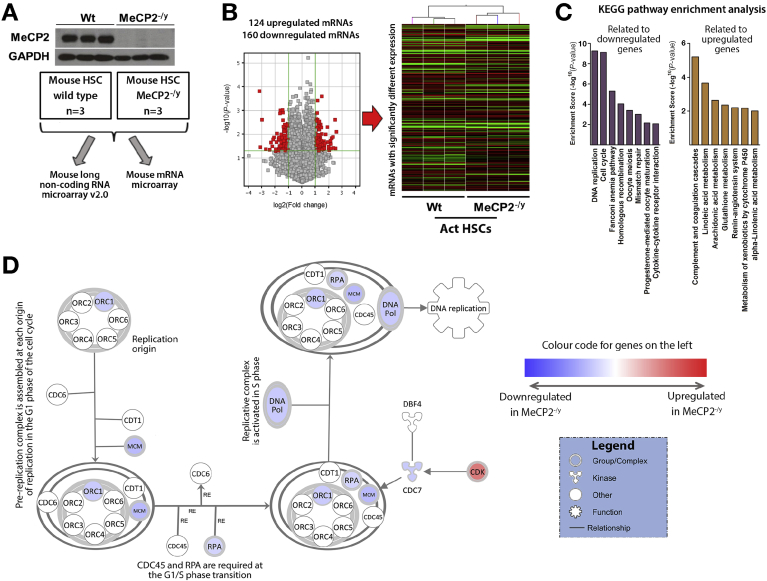
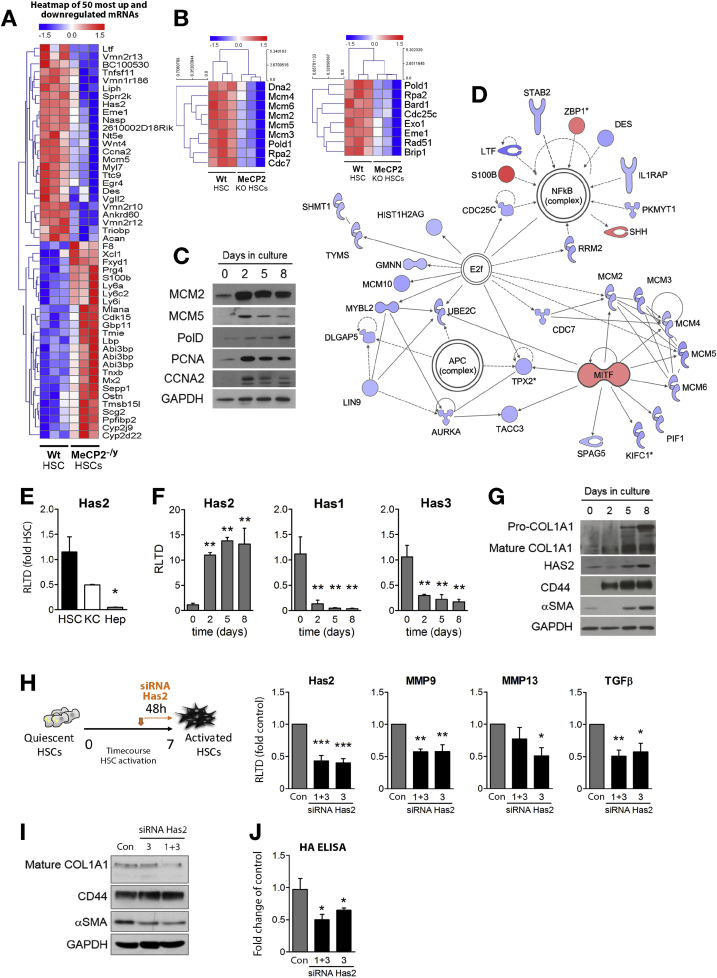
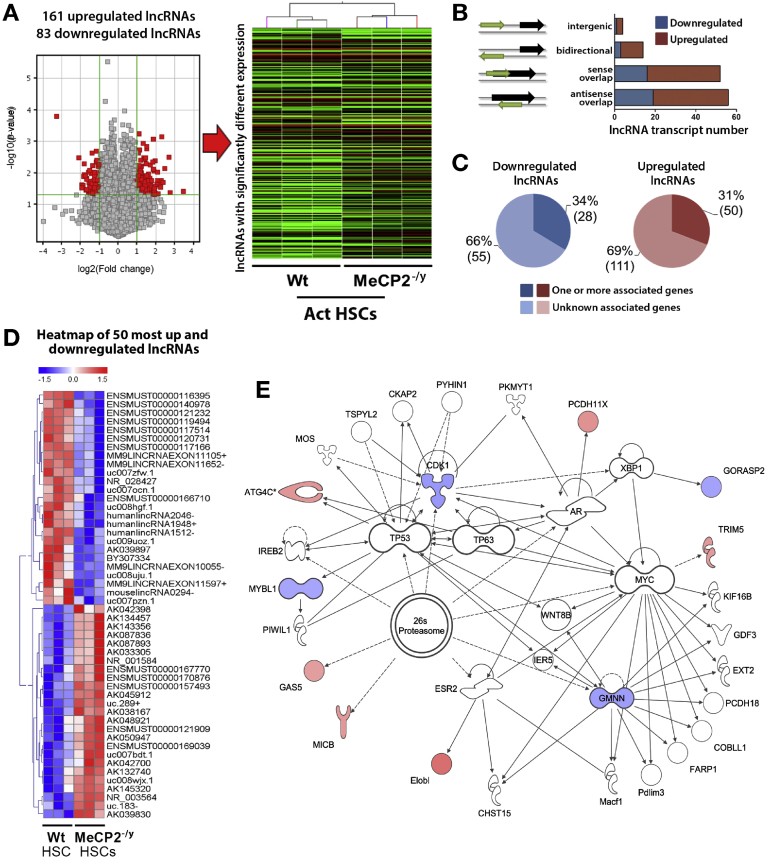
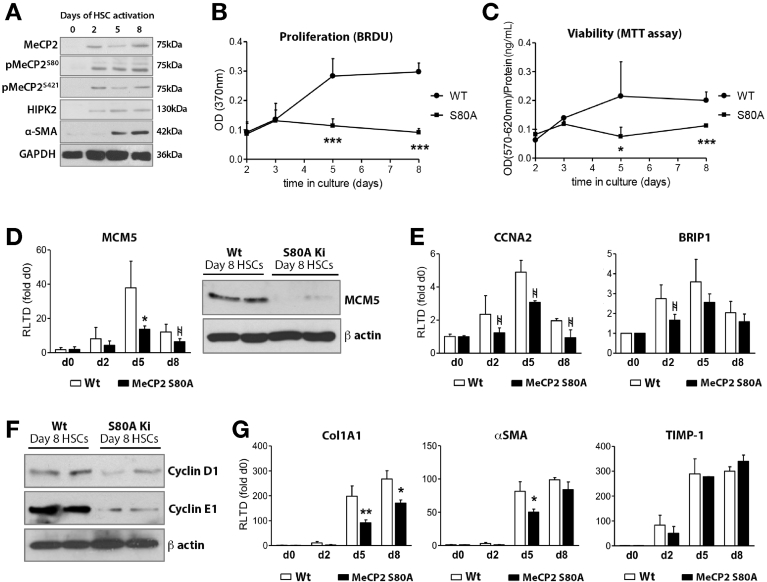
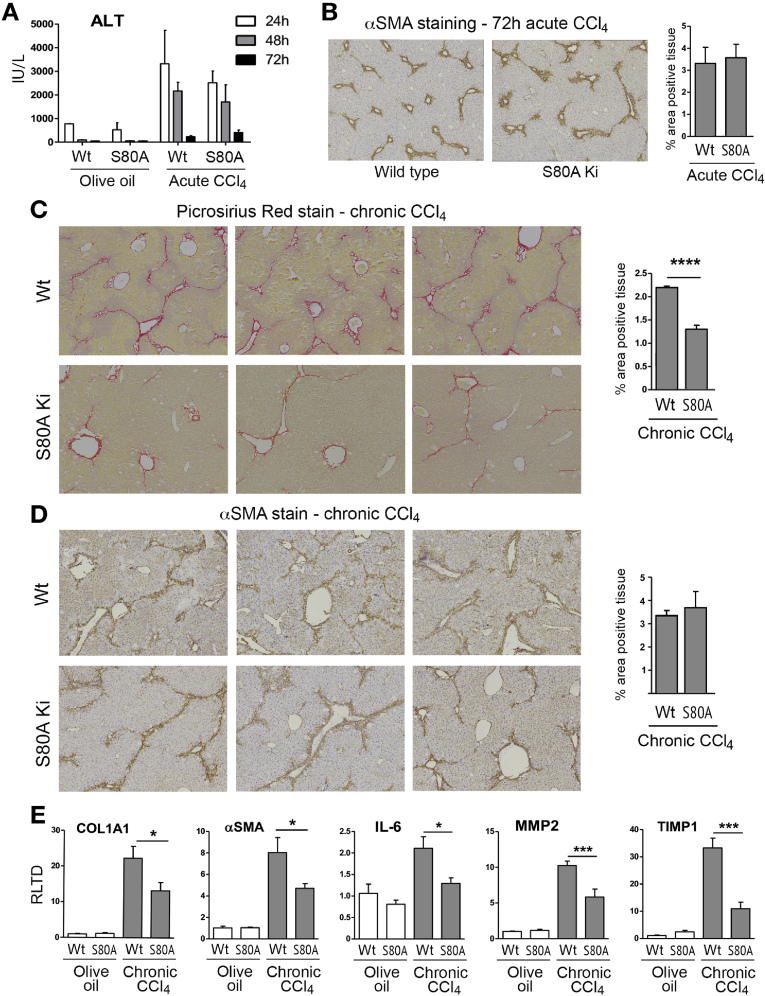
MECP2 deletion altered expression of 284 messenger RNAs and 244 long noncoding RNAs, including those that regulate DNA replication; are members of the minichromosome maintenance protein complex family; or encode CDC7, HAS2, DNA2 (a DNA helicase), or RPA2 (a protein that binds single-stranded DNA). We found that MECP2 regulates the DNA repair Fanconi anemia pathway in HSCs. Phosphorylation of MECP2S80 and its putative kinase, HAS2, were induced during transdifferentiation of HSCs. HSCs from MECP2S80 mice had reduced proliferation, and livers from these mice had reduced fibrosis after carbon tetrachloride administration.
In studies of mice with disruption of Mecp2 or that expressed a form of MECP2 that is not phosphorylated at S80, we found phosphorylation of MECP2 to be required for HSC proliferation and induction of fibrosis. In HSCs, MECP2 regulates expression of genes required for DNA replication and repair. Strategies to inhibit MECP2 phosphorylation at S80 might be developed for treatment of liver fibrosis.
甲基化CpG 结合蛋白 2(MECP2)与 DNA 的甲基化区域结合以调节转录,由肝星状细胞(HSCs)表达,是小鼠肝纤维化发展所必需的。我们研究了从 HSCs 中删除 MECP2 对其转录组的影响,以及 MECP2 磷酸化对 HSC 表型和肝纤维化的影响。
我们从 Mecp2 小鼠和野生型(对照)小鼠中分离出 HSCs。在培养中激活 HSCs,并用于信使 RNA 和长非编码 RNA 的阵列分析。京都基因与基因组百科全书通路分析确定了受 MECP2 调控的通路。我们研究了表达 S80A 取代导致 MECP2 丝氨酸 80 磷酸化丧失的突变形式 MECP2S80 的小鼠。这些小鼠通过给予四氯化碳诱导肝纤维化,并收集和分析肝组织和 HSCs。
MECP2 缺失改变了 284 个信使 RNA 和 244 个长非编码 RNA 的表达,包括调节 DNA 复制的 RNA;是微小染色体维持蛋白复合物家族的成员;或编码 CDC7、HAS2、DNA2(一种 DNA 解旋酶)或 RPA2(一种结合单链 DNA 的蛋白)。我们发现 MECP2 调节 HSCs 中的 DNA 修复范可尼贫血途径。在 HSCs 的转分化过程中,MECP2S80 的磷酸化及其假定激酶 HAS2 被诱导。来自 MECP2S80 小鼠的 HSCs 增殖减少,并且这些小鼠的肝脏在给予四氯化碳后纤维化减少。
在研究破坏 Mecp2 或表达不能在 S80 磷酸化的 MECP2 形式的小鼠时,我们发现 MECP2 的磷酸化对于 HSC 增殖和纤维化的诱导是必需的。在 HSCs 中,MECP2 调节 DNA 复制和修复所需基因的表达。抑制 S80 磷酸化的 MECP2 的策略可能被开发用于治疗肝纤维化。