Division of Epidemiology and Community Health, School of Public Health, University of Minnesota, Minneapolis, Minnesota.
Department of Epidemiology and Biostatistics, Dornsife School of Public Health, Drexel University, Philadelphia, Pennsylvania.
Am J Prev Med. 2019 Sep;57(3):321-329. doi: 10.1016/j.amepre.2019.04.014. Epub 2019 Jul 25.
Literature posits that discrimination can be a barrier to racial and ethnic minorities' healthcare use. This study examines the relationship between perceived discrimination in the form of racial microaggressions and delayed prenatal care in African American women. It also investigates whether this relationship is modified by women's shade of skin color owing to societal attitudes and beliefs tied to colorism (also known as skin-tone bias).
Data were collected from a cohort of 1,410 black, African American women in metropolitan Detroit, Michigan, enrolled in 2009-2011 (analyzed between August 2017 and July 2018). Perceived racial microaggressions were assessed using the 20-item Daily Life Experiences of Racism and Bother scale. Logistic regression modeled the relationship between the Daily Life Experiences of Racism and Bother scale and delayed prenatal care, defined as third trimester or no prenatal care entry.
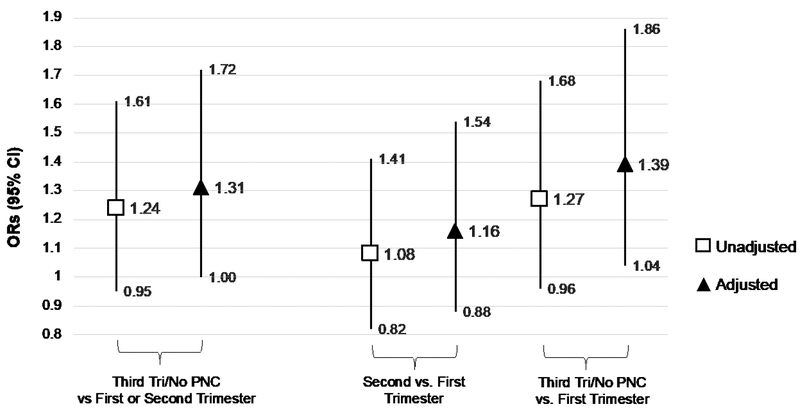
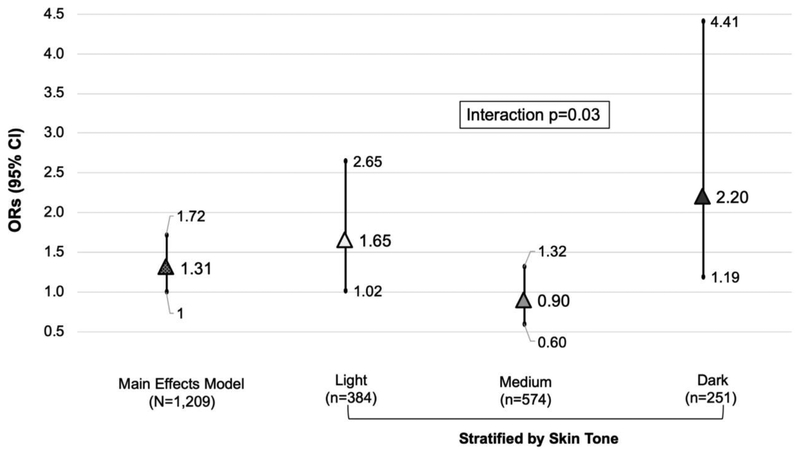
Nearly a quarter (24.8%) of women had delayed prenatal care. Logistic regression models showed that a Daily Life Experiences of Racism and Bother score above the median was associated with delayed prenatal care (AOR=1.31, 95% CI=1.00, 1.71). This association was moderated by self-reported maternal skin tone (interaction p=0.03). A higher Daily Life Experiences of Racism and Bother score was associated with delayed prenatal care among African-American women at either end of the color continuum (light brown: AOR=1.64, 95% CI=1.02, 2.65; dark brown: AOR=2.30, 95% CI=1.20, 4.41) but not in the middle (medium brown women).
Skin tone-based mistreatment in tandem with racial discrimination in the form of racial microaggressions may influence African American women's use of prenatal care. These findings have implications related to the engagement of women of color, particularly African American women, in healthcare systems and maternal and child health programs.
文献认为,歧视可能是阻碍少数族裔获得医疗保健的一个因素。本研究调查了以种族微侵犯形式出现的感知歧视与非裔美国妇女产前护理延迟之间的关系。它还调查了由于与肤色主义(也称为肤色偏见)相关的社会态度和信念,这种关系是否会因女性的肤色深浅而改变。
数据来自于密歇根州底特律大都市的 1410 名黑人、非裔美国女性队列,她们于 2009-2011 年入组(在 2017 年 8 月至 2018 年 7 月之间进行分析)。使用 20 项日常生活种族主义和烦恼经历量表评估感知种族微侵犯。使用逻辑回归模型,将日常生活种族主义和烦恼经历量表与产前护理延迟(定义为第三个三个月或没有产前护理进入)之间的关系进行建模。
近四分之一(24.8%)的女性产前护理延迟。逻辑回归模型显示,日常生活种族主义和烦恼经历量表得分高于中位数与产前护理延迟相关(AOR=1.31,95%CI=1.00,1.71)。这种关联受到自我报告的产妇肤色的调节(交互作用 p=0.03)。日常生活种族主义和烦恼经历量表得分较高与肤色连续体两端的非裔美国妇女的产前护理延迟相关(浅棕色:AOR=1.64,95%CI=1.02,2.65;深棕色:AOR=2.30,95%CI=1.20,4.41),但在中间(中等棕色女性)则没有。
基于肤色的虐待与种族微侵犯形式的种族歧视相结合,可能会影响非裔美国妇女对产前护理的使用。这些发现与有色人种妇女,特别是非裔美国妇女,参与医疗保健系统和母婴健康项目有关。