Department of Nanobiotechnology, Faculty of Biological Sciences, Tarbiat Modares University, Tehran, Iran.
Department of Biochemistry, Faculty of Biological Sciences, Tarbiat Modares University, Tehran, Iran.
Int J Nanomedicine. 2019 Jun 11;14:4353-4366. doi: 10.2147/IJN.S199104. eCollection 2019.
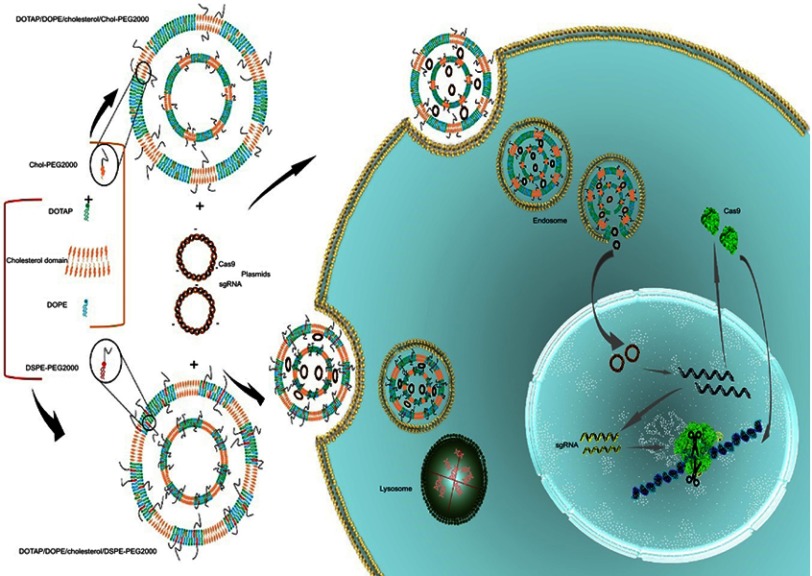
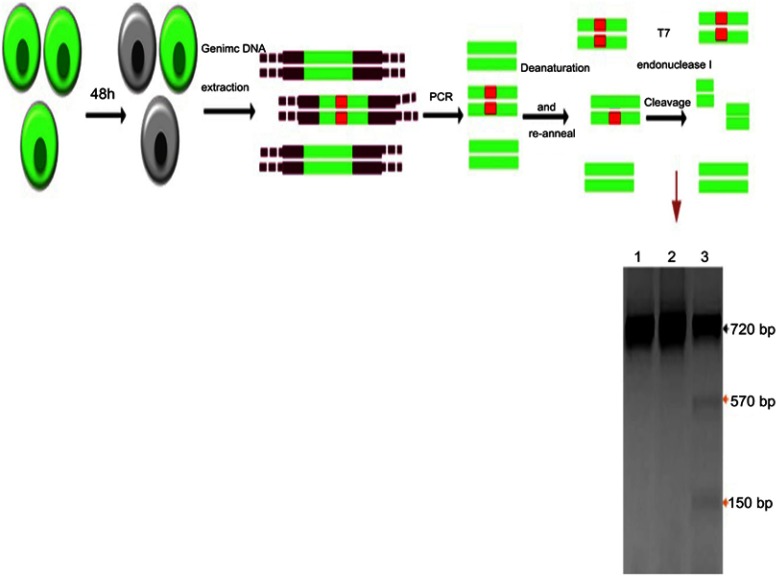
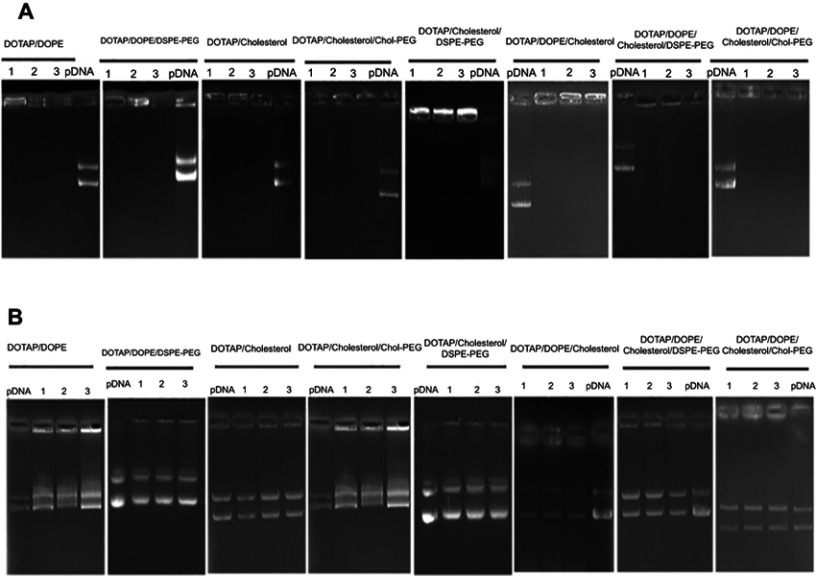
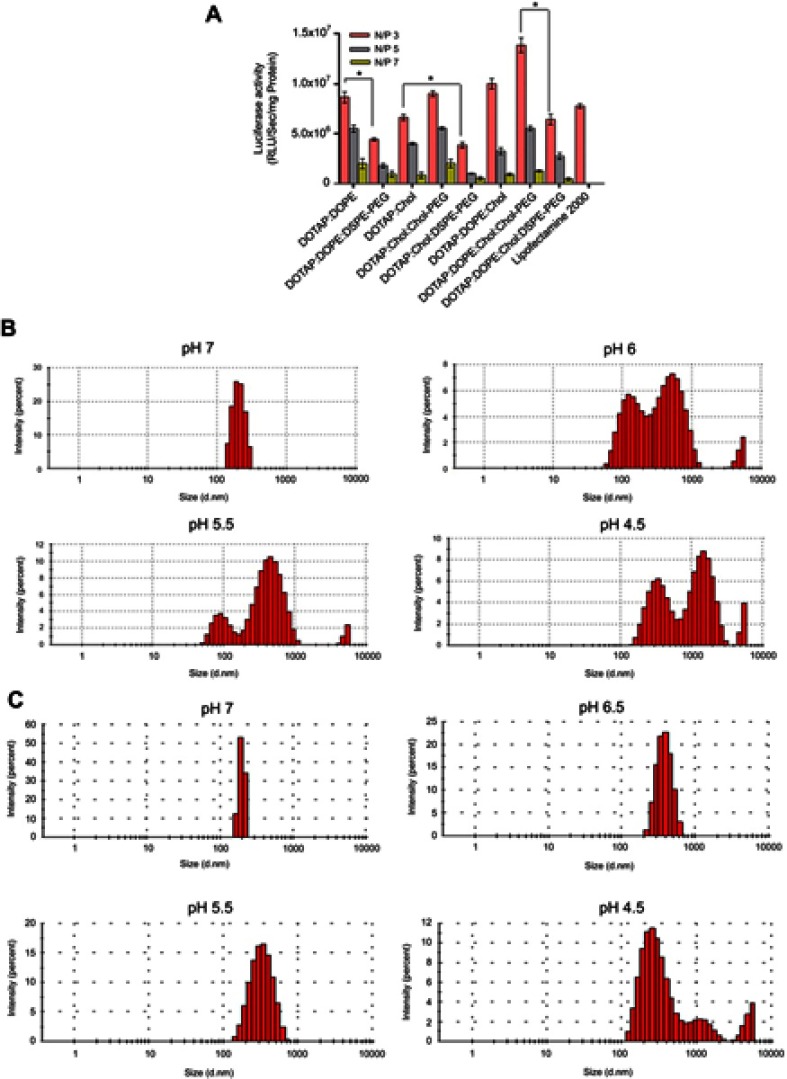
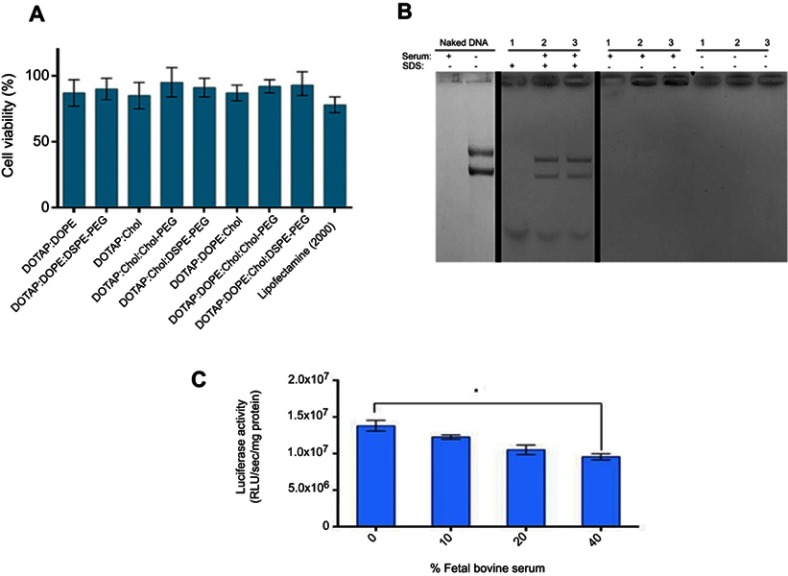
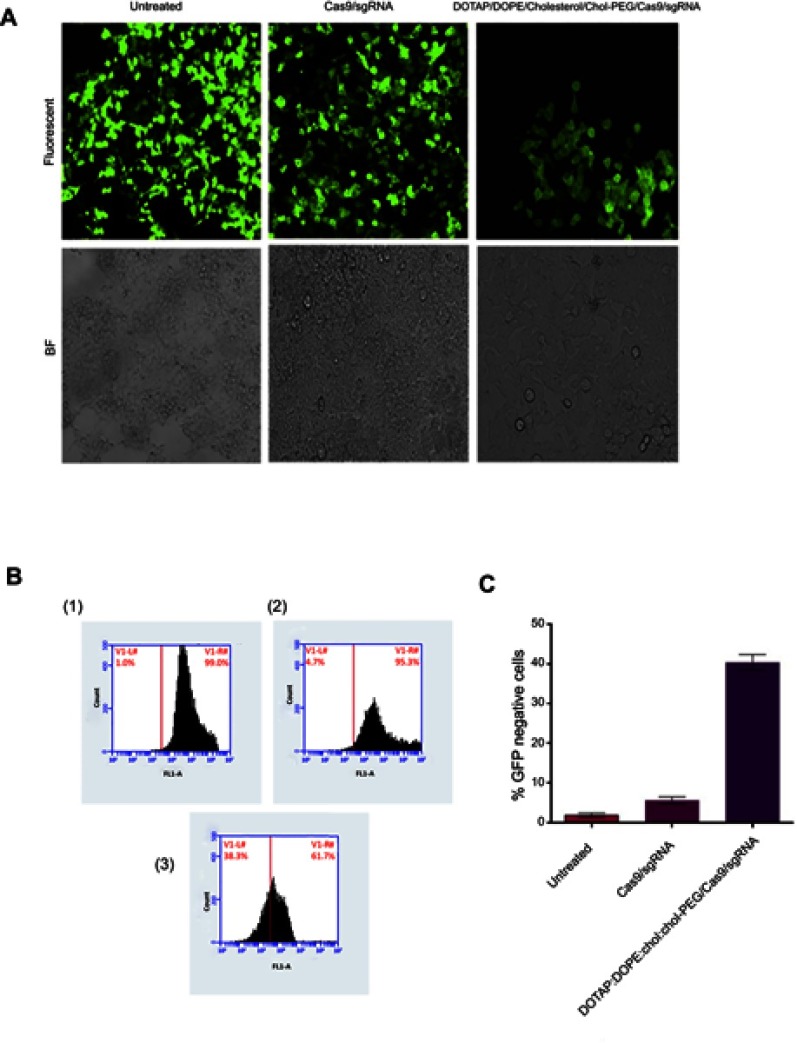
Gene therapy has become a promising remedy to treat disease by modifying the person's genes. The therapeutic potential of related tools such as CRISPR-Cas9 depends on the efficiency of delivery to the targeted cells. Numerous transfection reagents have been designed and lots of efforts have been devoted to develop carriers for this purpose. Therefore, the aim of the present study was to develop novel cholesterol-rich lipid-based nanoparticles to enhance transfection efficiency and serum stability. We constructed two-, three- and four-component cationic liposomes (CLs) to evaluate the combined effect of cholesterol domain and DOPE (dioleoyl phosphatidylethanolamine), a fusogenic lipid, and the PEG (polyethylene glycol) moiety location inside or outside of the cholesterol domain on transfection efficiency and other properties of the particle. Lipoplex formation and pDNA (plasmid DNA) entrapment were assessed by gel retardation assay at different N/P ratios (3, 5, 7). Physicochemical characteristics, cytotoxicity, serum stability and endosomal escape capability of the lipoplexes were studied and transfection potential was measured by firefly luciferase assay. Next, HEK293 cell line stably expressing GFP was utilized to demonstrate the editing of a reporter through Cas9 and sgRNA plasmids delivery by the selected CL formula, which showed the highest transfection efficiency. Among the designed CLs, the four-component formula [DOTAP (1,2-dioleoyl-3-trimethylammoniumpropane)/DOPE/cholesterol/Chol-PEG (cholesterol-polyethylene glycol)] showed the highest rate of transfection at N/P 3. Finally, transfection of Cas9/sgRNA by this formulation at N/P 3 resulted in 39% gene-editing efficiency to knockout GFP reporter. The results also show that this CL with no cytotoxicity effect can totally protect the plasmids from enzymatic degradation in serum. The novel PEGylated cholesterol domain lipoplex providing serum stability, higher transfection efficiency and endosomal release can be used for in vivo Cas9/sgRNA delivery and other future gene-therapy applications.
基因治疗通过修饰人的基因成为治疗疾病的一种有前途的方法。相关工具(如 CRISPR-Cas9)的治疗潜力取决于递送到靶向细胞的效率。已经设计了许多转染试剂,并为此目的投入了大量精力来开发载体。因此,本研究的目的是开发新型富含胆固醇的脂质纳米粒,以提高转染效率和血清稳定性。我们构建了二、三、四组分阳离子脂质体(CL),以评估胆固醇域内和外的 DOPE(二油酰基磷脂酰乙醇胺)、融合脂质和 PEG(聚乙二醇)部分位置对转染效率和颗粒其他性质的联合影响。在不同的 N/P 比(3、5、7)下,通过凝胶阻滞实验评估脂质体复合物的形成和 pDNA(质粒 DNA)包封。研究了脂质体的理化特性、细胞毒性、血清稳定性和内涵体逃逸能力,并通过萤火虫荧光素酶实验测量了转染潜力。接下来,使用稳定表达 GFP 的 HEK293 细胞系证明了通过 Cas9 和 sgRNA 质粒递送来编辑报告基因的能力,其中所选 CL 配方显示出最高的转染效率。在所设计的 CL 中,四组分配方 [DOTAP(1,2-二油酰基-3-三甲铵丙烷)/DOPE/胆固醇/Chol-PEG(胆固醇-聚乙二醇)] 在 N/P 为 3 时显示出最高的转染率。最后,在 N/P 为 3 时,该配方转染 Cas9/sgRNA 可使 GFP 报告基因的基因编辑效率达到 39%。结果还表明,这种无细胞毒性作用的新型 PEG 化胆固醇域脂质体可完全保护质粒免受血清中酶的降解。新型 PEG 化胆固醇域脂质体提供了血清稳定性、更高的转染效率和内涵体释放,可以用于 Cas9/sgRNA 的体内递送和其他未来的基因治疗应用。