Departamento de Bioquímica e Imunologia, Instituto de Ciências Biológicas, Universidade Federal de Minas Gerais, Belo Horizonte, MG, Brazil.
Instituto de Ensino e Pesquisa da Santa Casa de BH, Belo Horizonte, MG, Brazil.
Dis Markers. 2019 Jul 1;2019:7676189. doi: 10.1155/2019/7676189. eCollection 2019.
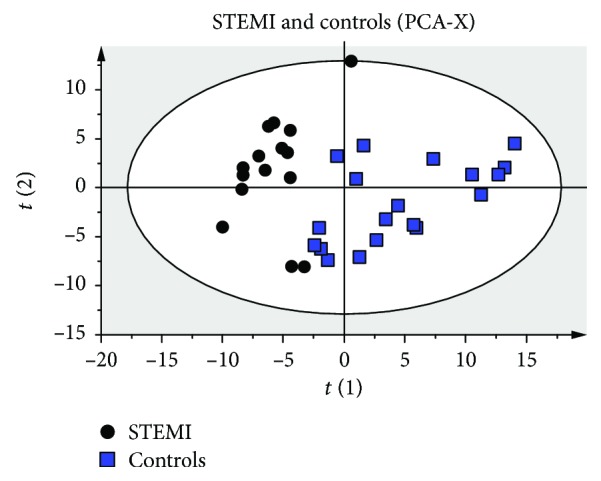
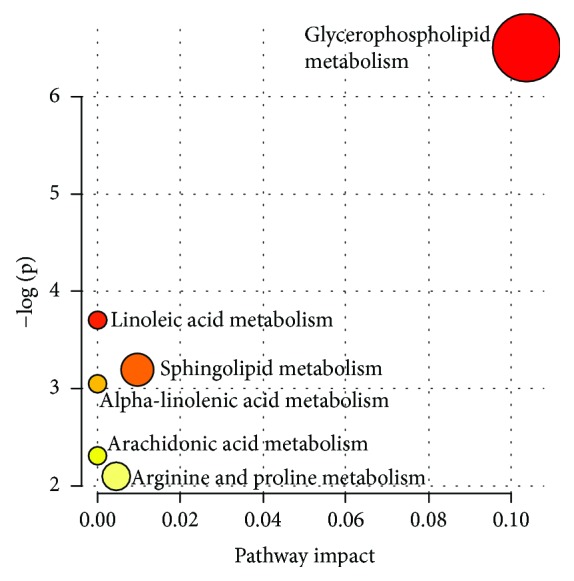
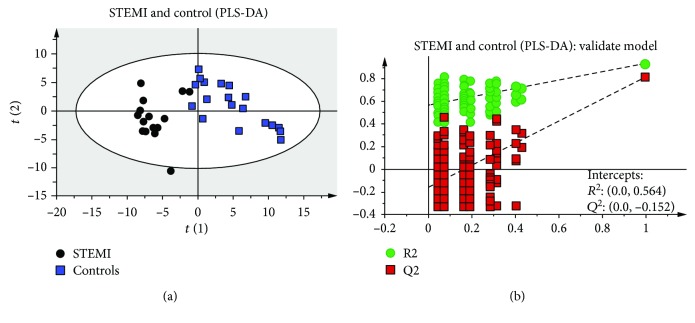
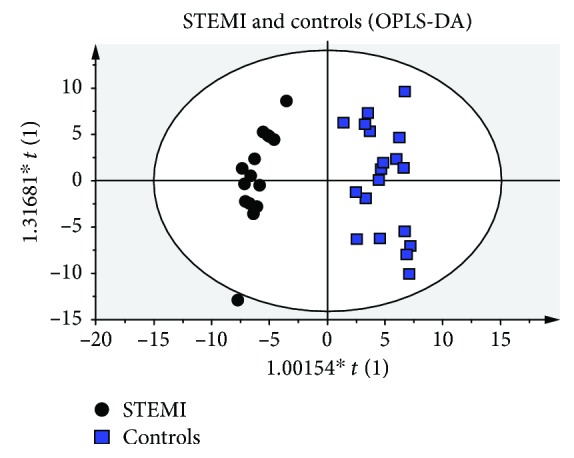
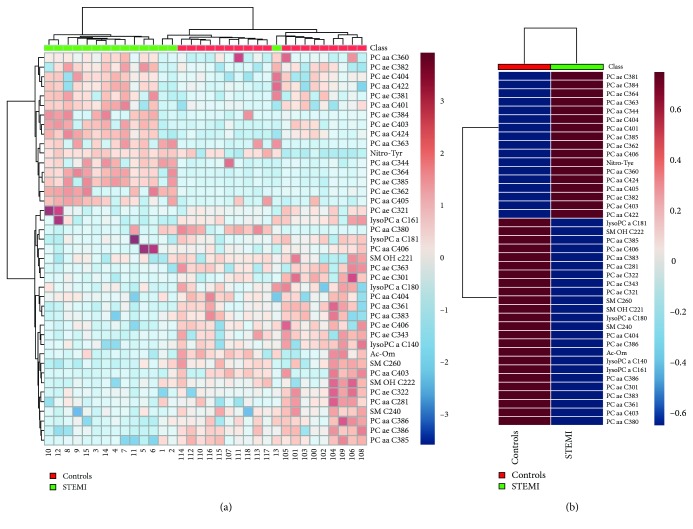
ST-segment elevation myocardial infarction (STEMI) is the most severe form of myocardial infarction (MI) and the main contributor to morbidity and mortality caused by MI worldwide. Frequently, STEMI is caused by complete and persistent occlusion of a coronary artery by a blood clot, which promotes heart damage. STEMI impairment triggers changes in gene transcription, protein expression, and metabolite concentrations, which grants a biosignature to the heart dysfunction. There is a major interest in identifying novel biomarkers that could improve the diagnosis of STEMI. In this study, the phenotypic characterization of STEMI patients ( = 15) and healthy individuals ( = 19) was performed, using a target metabolomics approach. Plasma samples were analyzed by UPLC-MS/MS (ultra-high-performance liquid chromatography-tandem mass spectrometry) and FIA-MS (MS-based flow injection analysis). The goal was to identify novel plasma biomarkers and metabolic signatures underlying STEMI. Concentrations of phosphatidylcholines, lysophosphatidylcholines, sphingomyelins, and biogenic amines were altered in STEMI patients in relation to healthy subjects. Also, after multivariate analysis, it was possible to identify alterations in the glycerophospholipids, alpha-linolenic acid, and sphingolipid metabolisms in STEMI patients.
ST 段抬高型心肌梗死(STEMI)是心肌梗死(MI)中最严重的一种形式,也是全球范围内由 MI 引起发病率和死亡率的主要原因。通常,STEMI 是由血凝块完全和持续阻塞冠状动脉引起的,这会导致心脏损伤。STEMI 损伤会引发基因转录、蛋白质表达和代谢物浓度的变化,为心脏功能障碍提供生物标志物。人们对识别新的生物标志物以改善 STEMI 的诊断非常感兴趣。在这项研究中,使用靶向代谢组学方法对 STEMI 患者(n=15)和健康个体(n=19)进行了表型特征分析。通过 UPLC-MS/MS(超高效液相色谱-串联质谱)和 FIA-MS(基于 MS 的流动注射分析)分析血浆样本。目的是确定 STEMI 患者的新型血浆生物标志物和代谢特征。与健康个体相比,STEMI 患者的磷脂酰胆碱、溶血磷脂酰胆碱、神经鞘磷脂和生物胺浓度发生了变化。此外,经过多元分析,还可以确定 STEMI 患者甘油磷脂、α-亚麻酸和鞘脂代谢的变化。