Watson Julie, D'Mello-Guyett Lauren, Flynn Erin, Falconer Jane, Esteves-Mills Joanna, Prual Alain, Hunter Paul, Allegranzi Benedetta, Montgomery Maggie, Cumming Oliver
Disease Control, London School of Hygiene and Tropical Medicine, Faculty of Infectious and Tropical Diseases, London, UK.
Infection and Immunity, South Australian Health and Medical Research Institute, Adelaide, South Australia, Australia.
BMJ Glob Health. 2019 Jul 8;4(4):e001632. doi: 10.1136/bmjgh-2019-001632. eCollection 2019.
Healthcare-associated infections (HCAIs) are the most frequent adverse event compromising patient safety globally. Patients in healthcare facilities (HCFs) in low-income and middle-income countries (LMICs) are most at risk. Although water, sanitation and hygiene (WASH) interventions are likely important for the prevention of HCAIs, there have been no systematic reviews to date.
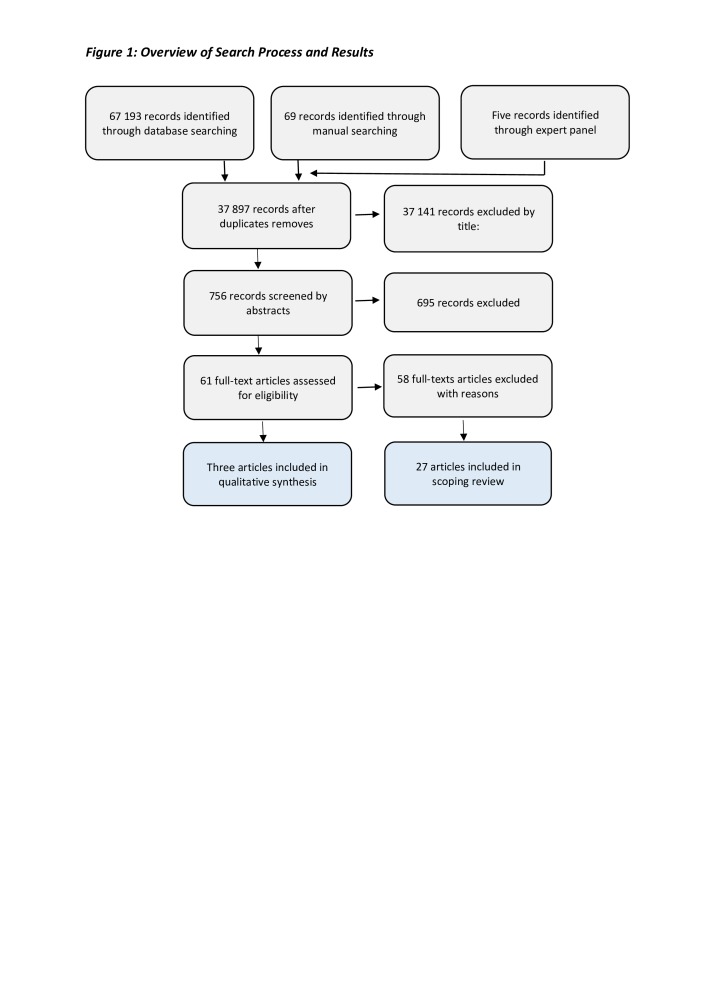
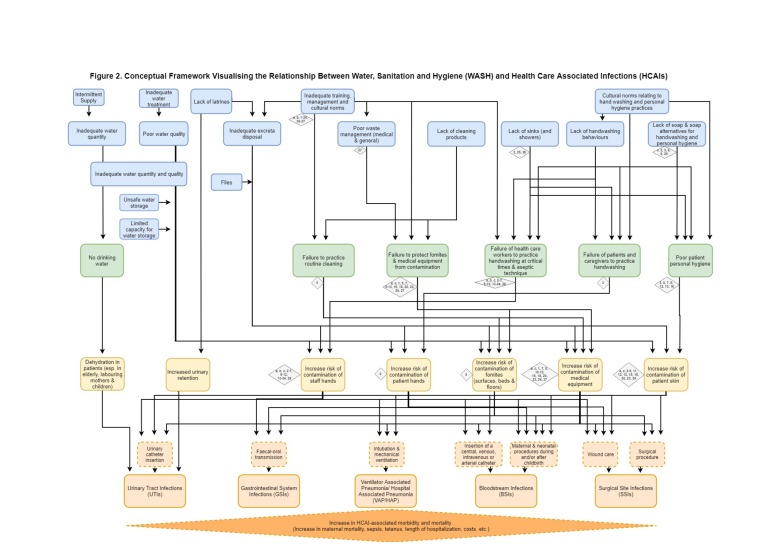
As per our prepublished protocol, we systematically searched academic databases, trial registers, WHO databases, grey literature resources and conference abstracts to identify studies assessing the impact of HCF WASH services and practices on HCAIs in LMICs. In parallel, we undertook a supplementary scoping review including less rigorous study designs to develop a conceptual framework for how WASH can impact HCAIs and to identify key literature gaps.
Only three studies were included in the systematic review. All assessed hygiene interventions and included: a cluster-randomised controlled trial, a cohort study, and a matched case-control study. All reported a reduction in HCAIs, but all were considered at medium-high risk of bias. The additional 27 before-after studies included in our scoping review all focused on hygiene interventions, none assessed improvements to water quantity, quality or sanitation facilities. 26 of the studies reported a reduction in at least one HCAI. Our scoping review identified multiple mechanisms by which WASH can influence HCAI and highlighted a number of important research gaps.
Although there is a dearth of evidence for the effect of WASH in HCFs, the studies of hygiene interventions were consistently protective against HCAIs in LMICs. Additional and higher quality research is urgently needed to fill this gap to understand how WASH services in HCFs can support broader efforts to reduce HCAIs in LMICs.
CRD42017080943.
医疗保健相关感染(HCAIs)是全球范围内影响患者安全的最常见不良事件。低收入和中等收入国家(LMICs)的医疗机构(HCFs)中的患者面临的风险最高。尽管水、环境卫生和个人卫生(WASH)干预措施可能对预防HCAIs很重要,但迄今为止尚无系统评价。
根据我们预先发表的方案,我们系统地检索了学术数据库、试验注册库、世卫组织数据库、灰色文献资源和会议摘要,以确定评估低收入和中等收入国家医疗机构WASH服务和做法对HCAIs影响的研究。同时,我们进行了一项补充性范围审查,纳入了不太严格的研究设计,以建立一个关于WASH如何影响HCAIs的概念框架,并确定关键的文献空白。
系统评价仅纳入了三项研究。所有研究均评估了卫生干预措施,包括:一项整群随机对照试验、一项队列研究和一项匹配病例对照研究。所有研究均报告HCAIs有所减少,但均被认为存在中高偏倚风险。我们范围审查中纳入的另外27项前后对照研究均侧重于卫生干预措施,没有一项评估水量、水质或卫生设施的改善情况。其中26项研究报告至少一种HCAI有所减少。我们的范围审查确定了WASH可以影响HCAI的多种机制,并突出了一些重要的研究空白。
尽管缺乏关于医疗机构中WASH效果的证据,但卫生干预措施的研究在低收入和中等收入国家始终对HCAIs具有预防作用。迫切需要更多高质量的研究来填补这一空白,以了解医疗机构中的WASH服务如何能够支持在低收入和中等收入国家减少HCAIs的更广泛努力。
CRD42017080943。