Abooalizadeh Zahra, Sudak Leszek Josef, Egberts Philip
Department of Mechanical and Manufacturing Engineering, University of Calgary, 40 Research Place NW, Calgary, Alberta T2L 1Y6, Canada.
Beilstein J Nanotechnol. 2019 Jul 3;10:1332-1347. doi: 10.3762/bjnano.10.132. eCollection 2019.
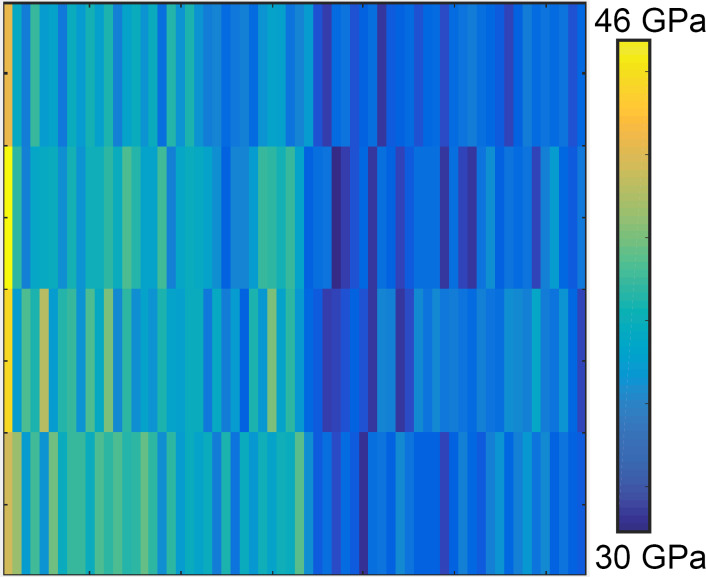
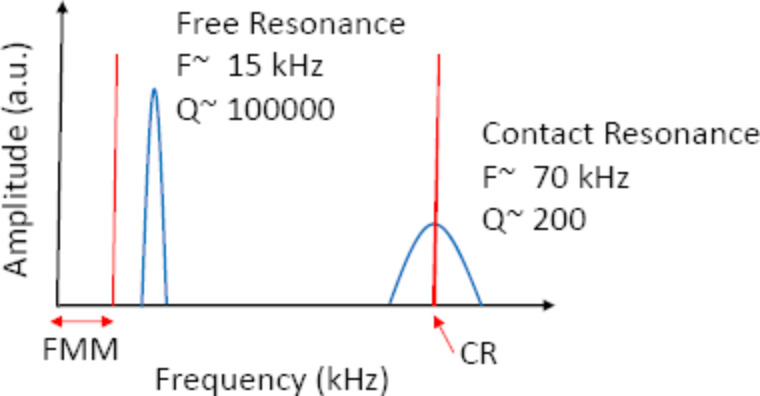
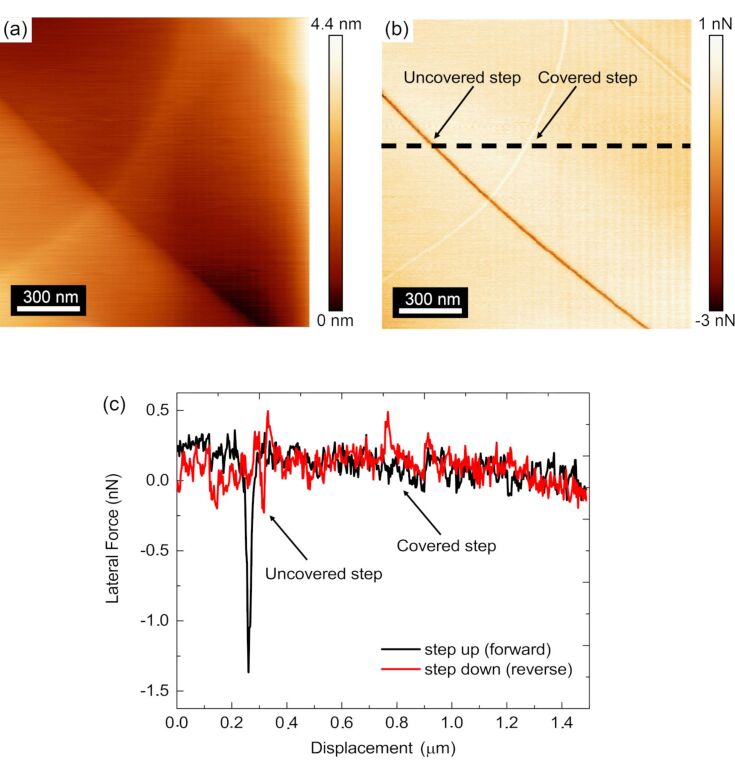
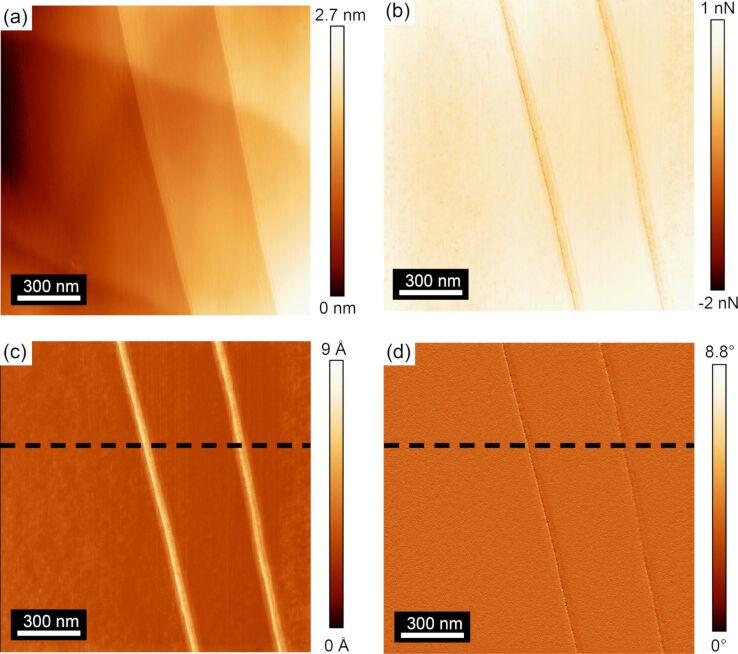
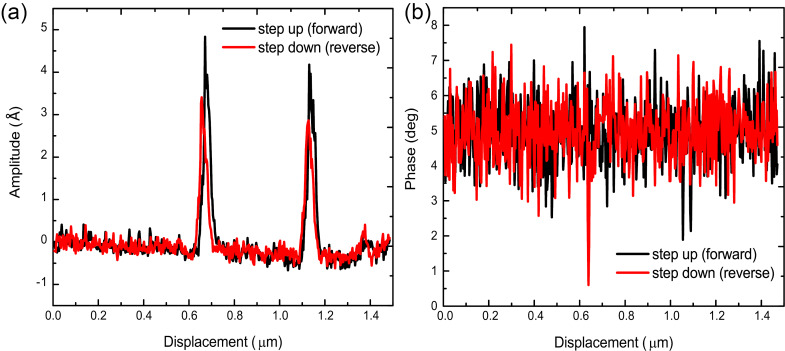
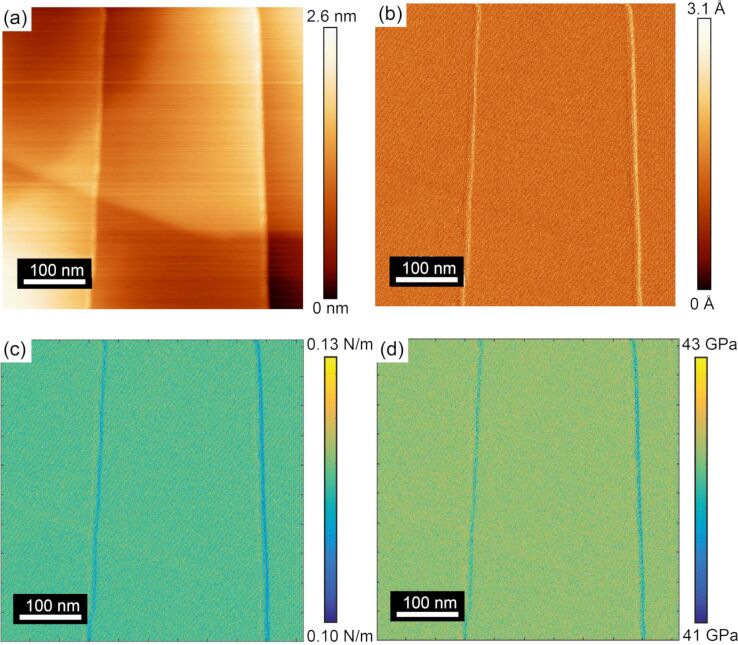
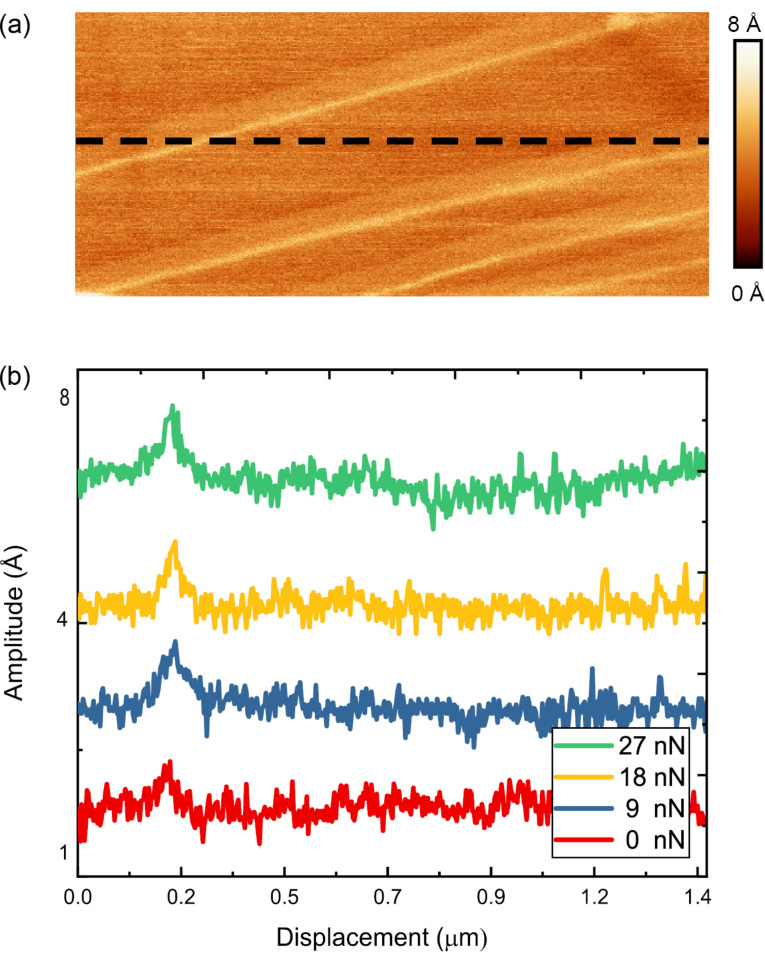
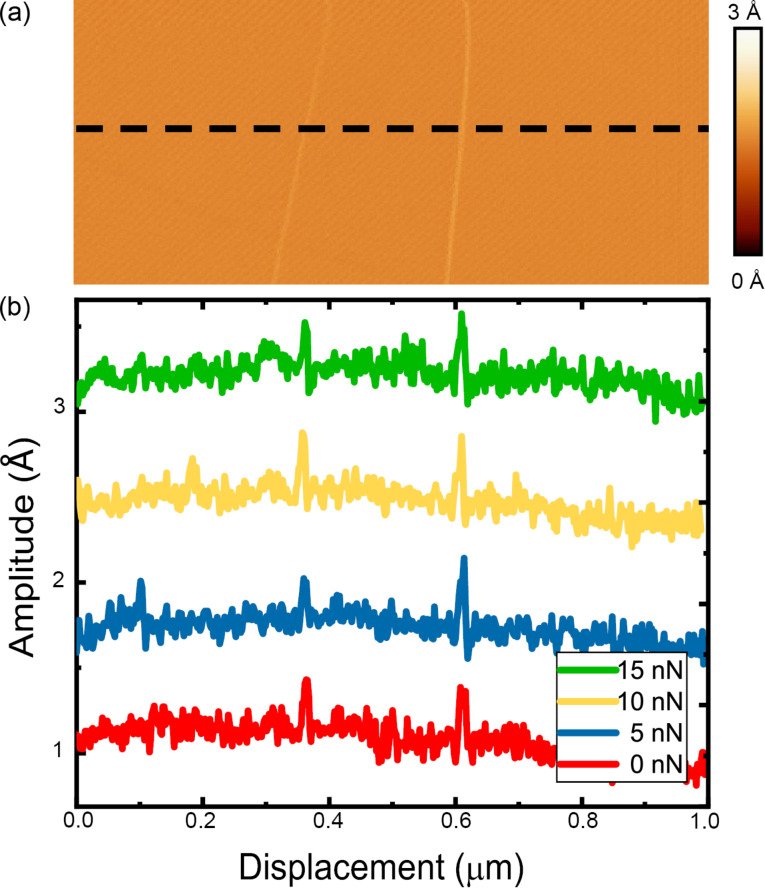
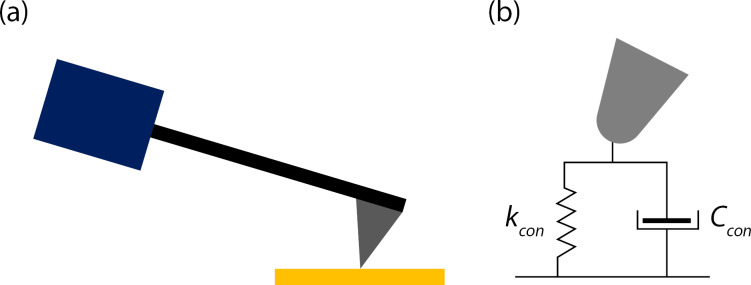
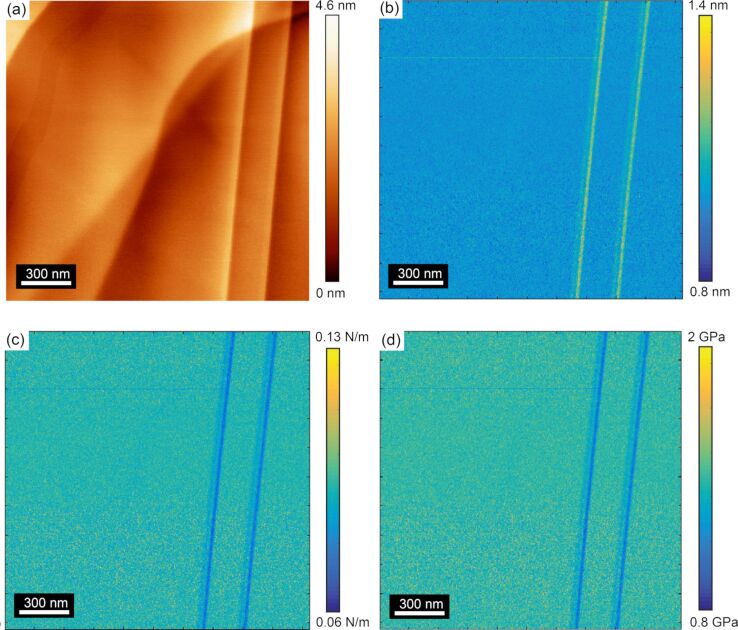
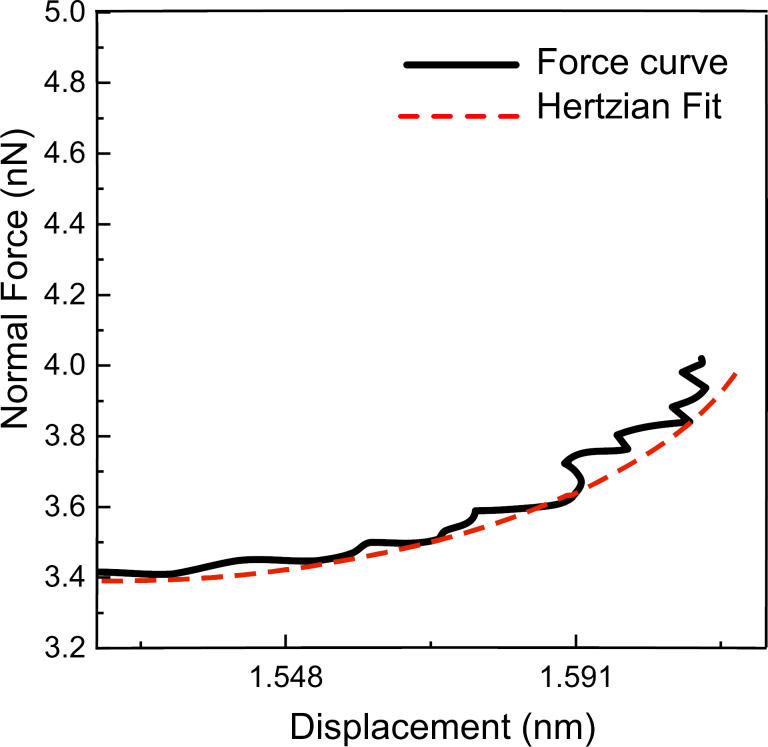
Dynamic atomic force microscopy (AFM) was employed to spatially map the elastic modulus of highly oriented pyrolytic graphite (HOPG), specifically by using force modulation microscopy (FMM) and contact resonance (CR) AFM. In both of these techniques, a variation in the amplitude signal was observed when scanning over an uncovered step edge of HOPG. In comparison, no variation in the amplitude signal was observed when scanning over a covered step on the same surface. These observations qualitatively indicate that there is a variation in the elastic modulus over uncovered steps and no variation over covered ones. The quantitative results of the elastic modulus required the use of FMM, while the CR mode better highlighted areas of reduced elastic modulus (although it was difficult to convert the data into a quantifiable modulus). In the FMM measurements, single atomic steps of graphene with uncovered step edges showed a decrease in the elastic modulus of approximately 0.5%, which is compared with no change in the elastic modulus for covered steps. The analysis of the experimental data taken under varying normal loads and with several different tips showed that the elastic modulus determination was unaffected by these parameters.
动态原子力显微镜(AFM)被用于对高度取向热解石墨(HOPG)的弹性模量进行空间映射,具体是通过使用力调制显微镜(FMM)和接触共振(CR)原子力显微镜来实现的。在这两种技术中,当扫描HOPG未覆盖的台阶边缘时,观察到振幅信号有变化。相比之下,在同一表面上扫描覆盖的台阶时,未观察到振幅信号的变化。这些观察结果定性地表明,未覆盖台阶上的弹性模量存在变化,而覆盖台阶上则没有变化。弹性模量的定量结果需要使用FMM,而CR模式能更好地突出弹性模量降低的区域(尽管难以将数据转换为可量化的模量)。在FMM测量中,具有未覆盖台阶边缘的石墨烯单原子台阶的弹性模量下降了约0.5%,而覆盖台阶的弹性模量没有变化。对在不同法向载荷下以及使用几种不同探针获取的实验数据进行分析表明,弹性模量的测定不受这些参数的影响。