Boudet Gil, Chausse Pierre, Thivel David, Rousset Sylvie, Mermillod Martial, Baker Julien S, Parreira Lenise M, Esquirol Yolande, Duclos Martine, Dutheil Frédéric
Faculté de Médecine, Institut de Médecine du Travail, Université Clermont-Auvergne, Clermont-Ferrand, France.
Cellule d'Accompagnement Technologique-Department of Technological Accompaniment, CNRS, LaPSCo, Université Clermont Auvergne, Clermont-Ferrand, France.
Front Public Health. 2019 Jul 5;7:167. doi: 10.3389/fpubh.2019.00167. eCollection 2019.
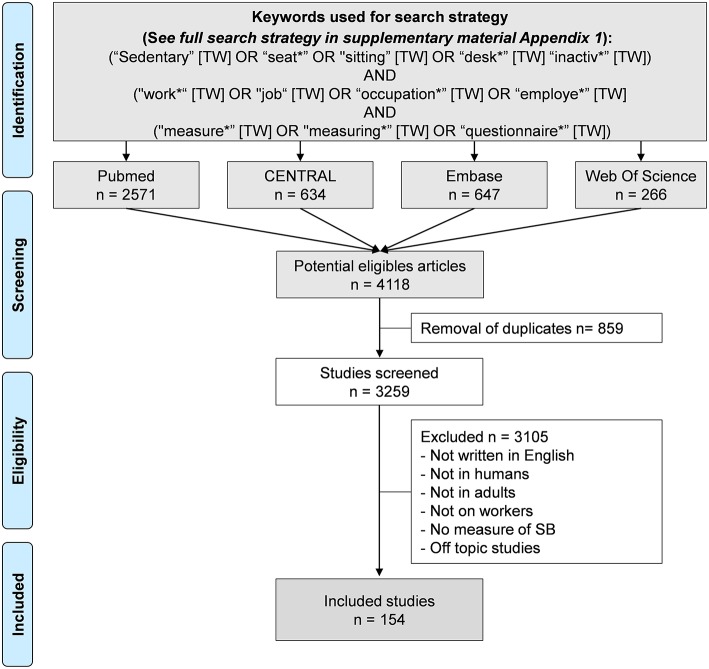
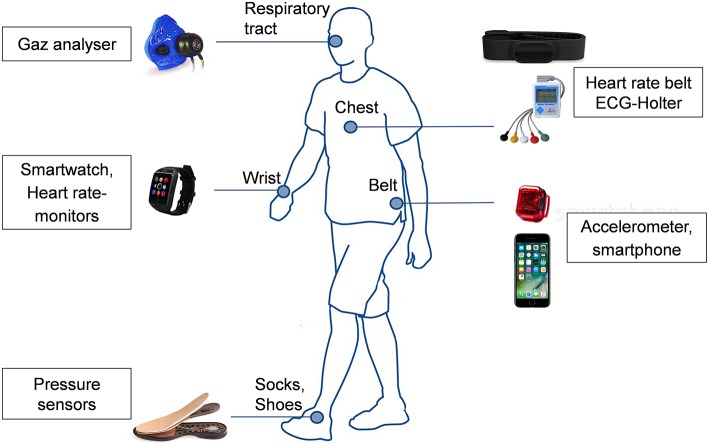
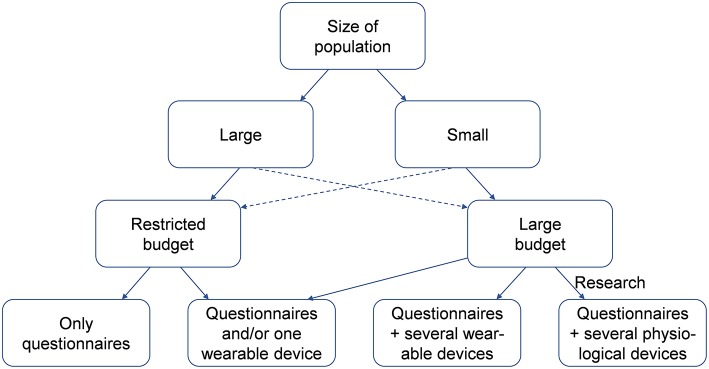
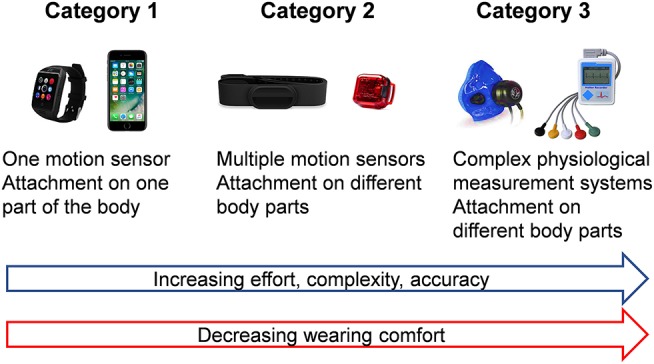
Prolonged sedentary behavior (SB) is associated with increased risk for chronic conditions. A growing number of the workforce is employed in office setting with high occupational exposure to SB. There is a new focus in assessing, understanding and reducing SB in the workplace. There are many subjective (questionnaires) and objective methods (monitoring with wearable devices) available to determine SB. Therefore, we aimed to provide a global understanding on methods currently used for SB assessment at work. We carried out a systematic review on methods to measure SB at work. Pubmed, Cochrane, Embase, and Web of Science were searched for peer-reviewed English-language articles published between 1st January 2000 and 17th March 2019. We included 154 articles: 89 were cross-sectional and 65 were longitudinal studies, for a total of 474,091 participants. SB was assessed by self-reported questionnaires in 91 studies, by wearables devices in also 91 studies, and simultaneously by a questionnaire and wearables devices in 30 studies. Among the 91 studies using wearable devices, 73 studies used only one device, 15 studies used several devices, and three studies used complex physiological systems. Studies exploring SB on a large sample used significantly more only questionnaires and/or one wearable device. Available questionnaires are the most accessible method for studies on large population with a limited budget. For smaller groups, SB at work can be objectively measured with wearable devices (accelerometers, heart-rate monitors, pressure meters, goniometers, electromyography meters, gas-meters) and the results can be associated and compared with a subjective measure (questionnaire). The number of devices worn can increase the accuracy but make the analysis more complex and time consuming.
长时间久坐行为(SB)与慢性病风险增加相关。越来越多的劳动力受雇于办公室环境,职业性久坐暴露程度高。目前在工作场所评估、理解和减少久坐行为方面有了新的关注点。有许多主观方法(问卷调查)和客观方法(使用可穿戴设备进行监测)可用于确定久坐行为。因此,我们旨在全面了解目前在工作中用于评估久坐行为的方法。我们对工作中测量久坐行为的方法进行了系统综述。在PubMed、Cochrane、Embase和科学网中搜索了2000年1月1日至2019年3月17日发表的同行评审英文文章。我们纳入了154篇文章:89篇为横断面研究,65篇为纵向研究,共有474,091名参与者。在91项研究中通过自我报告问卷评估久坐行为,91项研究中通过可穿戴设备评估,30项研究中同时通过问卷和可穿戴设备评估。在使用可穿戴设备的91项研究中,73项研究仅使用一种设备,15项研究使用多种设备,3项研究使用复杂的生理系统。对大量样本进行久坐行为研究时,显著更多地仅使用问卷和/或一种可穿戴设备。对于预算有限的大规模人群研究,现有的问卷是最容易获得的方法。对于较小的群体,工作中的久坐行为可以通过可穿戴设备(加速度计、心率监测器、压力计、测角仪、肌电图仪、气体测量仪)进行客观测量,结果可以与主观测量方法(问卷)进行关联和比较。佩戴的设备数量可以提高准确性,但会使分析更加复杂和耗时。