Merino Maria Cecilia, Guidarelli Michela, Negrini Francesca, De Biase Dario, Pession Annalisa, Baraldi Elena
Department of Agricultural and Food Sciences (DISTAL), University of Bologna, viale Fanin 44, Bologna, Italy.
Department of Pharmacy and Biotechnology, University of Bologna, Via San Giacomo 14, Bologna, 40126, Italy.
Mol Plant Pathol. 2019 Sep;20(9):1252-1263. doi: 10.1111/mpp.12837. Epub 2019 Jul 29.
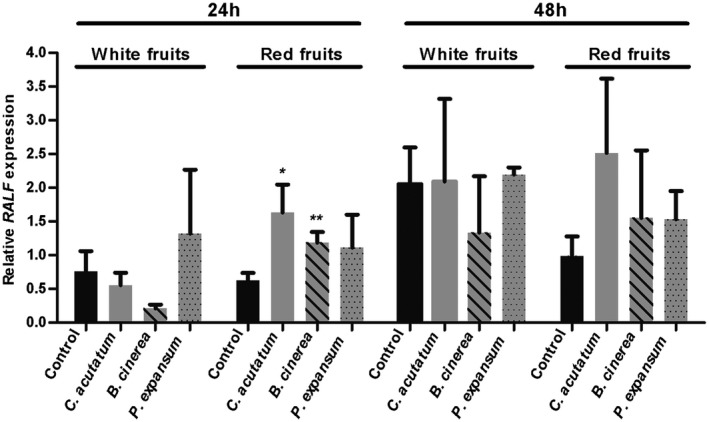
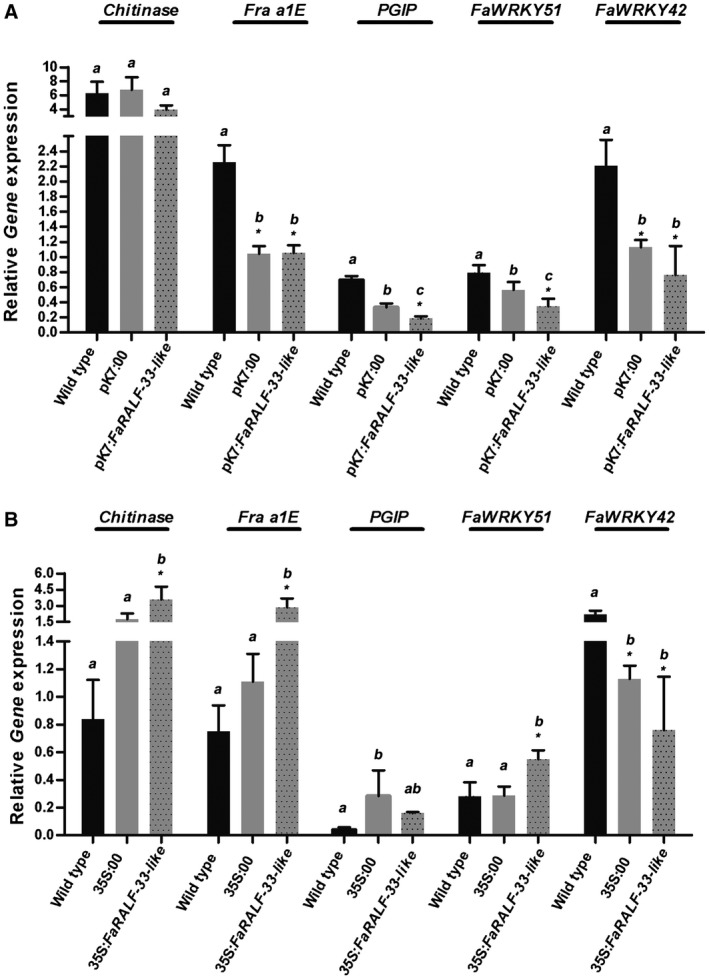
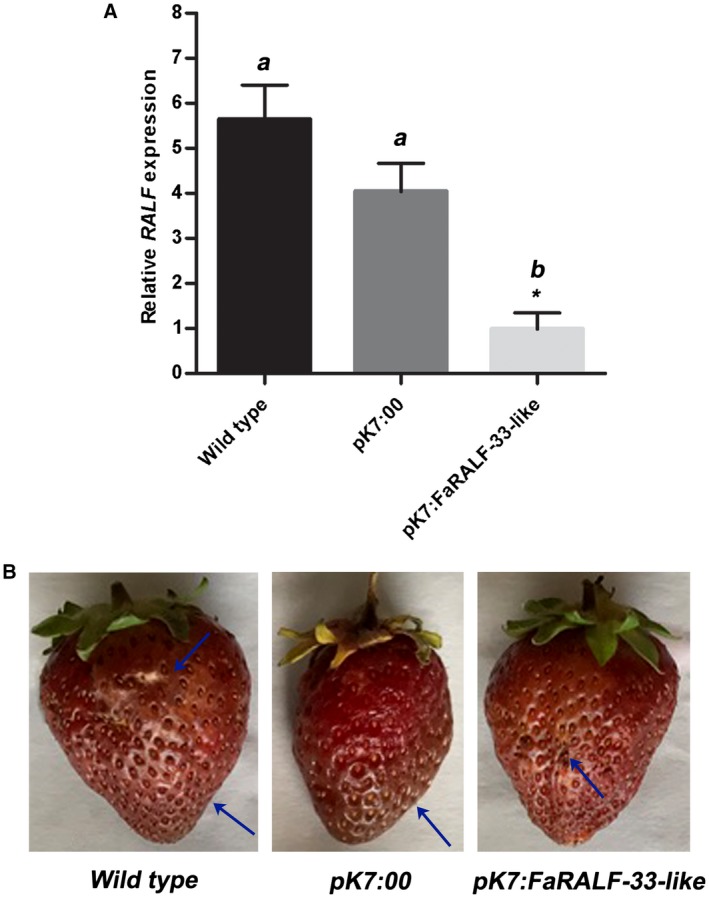
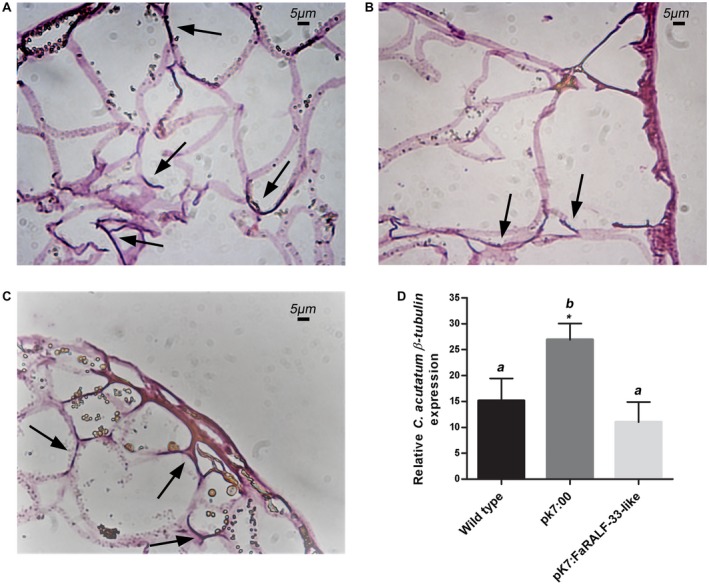
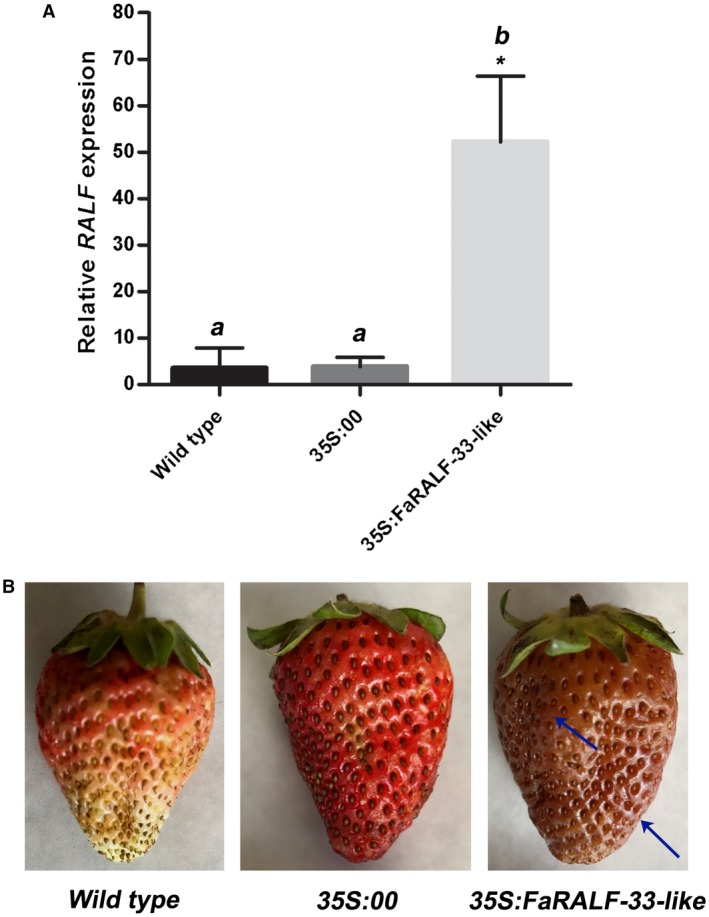
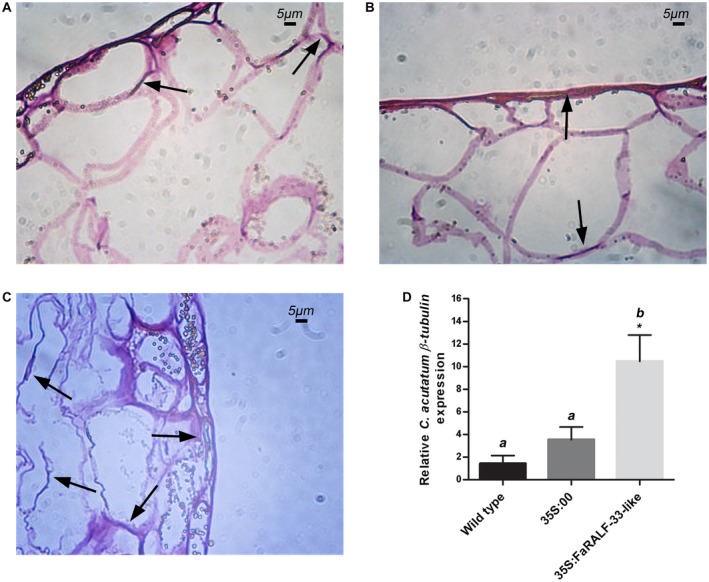
Rapid alkalinization factor (RALF) genes encode for ubiquitous small peptides that stimulate apoplastic alkalinization through interaction with malectin-like receptor kinase. RALF peptides may act as negative regulators of plant immune response, inhibiting the formation of the signal receptor complex for immune activation. Recently RALF homologues were identified in different fungal pathogen genomes contributing to host infection ability. Here, FaRALF-33-like gene expression was evaluated in strawberry fruits inoculated with Colletotrichum acutatum, Botrytis cinerea, or Penicillium expansum after 24 and 48 h post-infection. To investigate the role of FaRALF-33-like in strawberry susceptibility, transient transformation was used to overexpress it in white unripe fruits and silence it in red ripe fruits. Agroinfiltrated fruits were inoculated with C. acutatum and expression, and histological analysis of infection were performed. Silencing of FaRALF-33-like expression in C. acutatum-inoculated red fruits led to a delay in fruit colonization by the fungal pathogen, and infected tissues showed less penetrated infective hyphae than in wild-type fruits. In contrast, C. acutatum-inoculated white unripe fruits overexpressing the FaRALF-33-like gene decreased the ontogenic resistance of these fruits, leading to the appearance of disease symptoms and penetrated subcuticular hyphae, normally absent in white unripe fruits. The different response of transfected strawberry fruits to C. acutatum supports the hypothesis that the FaRALF-33-like gene plays an important role in the susceptibility of fruits to the fungal pathogen C. acutatum.
快速碱化因子(RALF)基因编码普遍存在的小肽,这些小肽通过与类Malectin受体激酶相互作用刺激质外体碱化。RALF肽可能作为植物免疫反应的负调节因子,抑制免疫激活信号受体复合物的形成。最近,在不同的真菌病原体基因组中鉴定出RALF同源物,其有助于宿主感染能力。在此,在接种尖孢炭疽菌、灰葡萄孢或扩展青霉24小时和48小时后的草莓果实中评估了FaRALF-33-like基因的表达。为了研究FaRALF-33-like在草莓易感性中的作用,采用瞬时转化在白色未成熟果实中过表达该基因,并在红色成熟果实中使其沉默。用尖孢炭疽菌对接种了农杆菌浸润果实进行接种,并进行感染的表达和组织学分析。在接种尖孢炭疽菌的红色果实中沉默FaRALF-33-like基因的表达导致真菌病原体在果实中定殖的延迟,并且与野生型果实相比,受感染组织中穿透的侵染菌丝较少。相反,过表达FaRALF-33-like基因的接种尖孢炭疽菌的白色未成熟果实降低了这些果实的个体发育抗性,导致出现疾病症状和穿透的皮下菌丝,而白色未成熟果实中通常不存在这些菌丝。转染的草莓果实对尖孢炭疽菌的不同反应支持了FaRALF-33-like基因在果实对真菌病原体尖孢炭疽菌的易感性中起重要作用的假设。