Departamento de Inmunobioquímica, Instituto Nacional de Perinatología Isidro Espinosa de los Reyes, Ciudad de México 11000, Mexico.
Departamento de Infectología e Inmunología, Instituto Nacional de Perinatología Isidro Espinosa de los Reyes, Ciudad de México 11000, Mexico.
Int J Mol Sci. 2019 Jul 26;20(15):3654. doi: 10.3390/ijms20153654.
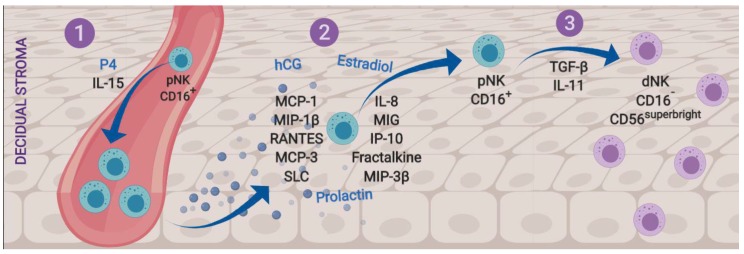
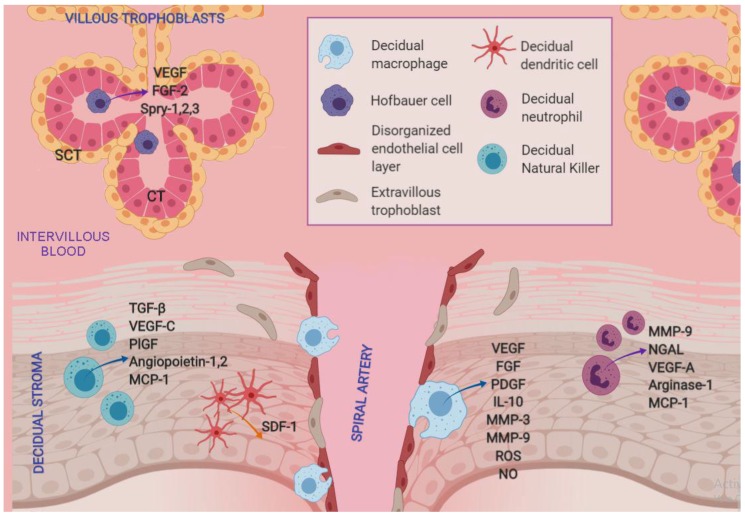
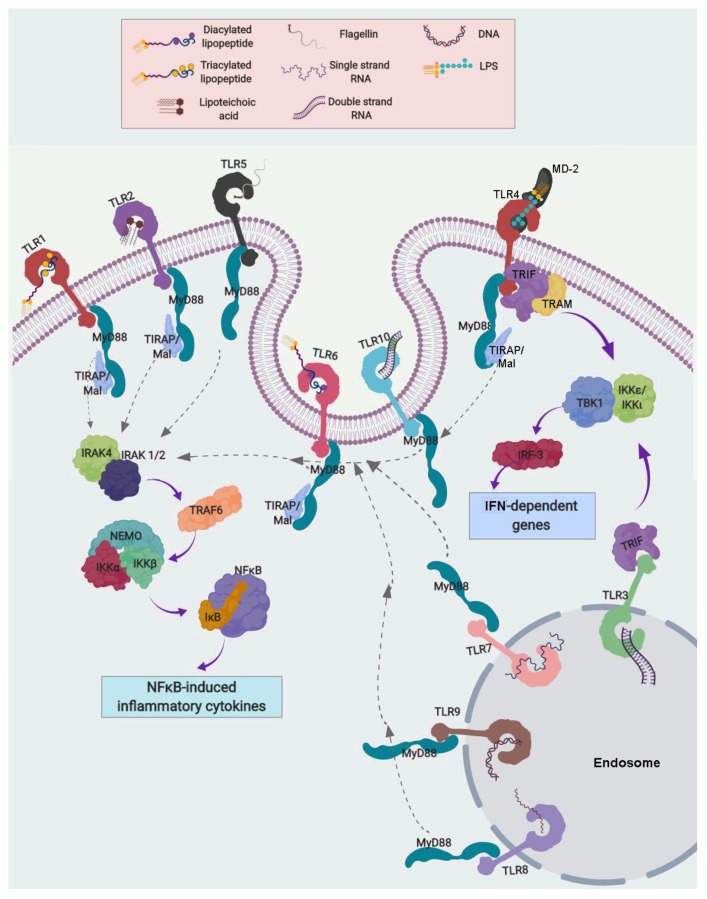
During pregnancy, the placenta, the mother and the fetus exploit several mechanisms in order to avoid fetal rejection and to maintain an immunotolerant environment throughout nine months. During this time, immune cells from the fetal and maternal compartments interact to provide an adequate defense in case of an infection and to promote a tolerogenic milieu for the fetus to develop peacefully. Trophoblasts and decidual cells, together with resident natural killer cells, dendritic cells, Hofbauer cells and other macrophages, among other cell types, contribute to the modulation of the uterine environment to sustain a successful pregnancy. In this review, the authors outlined some of the various roles that the innate immune system plays at the maternal-fetal interface. First, the cell populations that are recruited into gestational tissues and their immune mechanisms were examined. In the second part, the Toll-like receptor (TLR)-dependent immune responses at the maternal-fetal interface was summarized, in terms of their specific cytokine/chemokine/antimicrobial peptide expression profiles throughout pregnancy.
在妊娠期间,胎盘、母亲和胎儿利用几种机制来避免胎儿排斥,并在九个月内维持免疫耐受环境。在此期间,胎儿和母体隔室的免疫细胞相互作用,以在感染时提供适当的防御,并为胎儿的和平发育促进耐受环境。滋养层细胞和蜕膜细胞,连同常驻自然杀伤细胞、树突状细胞、Hofbauer 细胞和其他巨噬细胞等细胞类型,有助于调节子宫环境以维持成功的妊娠。在这篇综述中,作者概述了先天免疫系统在母体-胎儿界面所起的各种作用。首先,检查了募集到妊娠组织中的细胞群体及其免疫机制。在第二部分,总结了母体-胎儿界面 TLR 依赖性免疫反应,包括整个妊娠期间特定细胞因子/趋化因子/抗菌肽的表达谱。