Benyettou Farah, Prakasam Thirumurugan, Ramdas Nair Anjana, Witzel Ini-Isabee, Alhashimi Marwa, Skorjanc Tina, Olsen John-Carl, Sadler Kirsten C, Trabolsi Ali
Program in Chemistry , New York University Abu Dhabi , UAE . Email:
Program in Biology , New York University Abu Dhabi , UAE.
Chem Sci. 2019 May 22;10(23):5884-5892. doi: 10.1039/c9sc01218d. eCollection 2019 Jun 21.
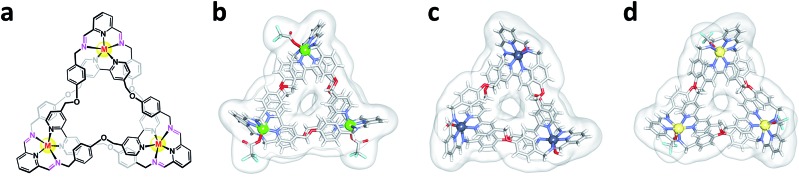
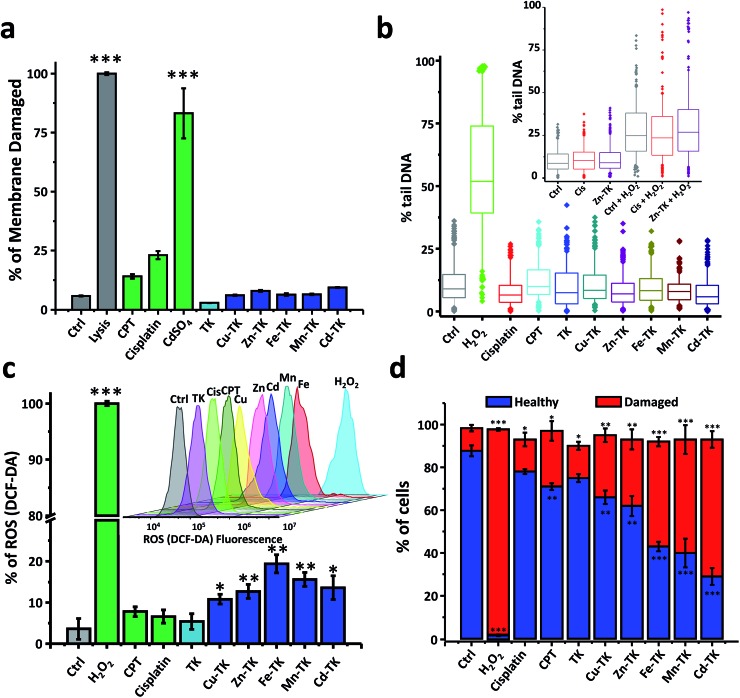
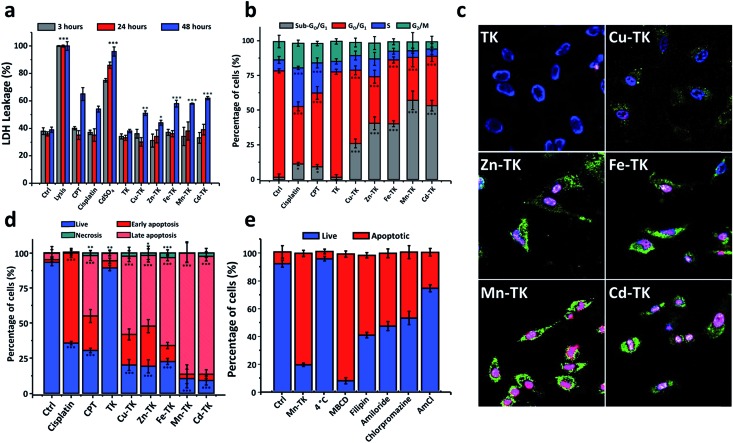
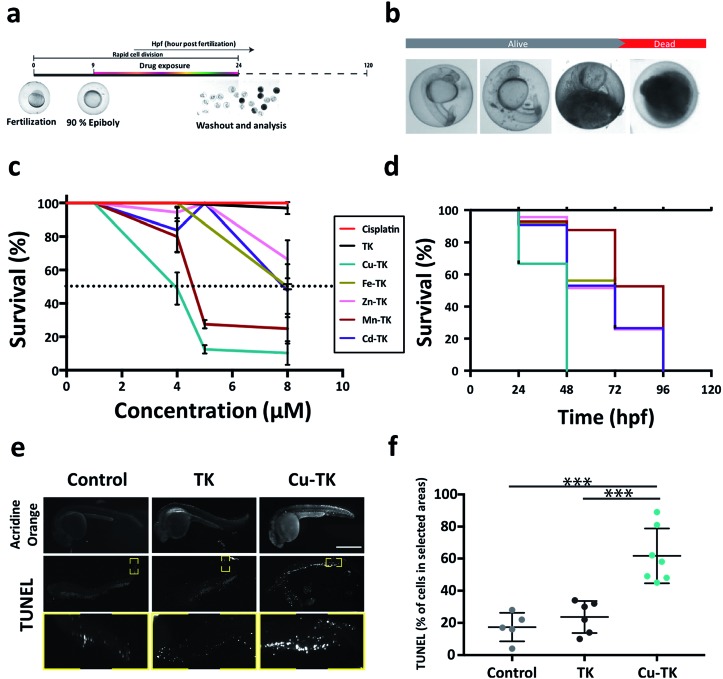
A set of metal-organic trefoil knots (M-TKs) generated by metal-templated self-assembly of a simple pair of chelating ligands were well tolerated by non-cancer cells but were significantly more potent than cisplatin in both human cancer cells--including those resistant to cisplatin--and in zebrafish embryos. In cultured cells, M-TKs generated reactive oxygen species that triggered apoptosis the mitochondrial pathway without directly disrupting the cell-membrane or damaging nuclear DNA. The cytotoxicity and wide scope for structural variation of M-TKs indicate the potential of synthetic metal-organic knots as a new field of chemical space for pharmaceutical design and development.
通过一对简单螯合配体的金属模板自组装生成的一组金属有机三叶结(M-TKs)在非癌细胞中耐受性良好,但在人类癌细胞(包括对顺铂耐药的细胞)和斑马鱼胚胎中,其效力明显高于顺铂。在培养细胞中,M-TKs产生活性氧,通过线粒体途径触发细胞凋亡,而不会直接破坏细胞膜或损伤核DNA。M-TKs的细胞毒性和广泛的结构变异范围表明,合成金属有机结作为药物设计和开发的化学空间新领域具有潜力。