Department of Biocybernetics and Biomedical Engineering, Faculty of Mechanical Engineering, Bialystok University of Technology, Bialystok 15-351, Poland.
Biomed Res Int. 2019 Jul 8;2019:6067952. doi: 10.1155/2019/6067952. eCollection 2019.
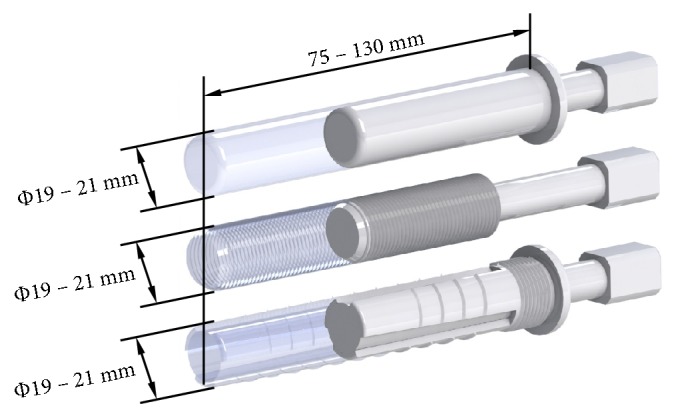
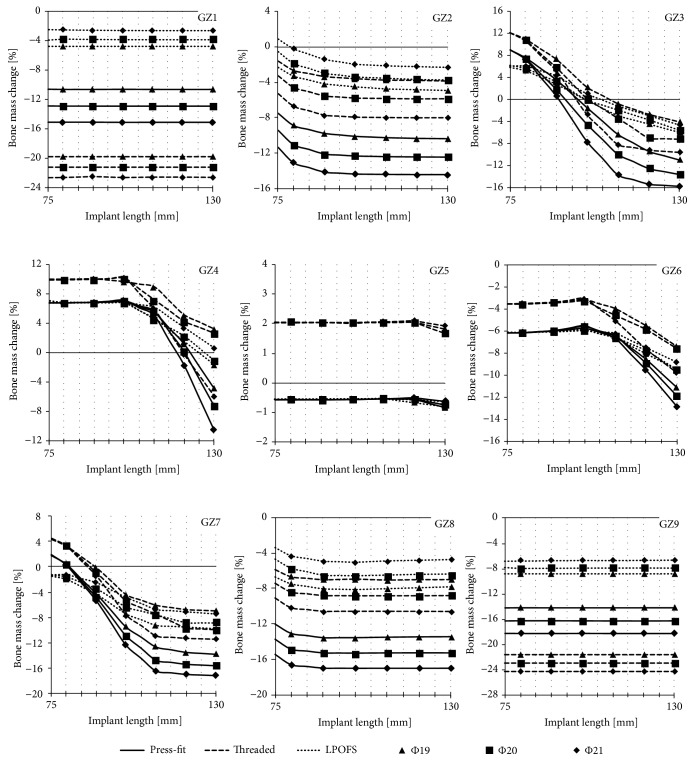
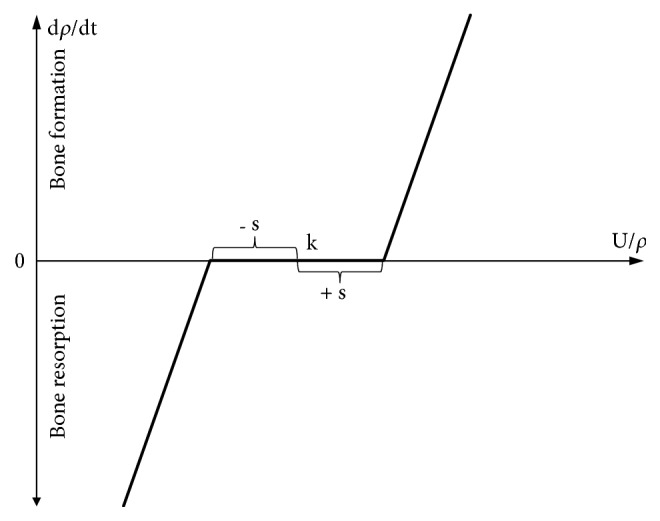
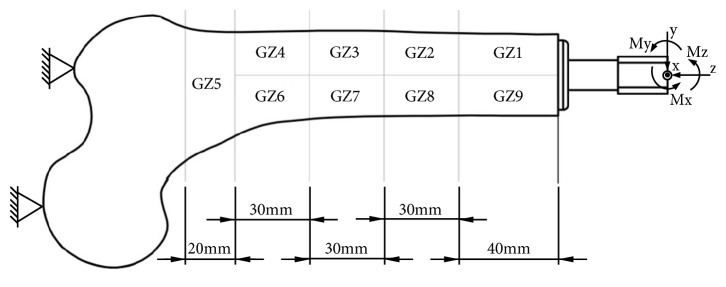
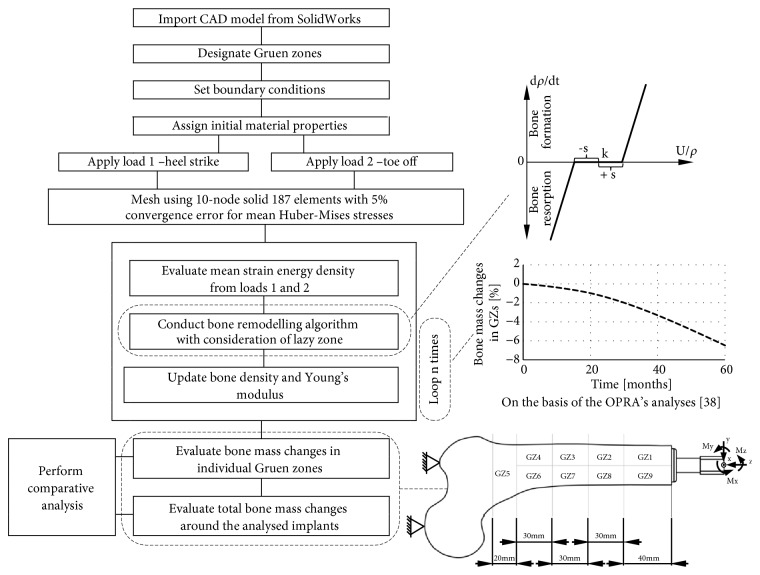
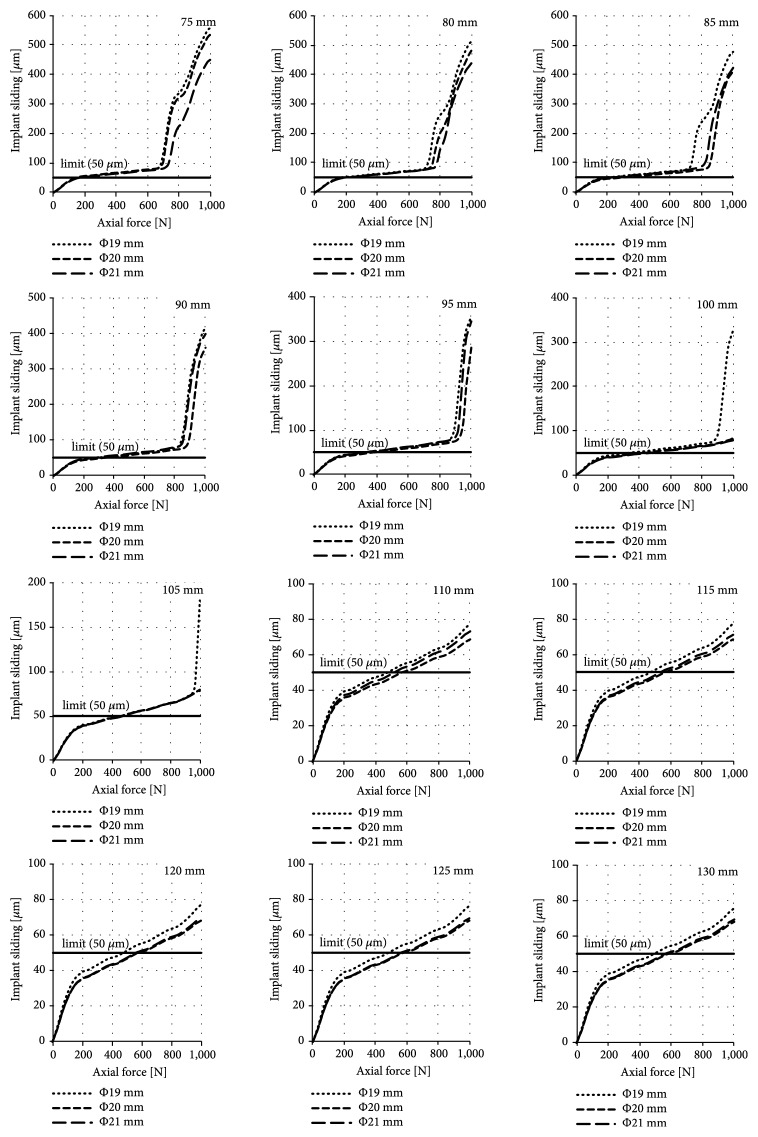
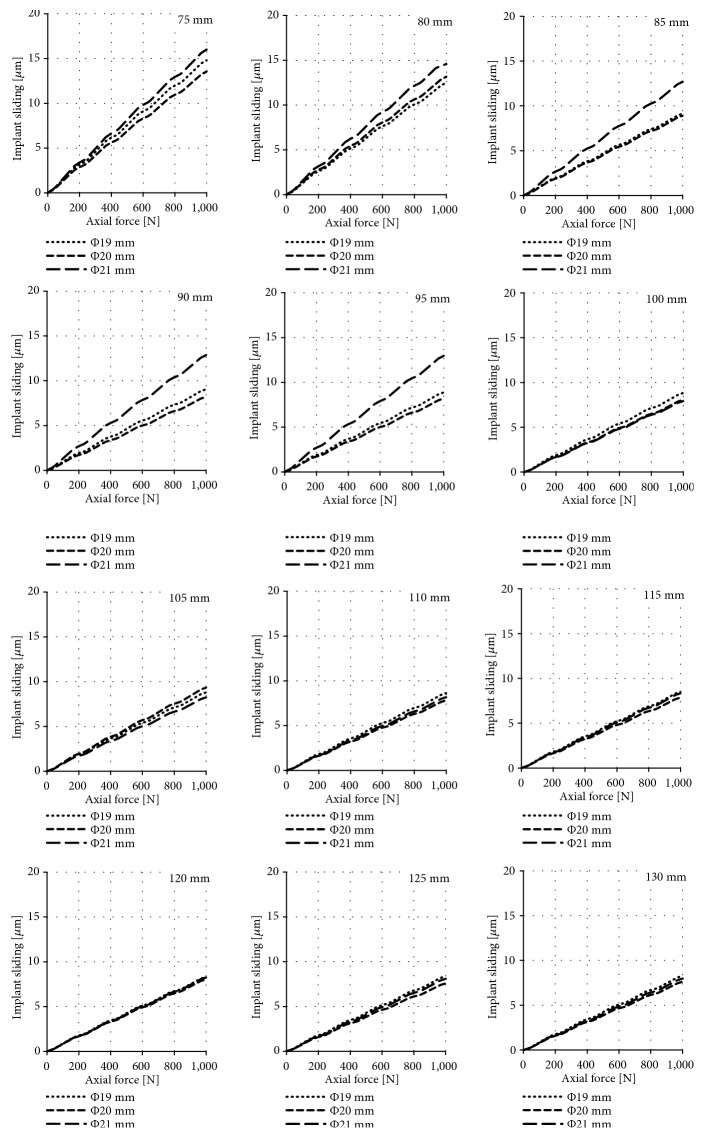
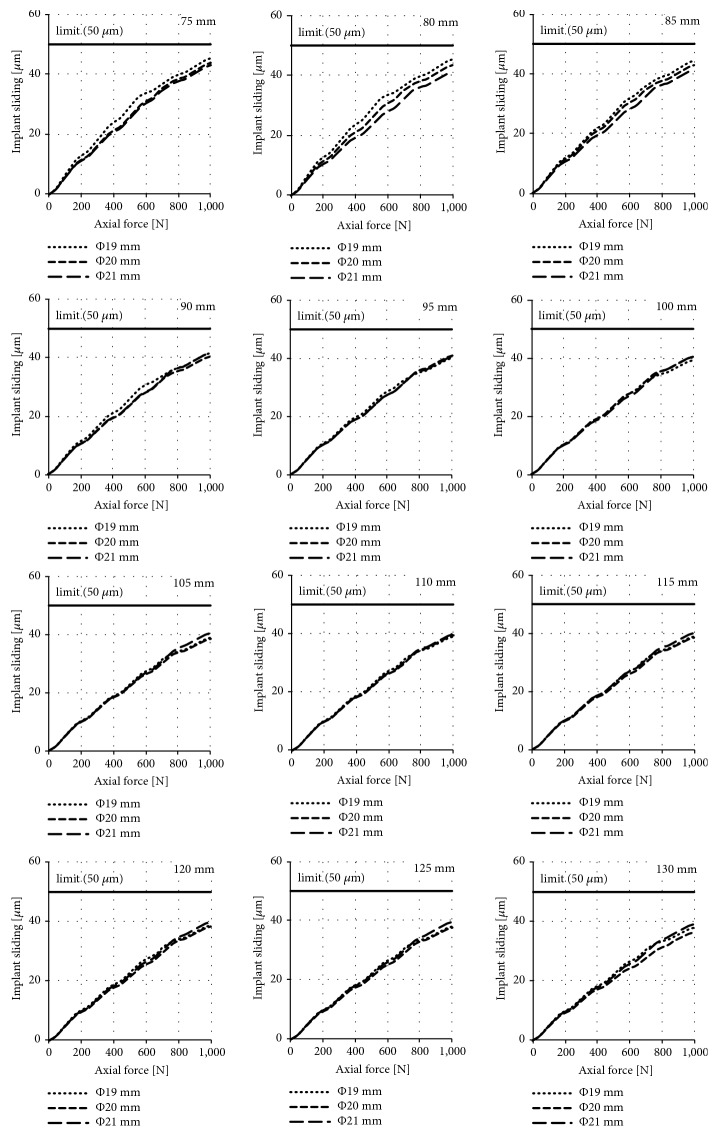
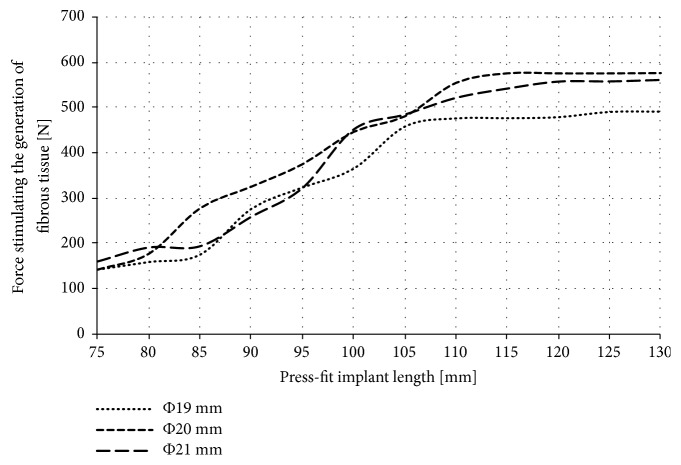
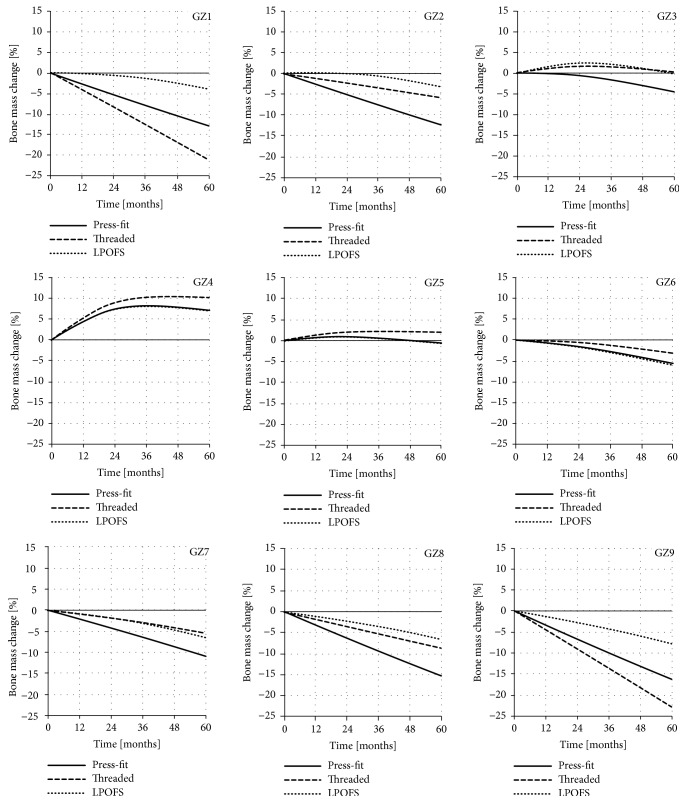
The purpose of the research was to evaluate the influence of selected parameters of the implants for bone anchored prostheses on possibility of conducting static load bearing exercises and stress-shielding intensity. A press-fit implant, a threaded implant, and the proposed design were compared using the finite element method. For the analyses two features were examined: diameter (19.0 - 21.0 mm) and length (75.0 - 130.0 mm). To define the possibility of conducting rehabilitation exercises the micromotion of implants while axial loading with a force up to 1000 N was examined to evaluate the changes at implant-bone interface. The stress-shielding intensity was estimated by bone mass loss over 60 months. The results suggest that, in terms of micromotion generated during rehabilitation exercises, the threaded (max. micromotion of 16.00 m) and the proposed (max. micromotion of 45.43 m) implants ensure low and appropriate micromotion. In the case of the press-fit solution the load values should be selected with care, as there is a risk of losing primary stabilisation. The allowed forces (that do not stimulate the organism to generate fibrous tissue) were approx. 140 N in the case of the length of 75 mm, increasing up to 560 N, while using the length of 130 mm. Moreover, obtained stress-shielding intensities suggest that the proposed implant should provide appropriate secondary stability, similar to the threaded solution, due to the low bone mass loss during long-term use (improving at the same time more bone remodelling in distal Gruen zones, by providing lower bone mass loss by approx. 13% to 20% in dependency of the length and diameter used). On this basis it can be concluded that the proposed design can be an appropriate alternative to commercially used implants.
本研究旨在评估骨锚定修复体用种植体的某些参数对进行静态负重练习的可能性和应力遮挡强度的影响。采用有限元法对压配式种植体、螺纹式种植体和所提出的设计进行了比较。在分析中,检查了两个特征:直径(19.0-21.0 毫米)和长度(75.0-130.0 毫米)。为了确定进行康复锻炼的可能性,在轴向加载至 1000N 的情况下,检查了种植体的微动,以评估种植体-骨界面的变化。通过 60 个月的骨质量损失来评估应力遮挡强度。结果表明,就康复锻炼期间产生的微动而言,螺纹式(最大微动 16.00m)和所提出的设计(最大微动 45.43m)种植体确保了低且合适的微动。在压配式解决方案的情况下,应该小心选择负载值,因为存在失去初始稳定性的风险。在长度为 75 毫米的情况下,允许的力(不会刺激机体产生纤维组织)约为 140N,增加到 560N,而使用长度为 130 毫米时则为 560N。此外,所获得的应力遮挡强度表明,所提出的种植体应提供适当的二次稳定性,类似于螺纹式解决方案,因为在长期使用过程中骨质量损失较小(同时通过提供约 13%至 20%的较低骨质量损失,改善远端 Gruen 区的骨重塑)。基于此,可以得出结论,所提出的设计可以成为商业上使用的种植体的合适替代品。