School of Biological Sciences, University of Nebraska, Lincoln, NE.
Research Center for High Altitude Medicine, Qinghai University, Xining, China.
Mol Biol Evol. 2019 Oct 1;36(10):2227-2237. doi: 10.1093/molbev/msz097.
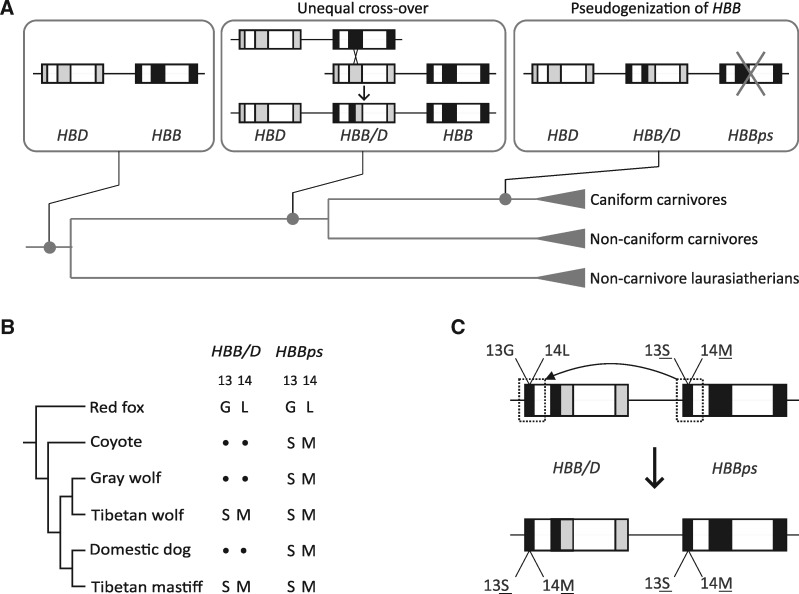
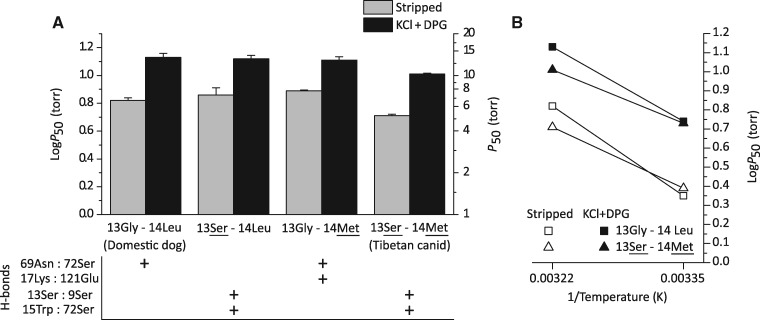
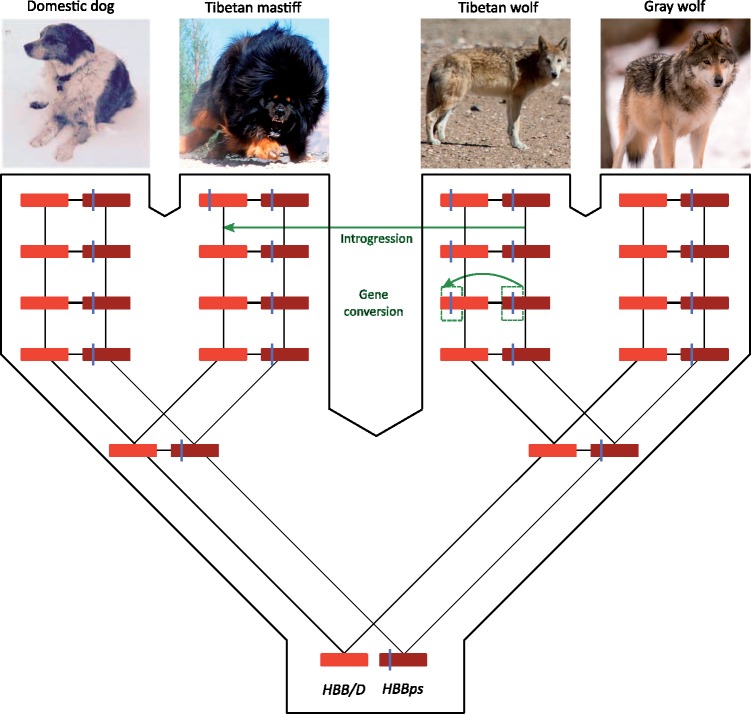
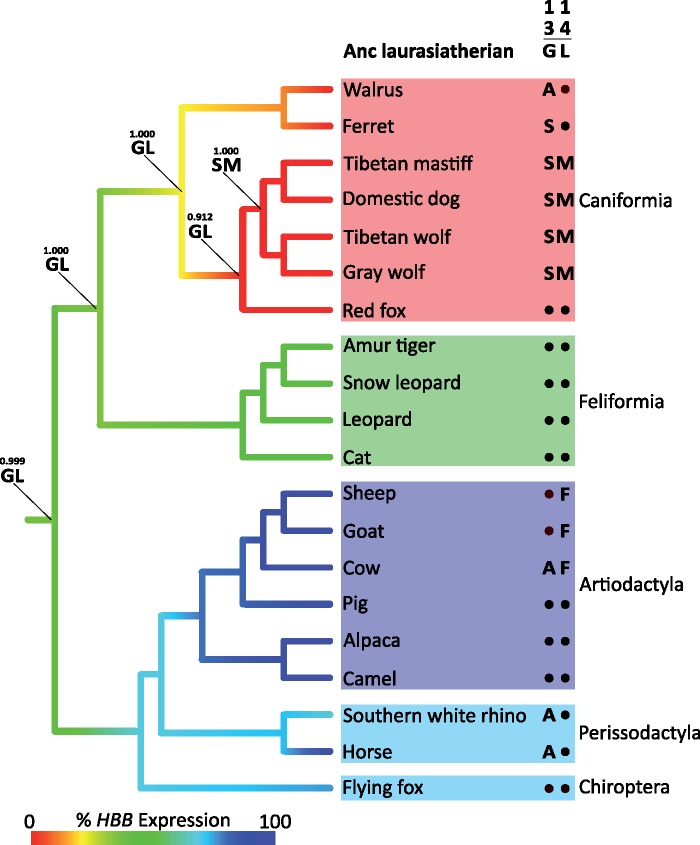
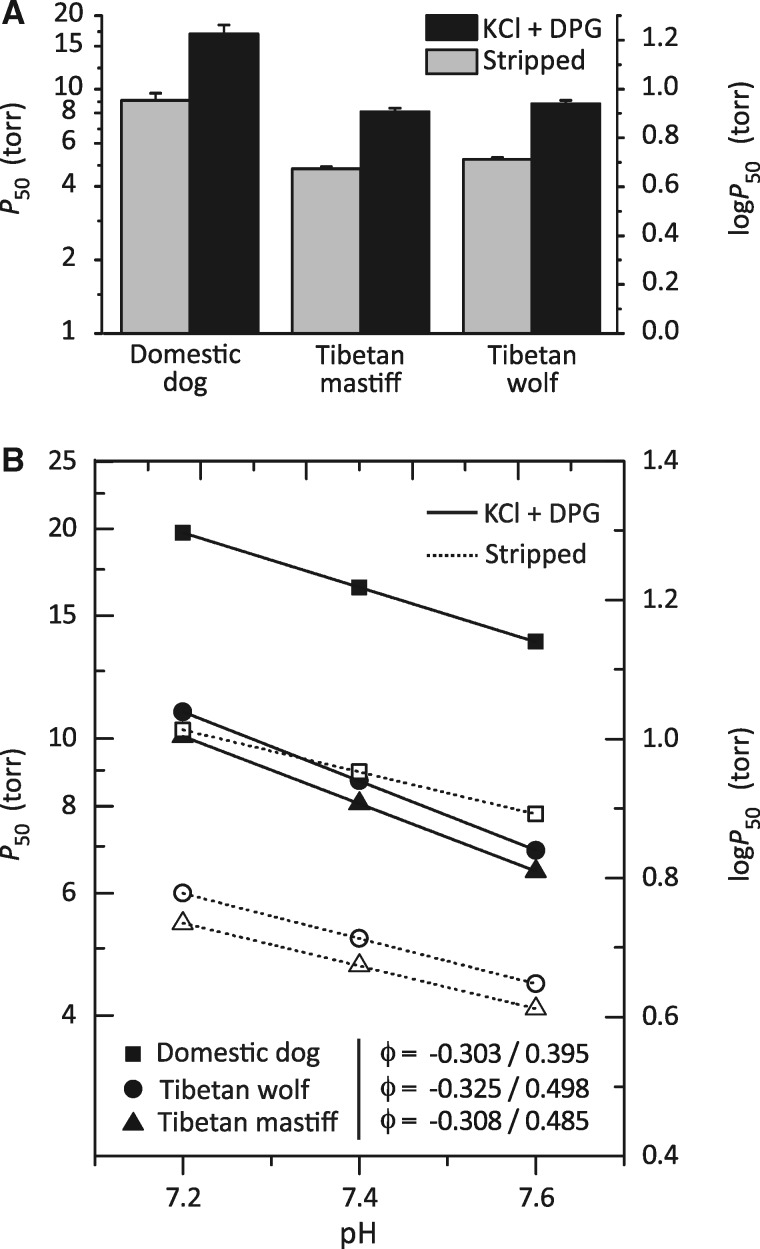
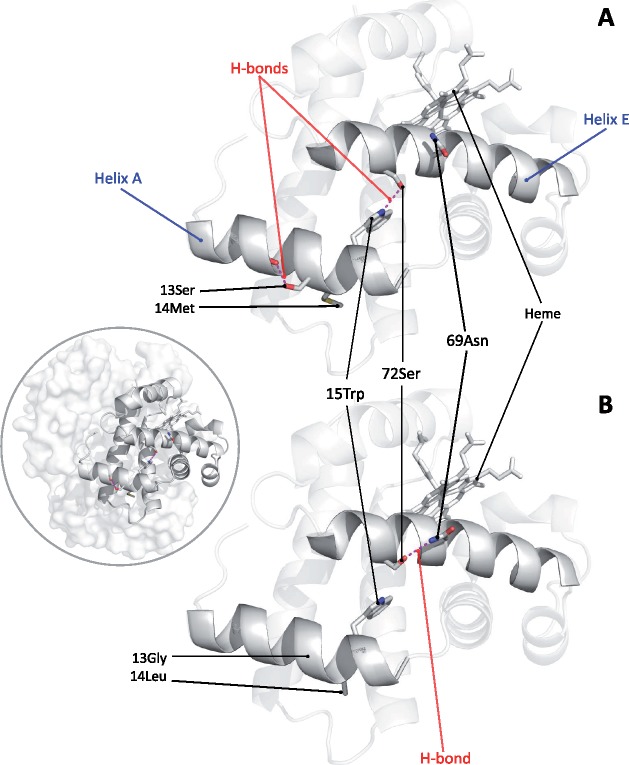
A key question in evolutionary biology concerns the relative importance of different sources of adaptive genetic variation, such as de novo mutations, standing variation, and introgressive hybridization. A corollary question concerns how allelic variants derived from these different sources may influence the molecular basis of phenotypic adaptation. Here, we use a protein-engineering approach to examine the phenotypic effect of putatively adaptive hemoglobin (Hb) mutations in the high-altitude Tibetan wolf that were selectively introgressed into the Tibetan mastiff, a high-altitude dog breed that is renowned for its hypoxia tolerance. Experiments revealed that the introgressed coding variants confer an increased Hb-O2 affinity in conjunction with an enhanced Bohr effect. We also document that affinity-enhancing mutations in the β-globin gene of Tibetan wolf were originally derived via interparalog gene conversion from a tandemly linked β-globin pseudogene. Thus, affinity-enhancing mutations were introduced into the β-globin gene of Tibetan wolf via one form of intragenomic lateral transfer (ectopic gene conversion) and were subsequently introduced into the Tibetan mastiff genome via a second form of lateral transfer (introgression). Site-directed mutagenesis experiments revealed that the increased Hb-O2 affinity requires a specific two-site combination of amino acid replacements, suggesting that the molecular underpinnings of Hb adaptation in Tibetan mastiff (involving mutations that arose in a nonexpressed gene and which originally fixed in Tibetan wolf) may be qualitatively distinct from functionally similar changes in protein function that could have evolved via sequential fixation of de novo mutations during the breed's relatively short duration of residency at high altitude.
进化生物学中的一个关键问题是不同适应遗传变异来源的相对重要性,例如从头突变、现有变异和渐渗杂交。一个推论问题是这些不同来源的等位变体如何影响表型适应的分子基础。在这里,我们使用蛋白质工程方法研究了青藏高原狼中的血红蛋白(Hb)适应性突变的表型效应,这些突变被选择性地渐渗到青藏高原犬中,青藏高原犬是一种以耐缺氧而闻名的高原犬种。实验表明,渐渗的编码变体与增强的波尔效应一起赋予 Hb-O2 亲和力增加。我们还记录到,青藏高原狼的β-珠蛋白基因中的亲和力增强突变最初是通过与串联β-珠蛋白假基因的基因间同源重组从一个β-珠蛋白基因衍生而来的。因此,亲和力增强突变通过一种基因组内横向转移(异位基因转换)引入到青藏高原狼的β-珠蛋白基因中,然后通过第二种横向转移(渐渗)引入到青藏高原犬的基因组中。定点突变实验表明,Hb-O2 亲和力的增加需要特定的两个氨基酸取代的组合,这表明青藏高原犬 Hb 适应的分子基础(涉及在一个非表达基因中产生的突变,最初在青藏高原狼中固定)可能与功能相似的蛋白质功能变化在性质上有所不同,这些变化可能是在该品种相对较短的高原居住期间通过从头突变的连续固定进化而来的。