Department of Oncology, University of Alberta and Cross Cancer Institute, 11560 University Ave, Edmonton, AB, T6G 1Z2, Canada.
Department of Agricultural, Food and Nutritional Science, University of Alberta, Edmonton, Alberta, T6G 2P5, Canada.
BMC Microbiol. 2019 Jul 30;19(1):175. doi: 10.1186/s12866-019-1541-4.
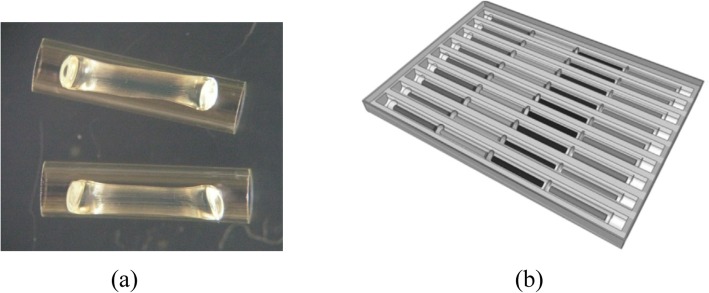
Over a one year period, swabs of 820 beef carcasses were tested for the presence of Shiga toxin-producing Escherichia coli by performing Polymerase Chain Reaction (PCR) in a novel technology termed "cassette PCR", in comparison to conventional liquid PCR. Cassette PCR is inexpensive and ready-to-use. The operator need only add the sample and press "go". Cassette PCR can simultaneously test multiple samples for multiple targets. Carcass swab samples were first tested for the presence of STEC genes (O157, eae, stx1 and stx2). Samples were considered to be pathogenic if positive for eae plus stx1 and/or stx2. For samples scored as pathogenic, further testing screened for 6 additional high frequency O-antigens (O26, O45, O103, O111, O121, and O145).
Of the 820 samples, 41% were pathogenic and 30% were O157 positive. Of these, 19% of samples were positive for O157 and carried potentially pathogenic E. coli (eae plus stx1 and/or stx2). Of all samples identified as carrying pathogenic E. coli, 18.9, 38.8, 41.4, 0, 36.1, and 4.1% respectively were positive for O26, O45, O103, O111, O121, and O145. To validate cassette PCR testing, conventional PCR using STEC primers was performed on each of the 820 samples. Only 148 of 3280 cassette PCR tests were discordant with conventional PCR results. However, further fractional testing showed that 110 of these 148 PCRs reflected low numbers of E. coli in the enrichment broth and could be explained as due to Poisson limiting dilution of the template, affecting both cassette PCR and conventional PCR. Of the remaining 38 discordant tests, 27 initial capillary PCRs and 10 initial conventional tests were nominally discordant between cassette and conventional PCR, perhaps reflecting human/technical error on both sides of the comparison.
Contaminated beef carcass swabs were often complex, likely harboring more than one strain of pathogenic E. coli. Cassette PCR had 98.8% concordance with parallel conventional PCR for detection of STEC genes. This indicates that cassette PCR is highly reliable for detecting multiple pathogens in beef carcass swabs from processing plants.
在为期一年的时间里,820 份牛肉胴体拭子通过一种名为“盒式 PCR”的新型技术进行聚合酶链反应(PCR),以检测产志贺毒素大肠杆菌的存在,与传统液体 PCR 进行了比较。盒式 PCR 价格低廉且即开即用。操作人员只需添加样品并按下“开始”键。盒式 PCR 可以同时对多个样品进行多种目标测试。首先对胴体拭子样本进行 STEC 基因(O157、eae、stx1 和 stx2)检测。如果 eae 加 stx1 和/或 stx2 呈阳性,则样本被认为具有致病性。对于评分呈阳性的样本,进一步的检测筛选出 6 种额外的高频 O 抗原(O26、O45、O103、O111、O121 和 O145)。
820 个样本中,41%为致病性,30%为 O157 阳性。其中,19%的样本为 O157 阳性,并携带潜在致病性大肠杆菌(eae 加 stx1 和/或 stx2)。在所有被确定携带致病性大肠杆菌的样本中,分别有 18.9%、38.8%、41.4%、0%、36.1%和 4.1%的样本对 O26、O45、O103、O111、O121 和 O145 呈阳性。为了验证盒式 PCR 检测,对 820 个样本中的每个样本都进行了使用 STEC 引物的常规 PCR。在 3280 次盒式 PCR 检测中,只有 148 次与常规 PCR 结果不一致。然而,进一步的分阶段测试表明,这些 PCR 中的 110 次反映了富集肉汤中大肠杆菌数量较少,这可以解释为模板的泊松限制稀释,影响了盒式 PCR 和常规 PCR。在其余 38 次不一致的测试中,27 次初始毛细管 PCR 和 10 次初始常规测试在盒式和常规 PCR 之间名义上不一致,这可能反映了比较双方的人为/技术错误。
污染的牛肉胴体拭子通常很复杂,可能携带不止一种致病性大肠杆菌。盒式 PCR 与平行常规 PCR 检测 STEC 基因的一致性为 98.8%。这表明盒式 PCR 非常可靠,可用于检测加工厂牛肉胴体拭子中的多种病原体。