Department of Host Defense and Biochemical Research, Juntendo University Graduate School of Medicine, Tokyo 113‑8421, Japan.
Int J Mol Med. 2019 Oct;44(4):1187-1196. doi: 10.3892/ijmm.2019.4294. Epub 2019 Jul 31.
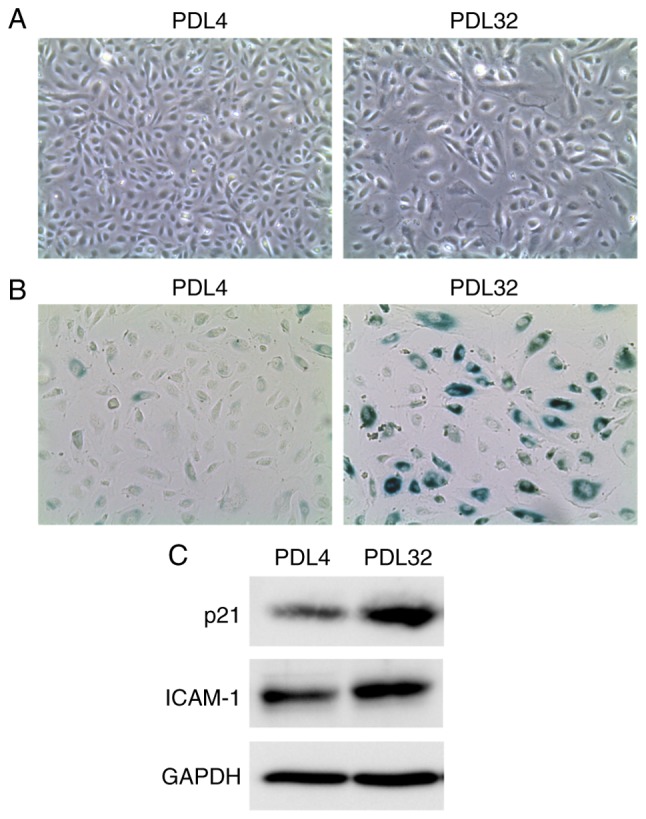
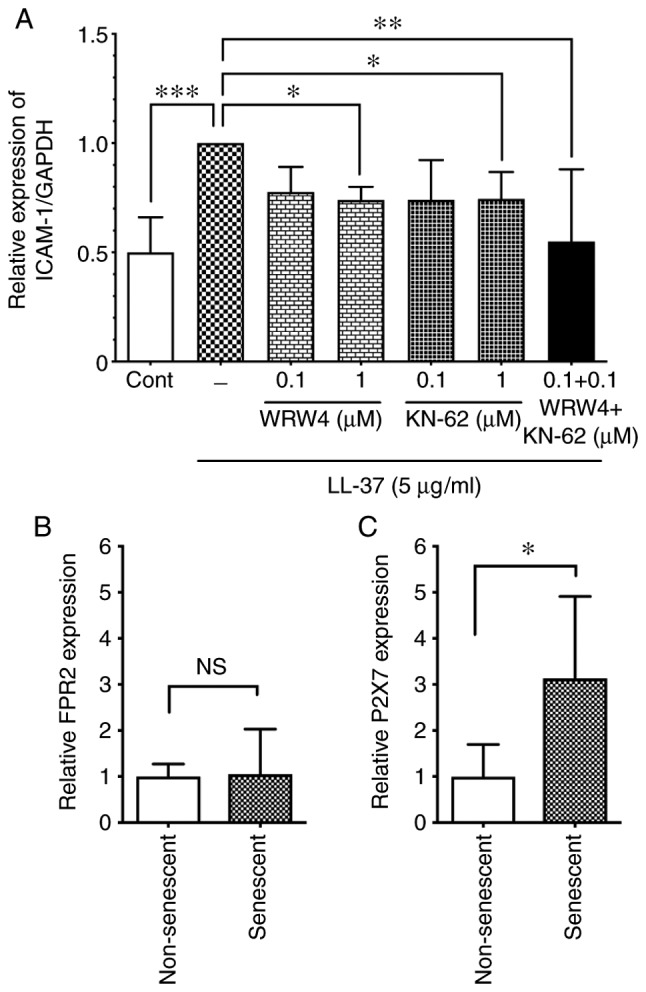
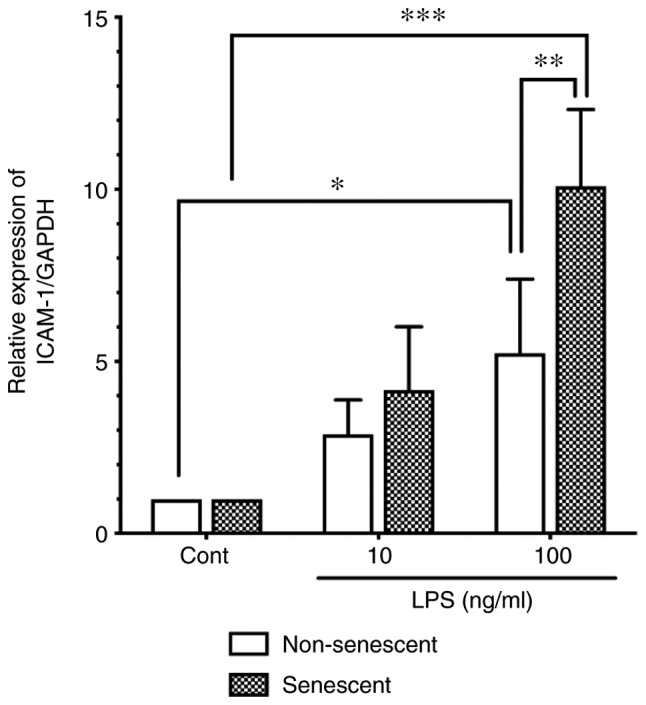
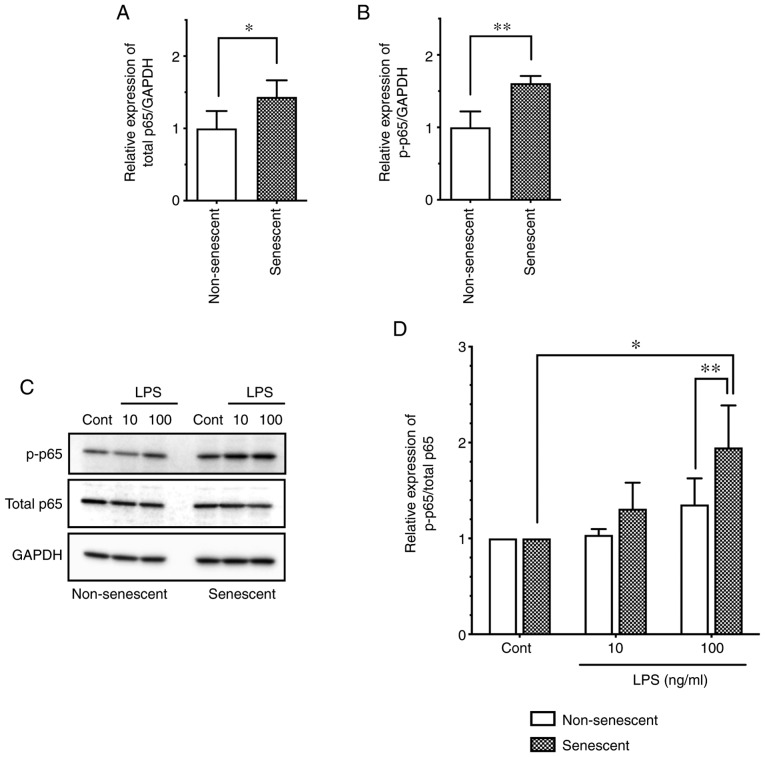
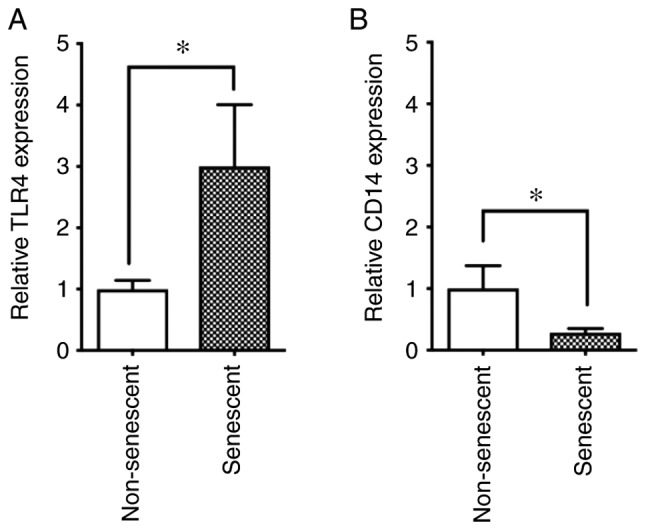
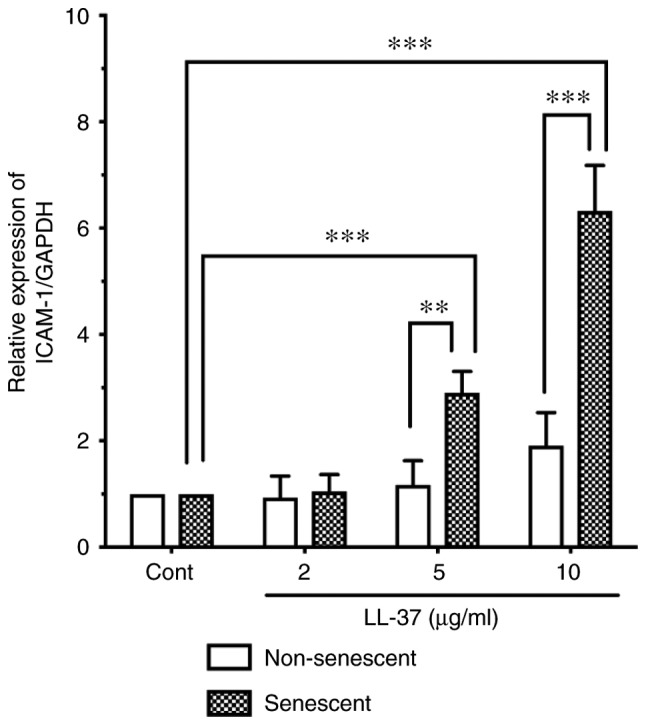
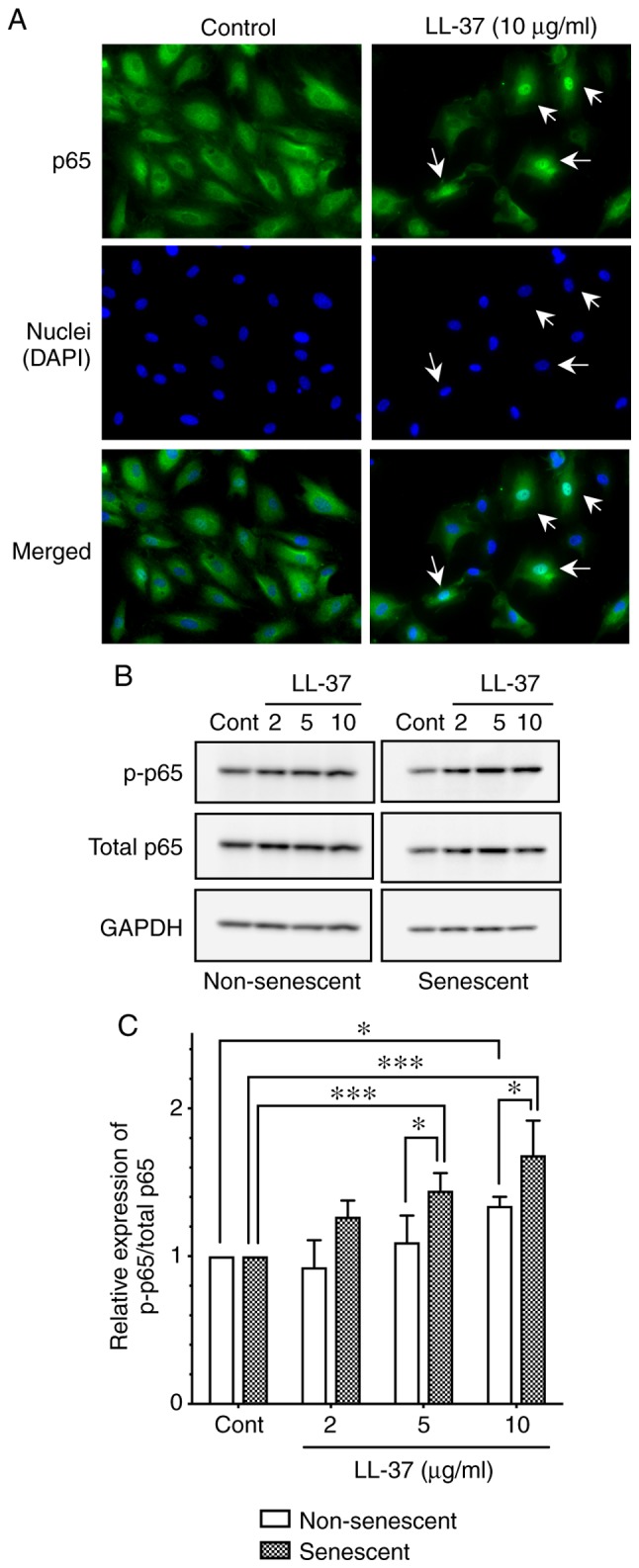
Cellular senescence is associated with the induction of a proinflammatory phenotype. Notably, senescent endothelial cells are detected at the sites of atherosclerotic lesions, suggesting the involvement of senescent endothelial cells in atherogenesis. Moreover, bacterial infection has been speculated to contribute to the pathogenesis of atherosclerosis. The present study investigated the effects of Gram‑negative bacterial lipopolysaccharide (LPS) and LL‑37 (a human antimicrobial peptide of the cathelicidin family), on senescent endothelial cells, using serially passaged human endothelial cells. The results indicated that senescent endothelial cells exhibited the basal proinflammatory phenotype, as evidenced by higher intercellular adhesion molecule‑1 (ICAM‑1) expression and NF‑κB p65 phosphorylation, compared with non‑senescent cells. Additionally, exposure to LPS and LL‑37 further enhanced the expression of ICAM‑1 in senescent endothelial cells, compared with non‑senescent cells. Of note, the NF‑κB p65 pathway was more activated in senescent endothelial cells stimulated with LPS and LL‑37. Furthermore, the expression levels of the receptors for LPS and LL‑37 [toll‑like receptor 4 (TLR4) and purinergic receptor P2X 7 (P2X7), respectively] were upregulated in senescent endothelial cells. These observations indicated that LPS and LL‑37 enhanced the ICAM‑1 expression and NF‑κB p65 activation in senescent endothelial cells, potentially via the upregulated TLR4 and P2X7. Thus, senescent endothelial cells may contribute to the pathogenesis of atherosclerosis via the basal proinflammatory phenotype and the enhanced inflammatory responses against atherogenic factors, including LPS and LL‑37.
细胞衰老与促炎表型的诱导有关。值得注意的是,动脉粥样硬化病变部位检测到衰老的内皮细胞,表明衰老的内皮细胞参与动脉粥样硬化的发生。此外,有人推测细菌感染有助于动脉粥样硬化的发病机制。本研究使用连续传代的人内皮细胞,研究革兰氏阴性细菌脂多糖(LPS)和 LL-37(一种属于抗菌肽家族的人抗菌肽)对衰老内皮细胞的影响。结果表明,与非衰老细胞相比,衰老内皮细胞表现出基础促炎表型,这表现在细胞间黏附分子-1(ICAM-1)表达和 NF-κB p65 磷酸化水平较高。此外,与非衰老细胞相比,LPS 和 LL-37 暴露进一步增强了衰老内皮细胞中 ICAM-1 的表达。值得注意的是,LPS 和 LL-37 刺激的衰老内皮细胞中 NF-κB p65 途径更为活跃。此外,LPS 和 LL-37 的受体[分别为 Toll 样受体 4(TLR4)和嘌呤能受体 P2X7(P2X7)]的表达水平在衰老的内皮细胞中上调。这些观察结果表明,LPS 和 LL-37 通过上调 TLR4 和 P2X7 增强衰老内皮细胞中 ICAM-1 的表达和 NF-κB p65 激活。因此,衰老的内皮细胞可能通过基础促炎表型和增强对动脉粥样硬化因子(包括 LPS 和 LL-37)的炎症反应,有助于动脉粥样硬化的发病机制。