Markin Viacheslav, Nerella Venkatesh Naidu, Schröfl Christof, Guseynova Gyunay, Mechtcherine Viktor
Institute for Construction Materials, Technische Universität Dresden, 01602 Dresden, Germany.
Materials (Basel). 2019 Jul 30;12(15):2433. doi: 10.3390/ma12152433.
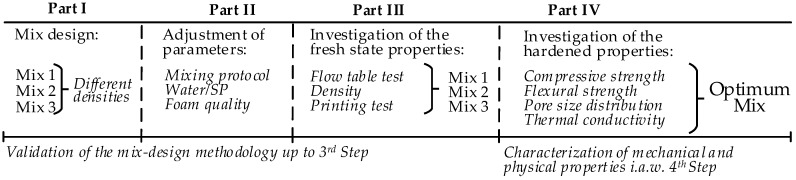
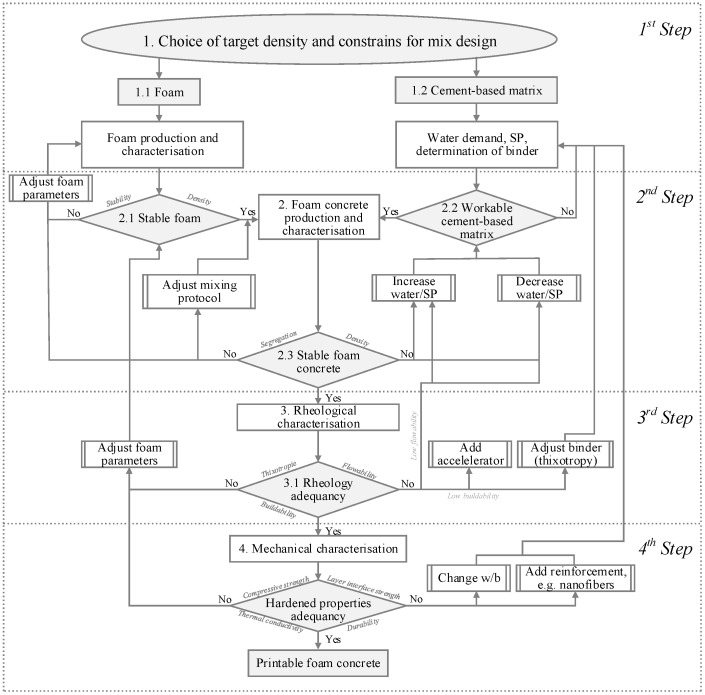
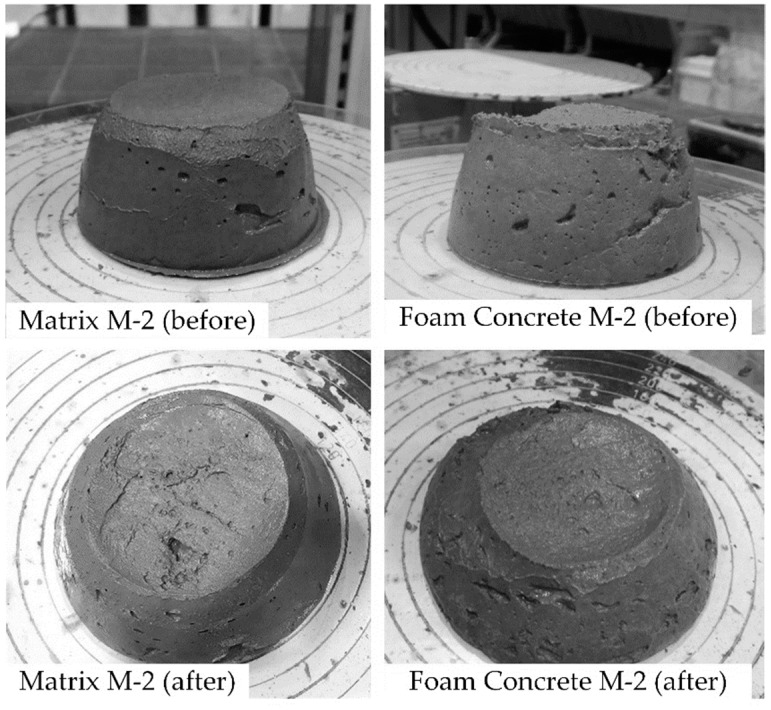
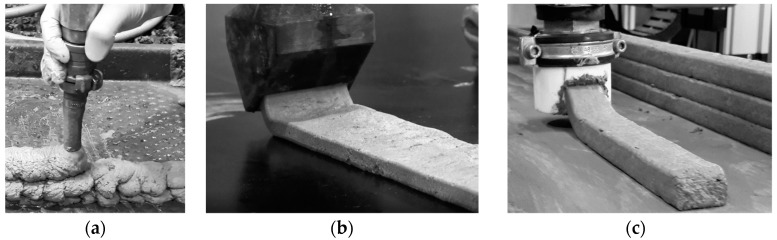
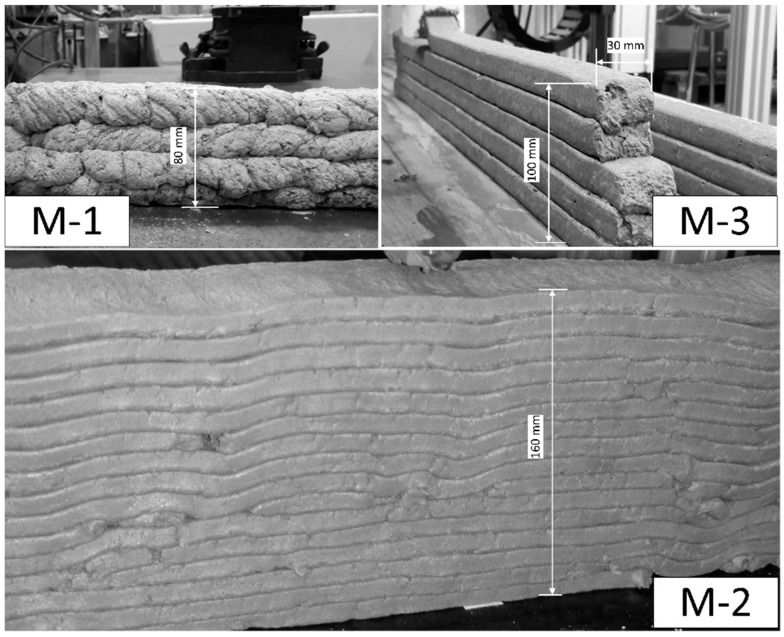
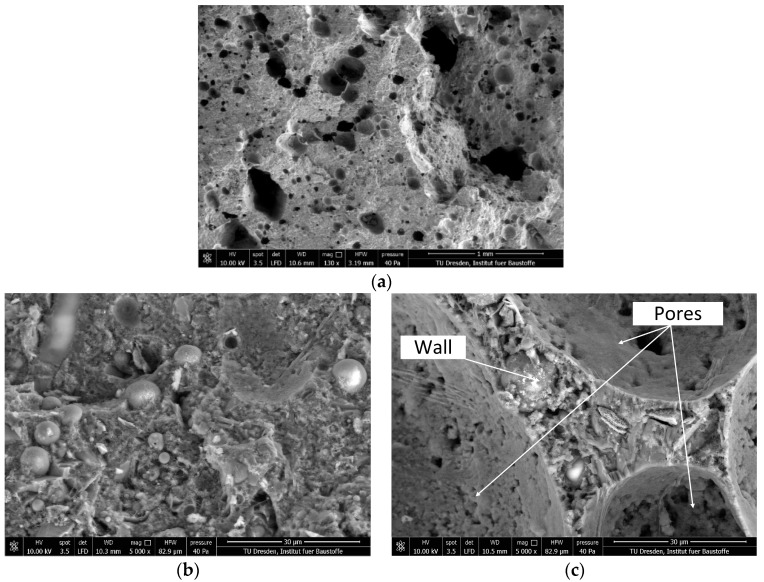
Three-dimensional (3D) printing with foam concrete, which is known for its distinct physical and mechanical properties, has not yet been purposefully investigated. The article at hand presents a methodological approach for the mixture design of 3D-printable foam concretes and a systematic investigation of the potential application of this type of material in digital construction. Three different foam concrete compositions with water-to-binder ratios between 0.33-0.36 and densities of 1100 to 1580 kg/m³ in the fresh state were produced with a prefoaming technique using a protein-based foaming agent. Based on the fresh-state tests, including 3D printing as such, an optimum composition was identified, and its compressive and flexural strengths were characterized. The printable foam concrete showed low thermal conductivity and relatively high compressive strengths of above 10 MPa; therefore, it fulfilled the requirements for building materials used for load-bearing wall elements in multi-story houses. Thus, it is suitable for 3D-printing applications, while fulfilling both load-carrying and insulating functions.
以其独特物理和力学性能著称的泡沫混凝土三维(3D)打印尚未得到专门研究。本文提出了一种用于3D可打印泡沫混凝土混合料设计的方法,并对这类材料在数字建筑中的潜在应用进行了系统研究。采用基于蛋白质的发泡剂,通过预发泡技术制备了三种不同的泡沫混凝土组合物,其在新鲜状态下的水胶比为0.33 - 0.36,密度为1100至1580 kg/m³。基于包括3D打印本身在内的新鲜状态测试,确定了最佳组合物,并对其抗压强度和抗弯强度进行了表征。可打印泡沫混凝土显示出低导热性和高于10 MPa的相对较高抗压强度;因此,它满足了用于多层房屋承重墙构件的建筑材料要求。所以,它适用于3D打印应用,同时兼具承载和保温功能。