a Department of Pharmacy, Tongji Hospital, Tongji Medical College, Huazhong University of Science and Technology , Wuhan , P. R. China.
b School of Pharmacy, Tongji Medical College, Huazhong University of Science and Technology , Wuhan , P. R. China.
Drug Deliv. 2019 Dec;26(1):794-802. doi: 10.1080/10717544.2019.1645244.
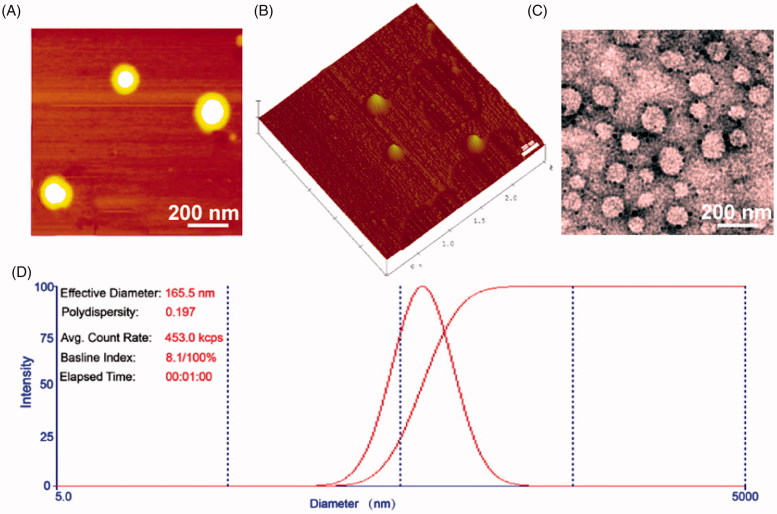
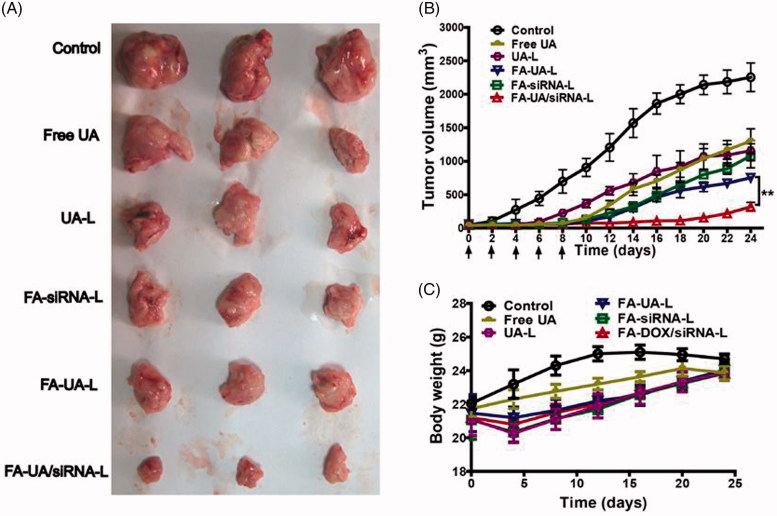
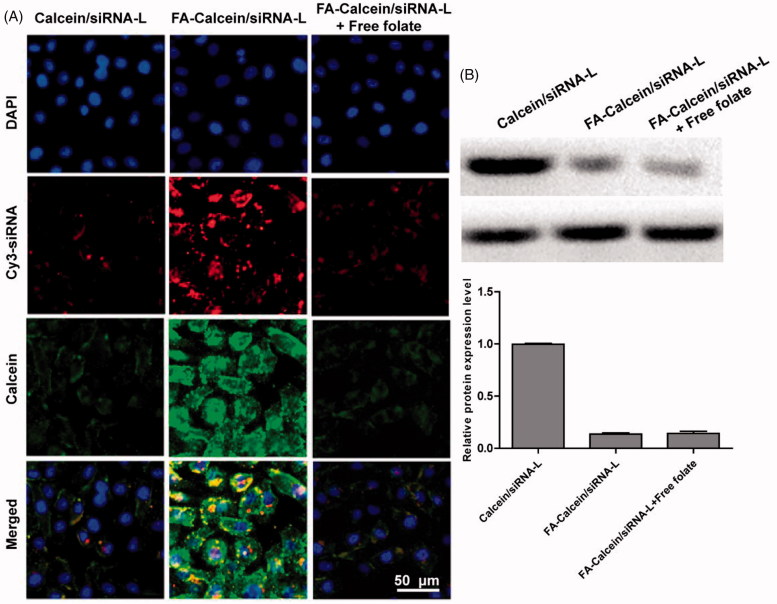
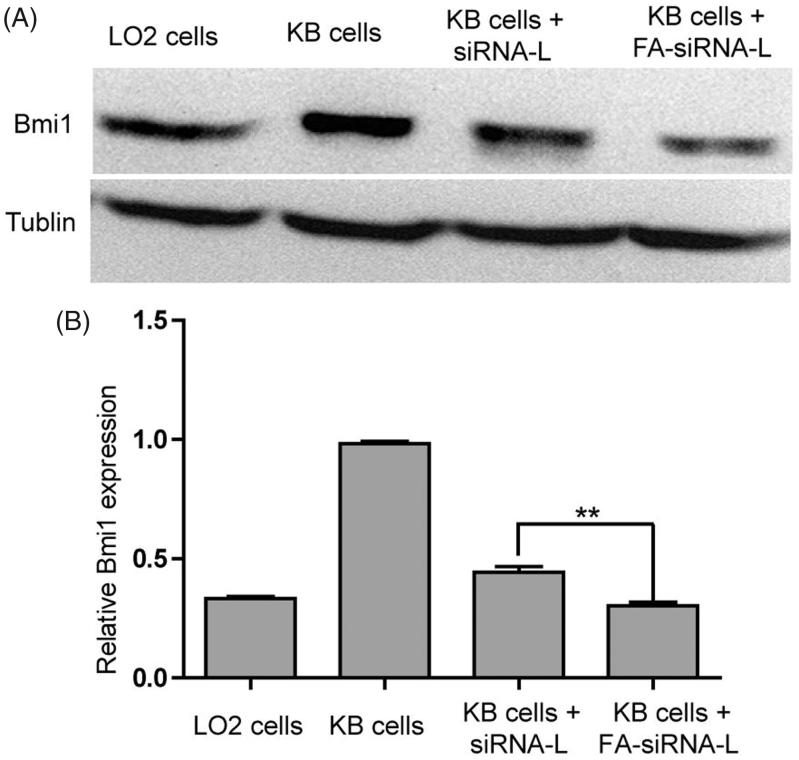
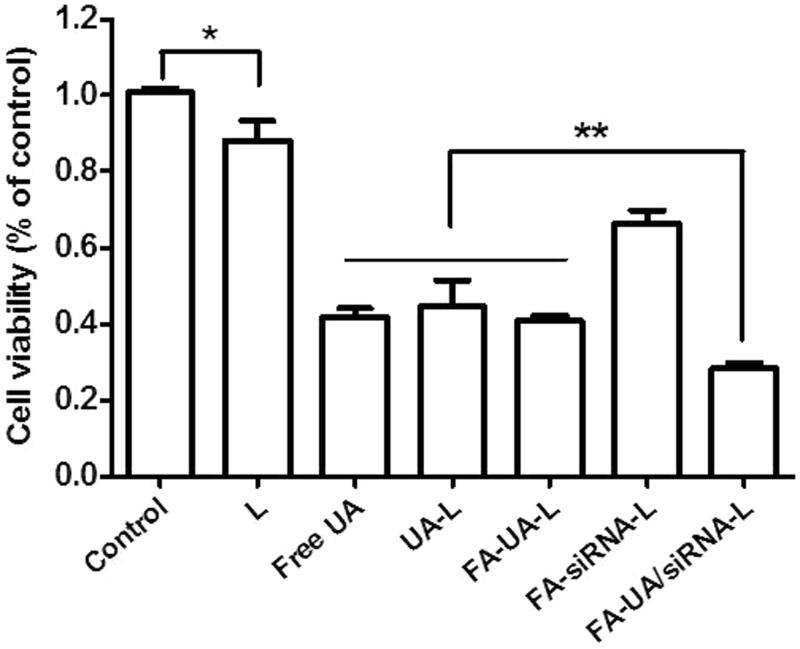
Overexpression of Bmi1 gene is an important feature of cancer stem cell in various human tumors. Therefore, Bmi1 gene can be a potential target for small interfering RNA (siRNA) mediated cancer therapy. Ursolic acid (UA) as a natural product plays a pivotal role in anti-tumor field, although its performance is limited by low bioavailability and poor hydrophilicity. A folate receptor-targeted cationic liposome system was designed for the purpose of investigating the relationship between Bmil siRNA and UA. The folate receptor-targeted cationic liposomes co-delivering UA and Bmi1 siRNA (FA-UA/siRNA-L) were fabricated by electrostatic interaction between folate UA liposome (FA-UA-L) and Bmi1 siRNA. Tumor growth is inhibited by FA-UA/siRNA-L and and this inhibition is contributed by a synergistic anti-tumor effect of UA and Bmi1 siRNA. The western blot measurement of apoptosis-protein and cancer stem cell (CSC) marked-protein demonstrated that UA led to activation-induced tumor cell death and Bmi1 siRNA resulted in inhibition of cancer stem cells. Overall, these results indicate that Bmi1 as a regulating gene for cancer stem cell is an effective target for cancer treatment using siRNA and co-delivery of UA and Bmi1 siRNA using folate-targeted liposomes is a promising strategy for improved anti-tumor effect.
Bmi1 基因的过表达是各种人类肿瘤中癌症干细胞的一个重要特征。因此,Bmi1 基因可以成为小干扰 RNA(siRNA)介导的癌症治疗的潜在靶点。熊果酸(UA)作为一种天然产物,在抗肿瘤领域发挥着重要作用,但其性能受到生物利用度低和亲水性差的限制。本研究设计了一种叶酸受体靶向阳离子脂质体系统,旨在研究 Bmi1 siRNA 与 UA 之间的关系。通过叶酸 UA 脂质体(FA-UA-L)与 Bmi1 siRNA 之间的静电相互作用,制备了共递送 UA 和 Bmi1 siRNA 的叶酸受体靶向阳离子脂质体(FA-UA/siRNA-L)。FA-UA/siRNA-L 抑制肿瘤生长,这种抑制作用是 UA 和 Bmi1 siRNA 的协同抗肿瘤作用的结果。凋亡蛋白和癌症干细胞(CSC)标记蛋白的 Western blot 测量表明,UA 导致激活诱导的肿瘤细胞死亡,Bmi1 siRNA 抑制癌症干细胞。总之,这些结果表明,作为癌症干细胞调控基因的 Bmi1 是使用 siRNA 进行癌症治疗的有效靶点,使用叶酸靶向脂质体共递送 UA 和 Bmi1 siRNA 是提高抗肿瘤效果的一种有前途的策略。