Microbial Ecology and Environmental Biotechnology Department, Institute of Botany, Faculty of Biology, University of Warsaw; Biological and Chemical Research Centre, Warszawa, Poland.
Sci Rep. 2019 Jul 31;9(1):11144. doi: 10.1038/s41598-019-47577-8.
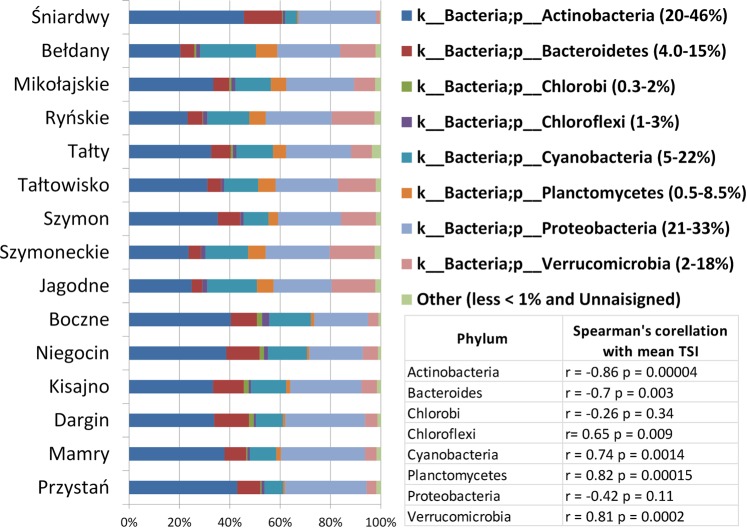
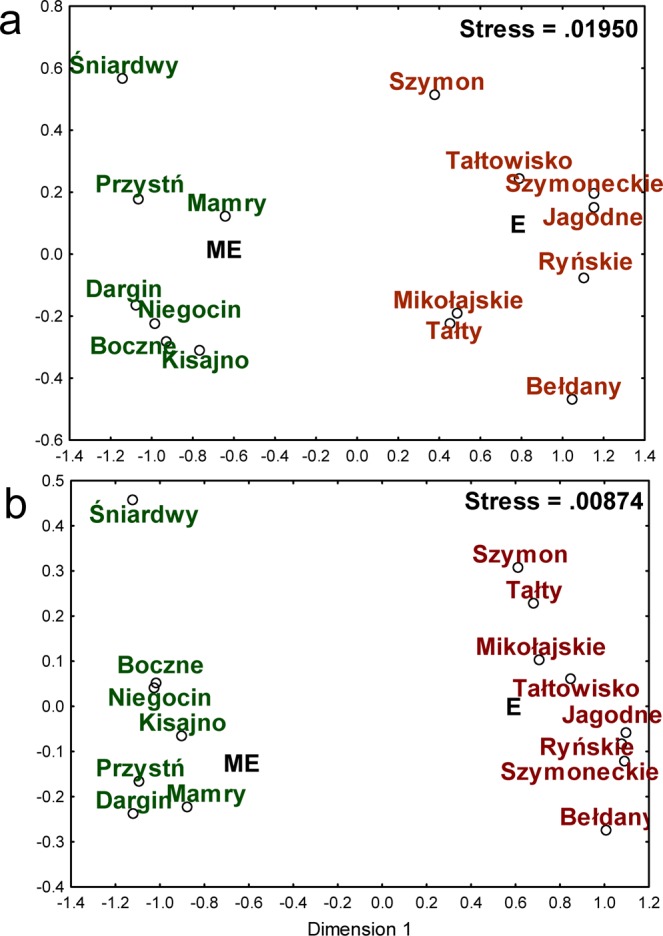
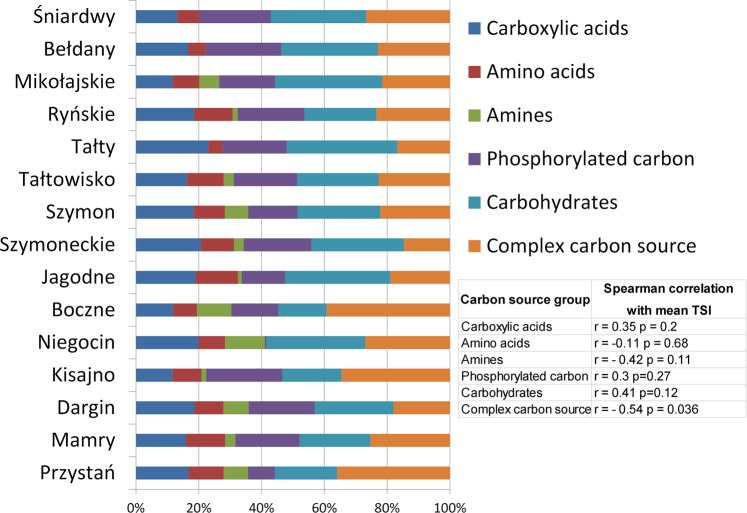
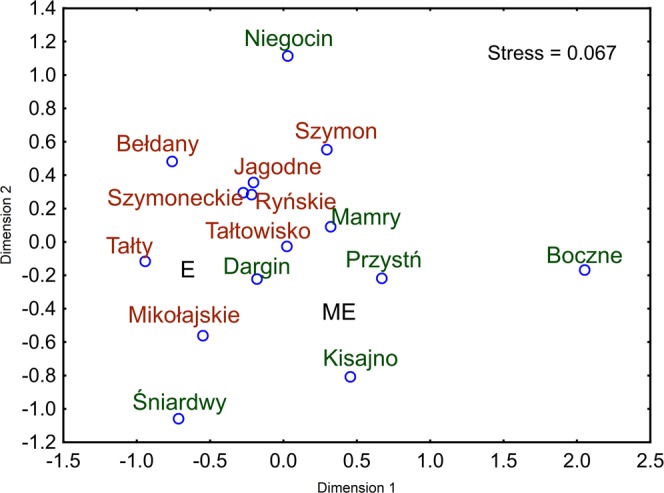
We present the results of an analysis of the 16S rRNA-based taxonomical structure of bacteria together with an analysis of carbon source utilization ability using EcoPlate (Biolog, USA) metabolic fingerprinting assessment against the backdrop of physicochemical parameters in fifteen interconnected lakes. The lakes exhibit a wide spectrum of trophic gradients and undergo different intensities of anthropopressure. Sequences of V3-V4 16S rRNA genes binned by taxonomic assignment to family indicated that bacterial communities in the highly eutrophicated lakes were distinctly different from the bacterial communities in the meso-eutrophic lakes (ANOSIM r = 0.99, p = 0.0002) and were characterized by higher richness and more diverse taxonomical structure. Representatives of the Actinobacteria, Proteobacteria, Cyanobacteria, Planctomycetes, Verrucomicrobia, Bacteroides phyla predominated. In most cases their relative abundance was significantly correlated with lake trophic state. We found no similar clear relationship of community-level physiological profiling with lake trophic state. However, we found some significant links between the taxonomic and metabolic structure of the microbes in the studied lakes (Mantel's correlation r = 0.22, p = 0.006). The carbon source utilization ability of the studied microorganisms was affected not only by the taxonomic groups present in the lakes but also by various characteristics like a high PO concentration inhibiting the utilization of phosphorylated carbon.
我们呈现了一项分析结果,该分析基于 16S rRNA 对细菌的分类结构,同时使用 EcoPlate(美国 Biolog)代谢指纹图谱评估了碳源利用能力,其背景是十五个相互连接的湖泊中的理化参数。这些湖泊表现出广泛的营养梯度,并经历着不同程度的人为压力。通过分类学分配到科的 V3-V4 16S rRNA 基因序列表明,高度富营养化湖泊中的细菌群落与中营养湖泊中的细菌群落明显不同(ANOSIM r=0.99,p=0.0002),其特点是丰富度更高,分类结构更加多样化。放线菌、变形菌、蓝细菌、浮霉菌、疣微菌和拟杆菌门的代表种类占优势。在大多数情况下,它们的相对丰度与湖泊营养状态显著相关。我们没有发现群落水平生理特征与湖泊营养状态之间存在类似的明确关系。然而,我们发现研究湖泊中微生物的分类和代谢结构之间存在一些显著的联系(Mantel 相关 r=0.22,p=0.006)。研究中微生物的碳源利用能力不仅受到湖泊中存在的分类群的影响,还受到各种特征的影响,例如高 PO 浓度会抑制磷酸化碳的利用。