Eastwood John G, Kemp Lynn A, Garg Pankaj, Tyler Ingrid, De Souza Denise E
School of Women's and Children's Health, The University of New South Wales, Sydney, NSW, AU.
Ingham Institute of Applied Medical Research, Liverpool, NSW, AU.
Int J Integr Care. 2019 Jul 25;19(3):8. doi: 10.5334/ijic.3962.
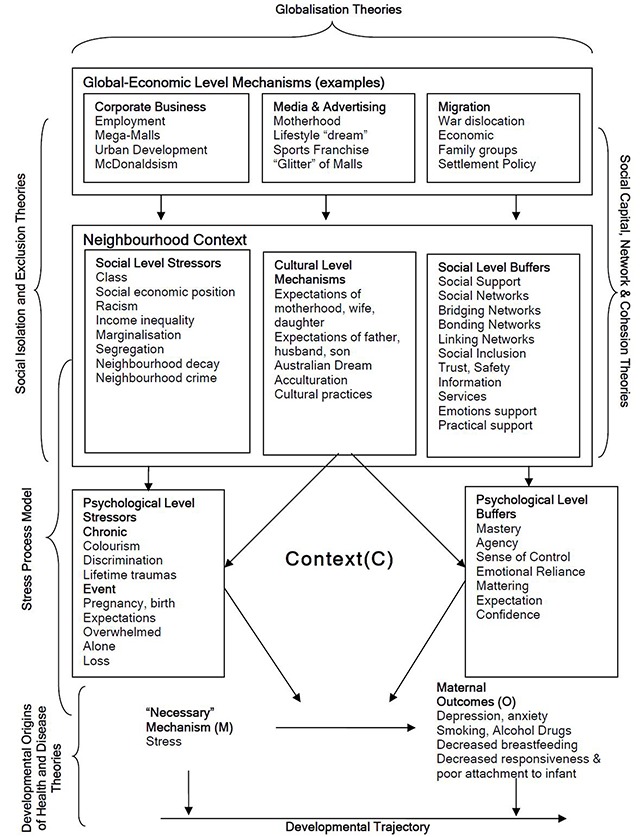
We will describe here a translational social epidemiology protocol for confirming a critical realist "Theory of Neighbourhood Context, Stress, Depression, and the Developmental Origins of Health and Disease (DOHaD). The approach will include the concretising and contextualising of the above causal theory into programme theories for child and adolescent interventions that aim to break intergenerational cycles of disadvantage and poor life outcomes. In undertaking this work we seek to advance realist translational methodology within the discipline of applied perinatal and paediatric social epidemiology.
The research settings are in metropolitan Sydney. The design will be a longitudinal, multi-level, mixed method realist evaluation of applied programme interventions that seek to break the intergeneration cycle of social disadvantage and poor child health and developmental outcomes. The programme of research will consist of three components: 1) of the theory and designing of programme initiatives for implementation; 2) of the translated programme and implementation theory using Theory of Change and critical realist evaluation; and 3) of realist hypotheses using both intensive and extensive critical realist research methods including realist structural modelling.
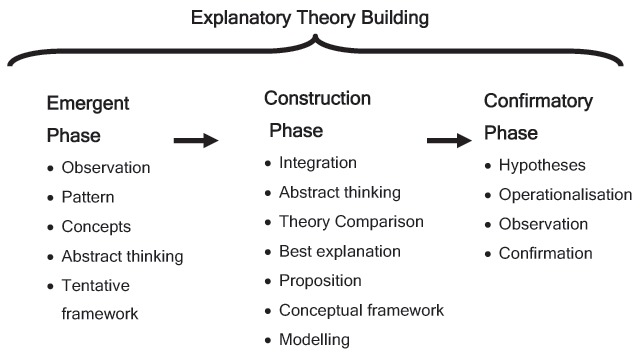
The proposed programme of research will assist in translating empirical explanatory theory building to theory driven interventions. The research will be situated in socially disadvantaged regions of Sydney where the local child and family inter-agencies will collaborate to design and implement new initiatives that address significant disparities in childhood development and adolescent outcomes attributed to neighbourhood circumstances, family stress and intergenerational cycles of disadvantage and poor mental health.
我们在此将描述一项转化性社会流行病学方案,以证实一种批判实在论的“邻里环境、压力、抑郁与健康及疾病的发育起源理论(DOHaD)”。该方法将包括把上述因果理论具体化并置于情境中,转化为针对儿童和青少年干预措施的项目理论,这些干预措施旨在打破劣势和不良生活结果的代际循环。在开展这项工作时,我们力求在应用围产期和儿科社会流行病学学科内推进实在论转化方法。
研究地点位于悉尼大都市。设计将是对应用项目干预措施进行纵向、多层次、混合方法的实在论评估,这些干预措施旨在打破社会劣势以及儿童健康和发育不良结果的代际循环。研究项目将包括三个部分:1)理论以及为实施而设计项目举措;2)使用变革理论和批判实在论评估对转化后的项目及实施理论进行评估;3)使用包括实在论结构建模在内的密集和广泛的批判实在论研究方法对实在论假设进行评估。
拟议的研究项目将有助于把实证性解释理论构建转化为理论驱动的干预措施。该研究将位于悉尼社会弱势地区,当地儿童和家庭跨部门机构将合作设计并实施新举措,以解决因邻里环境、家庭压力以及劣势和不良心理健康的代际循环导致的儿童发育和青少年结果方面的重大差异。