De La Fuente Gina, Chiantore Mariachiara, Asnaghi Valentina, Kaleb Sara, Falace Annalisa
Department of Earth, Environment and Life Sciences, University of Genoa, Genoa, Italy.
Department of Life Sciences, University of Trieste, Trieste, Italy.
PeerJ. 2019 Jul 22;7:e7290. doi: 10.7717/peerj.7290. eCollection 2019.
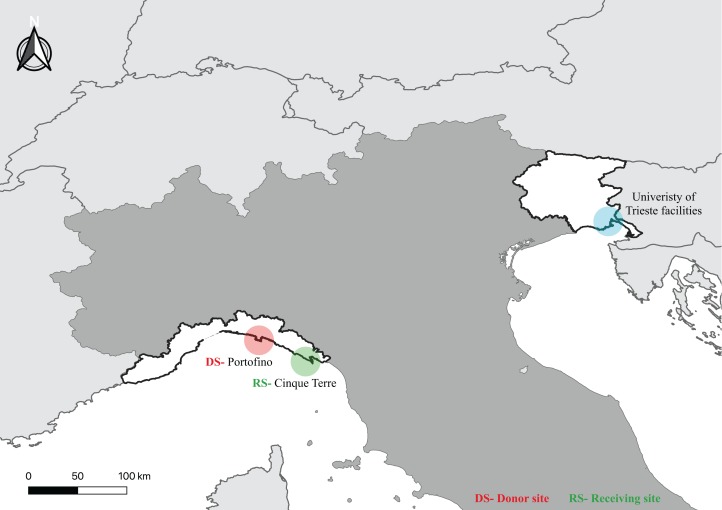
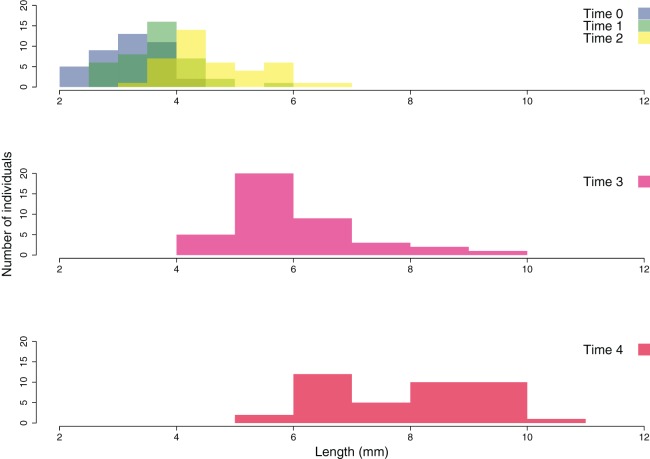
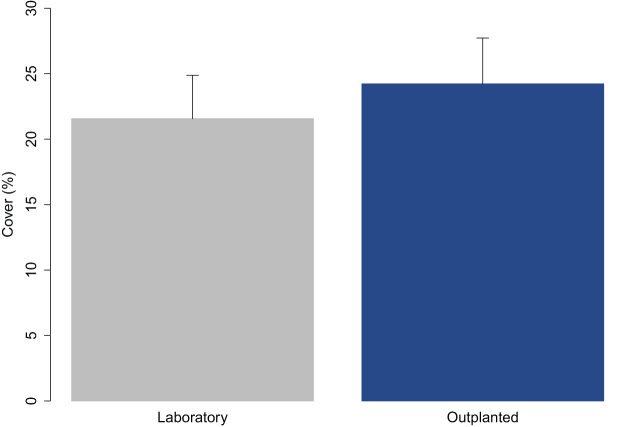
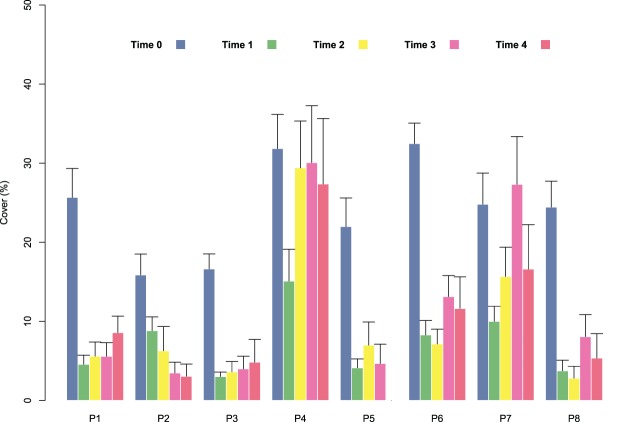
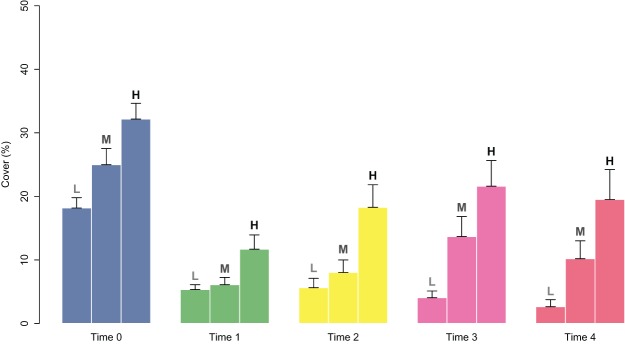
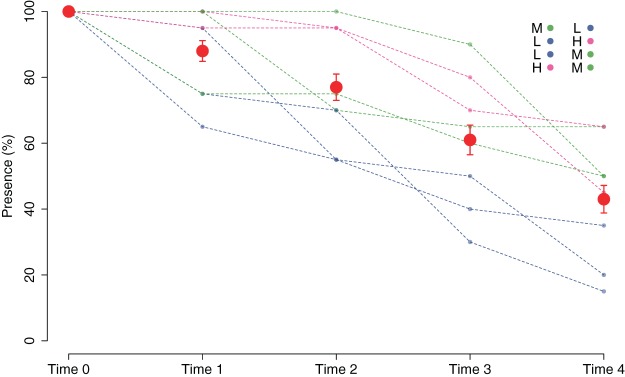
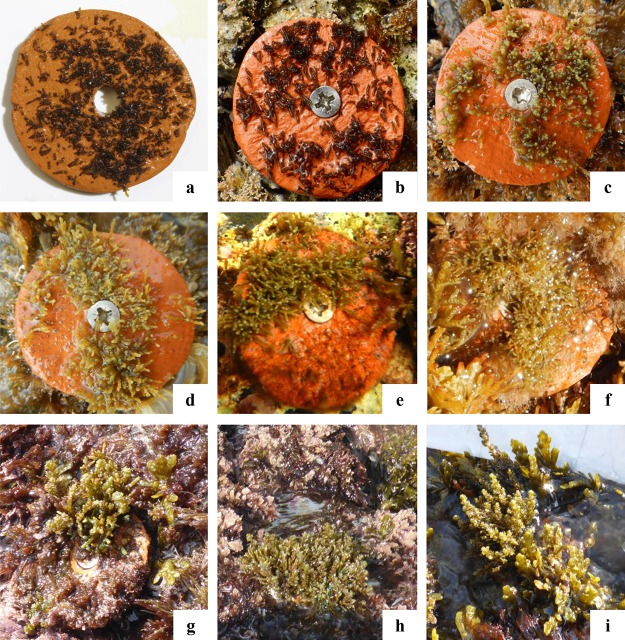
In the Mediterranean Sea, brown algae belonging to the genus play a valuable role as foundation species. Due to evidences of regression/loss of the habitats of these species caused by the interplay of human and climatic disturbances, active restoration measures have been encouraged by EU regulations. In particular, nondestructive restoration techniques, which avoid the depletion of threatened species in donor populations, are strongly recommended. In the framework of the EU project ROCPOP-Life, the first outplanting experience of var. has been implemented in the Cinque Terre Marine Protected Area (northwestern Mediterranean). A total of 400 clay tiles, hosting approximately three mm-long germlings of , were fixed to the rocky shore with screws: the tiles were monitored for the next 2 months by photographic sampling, and survival (presence/absence of juveniles on the tiles), cover and growth were assessed. Additional sampling was performed 6 months after tile deployment, after which an unprecedented storm surge severely affected the restoration performance. After 2 months, over 40% of the tiles were covered with juveniles, which reached approximately eight mm in total length. The tiles that survived the storm hosted three to six cm-long juveniles. The high cover (≥25%), assuring moisture and shading, and the appropriate size of the juveniles, to avert micro-grazing, at time of deployment were key to the survival and growth of the outplanted juveniles, increasing the potential for restoration success. Our findings show that outplanting of midlittoral canopy-forming species is a feasible approach for restoration efforts, with particular attention given to the early phases: (i) laboratory culture, (ii) transport, and (iii) juvenile densities. These results are strongly encouraging for the implementation of restoration actions for on a large scale, in light of EU guidelines.
在地中海,该属的褐藻作为基础物种发挥着重要作用。由于人类活动和气候干扰相互作用导致这些物种栖息地衰退/丧失的证据,欧盟法规鼓励采取积极的恢复措施。特别是,强烈推荐采用无损恢复技术,以避免供体种群中受威胁物种的枯竭。在欧盟项目ROCPOP-Life的框架内,在五渔村海洋保护区(地中海西北部)开展了首个变种的移栽试验。总共400块粘有大约3毫米长幼苗的陶瓦用螺丝固定在岩石海岸上:通过摄影采样对这些陶瓦进行了接下来两个月的监测,并评估了存活率(陶瓦上幼体的有无)、覆盖度和生长情况。在陶瓦放置6个月后进行了额外采样,之后一场前所未有的风暴潮严重影响了恢复效果。两个月后,超过40%的陶瓦被幼体覆盖,幼体总长度达到约8毫米。在风暴中存活下来的陶瓦上有3至6厘米长的幼体。放置时高覆盖度(≥25%)以确保湿度和遮荫,以及幼体大小合适以避免微捕食,是移栽幼体存活和生长的关键,增加了恢复成功的可能性。我们的研究结果表明,移栽潮间带中层冠层形成物种是恢复工作的一种可行方法,尤其要关注早期阶段:(i)实验室培养,(ii)运输,以及(iii)幼体密度。根据欧盟指南,这些结果对于大规模开展该物种的恢复行动极具鼓舞作用。