Dipartimento di Biologia Evoluzionistica Sperimentale and Centro Interdipartimentale di Ricerca per le Scienze Ambientali, University of Bologna, Ravenna, Italy.
PLoS One. 2010 May 24;5(5):e10791. doi: 10.1371/journal.pone.0010791.
Predicting and abating the loss of natural habitats present a huge challenge in science, conservation and management. Algal forests are globally threatened by loss and severe recruitment failure, but our understanding of resilience in these systems and its potential disruption by anthropogenic factors lags well behind other habitats. We tested hypotheses regarding triggers for decline and recovery potential in subtidal forests of canopy-forming algae of the genus Cystoseira.
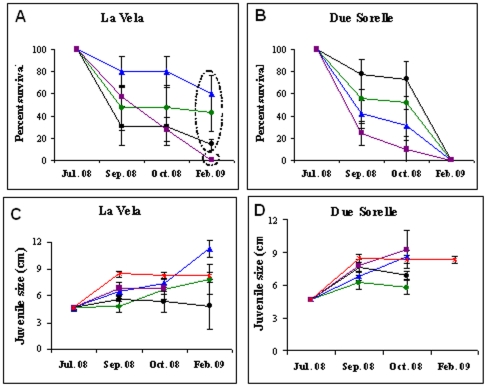
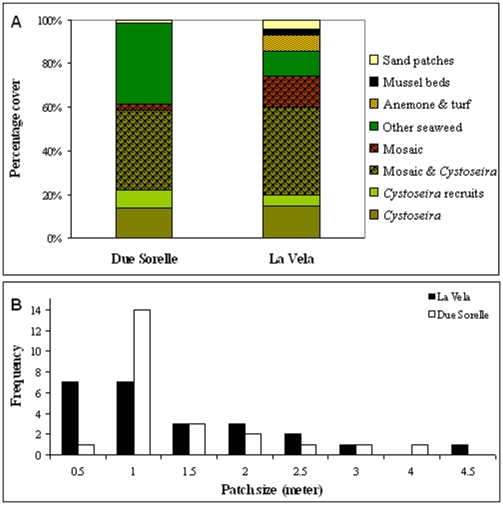
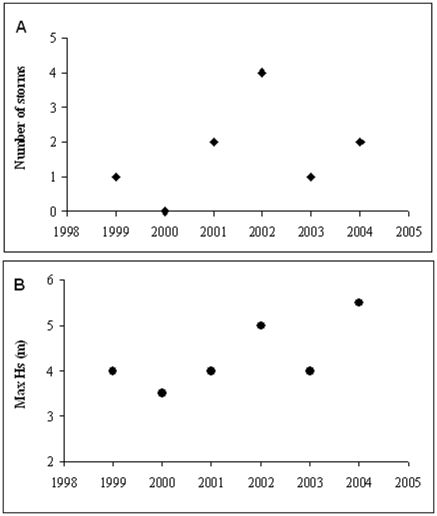
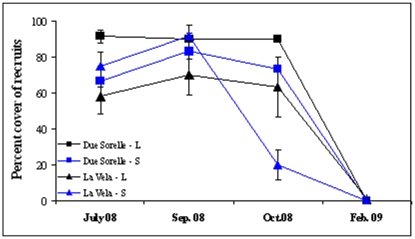
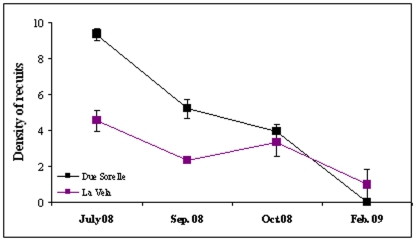
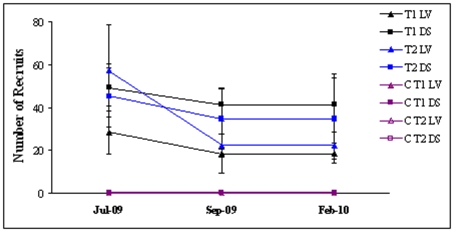
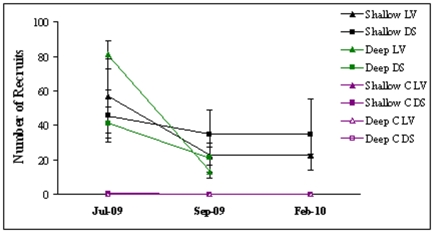
METHODOLOGY/PRINCIPAL FINDINGS: By using a combination of historical data, and quantitative in situ observations of natural recruitment patterns we suggest that recent declines of forests along the coasts of the north Adriatic Sea were triggered by increasing cumulative impacts of natural- and human-induced habitat instability along with several extreme storm events. Clearing and transplantation experiments subsequently demonstrated that at such advanced stages of ecosystem degradation, increased substratum stability would be essential but not sufficient to reverse the loss, and that for recovery to occur removal of the new dominant space occupiers (i.e., opportunistic species including turf algae and mussels) would be required. Lack of surrounding adult canopies did not seem to impair the potential for assisted recovery, suggesting that in these systems recovery could be actively enhanced even following severe depletions.
CONCLUSIONS/SIGNIFICANCE: We demonstrate that sudden habitat loss can be facilitated by long term changes in the biotic and abiotic conditions in the system, that erode the ability of natural ecosystems to absorb and recover from multiple stressors of natural and human origin. Moreover, we demonstrate that the mere restoration of environmental conditions preceding a loss, if possible, may be insufficient for ecosystem restoration, and is scarcely cost-effective. We conclude that the loss of complex marine habitats in human-dominated landscapes could be mitigated with appropriate consideration and management of incremental habitat changes and of attributes facilitating system recovery.
预测和缓解自然栖息地的丧失是科学、保护和管理面临的巨大挑战。海藻林在全球范围内受到丧失和严重繁殖失败的威胁,但我们对这些系统的恢复力及其可能被人为因素破坏的理解远远落后于其他栖息地。我们测试了关于引发衰退和恢复潜力的假设,这些假设涉及冠层海藻属 Cystoseira 的潮下带森林。
方法/主要发现:通过使用历史数据的组合,以及对自然繁殖模式的定量现场观察,我们认为,最近亚得里亚海北部沿海森林的衰退是由自然和人为引起的栖息地不稳定的累积影响以及几次极端风暴事件引发的。随后的清理和移植实验表明,在生态系统退化的如此高级阶段,增加基质稳定性将是必要的,但不足以逆转损失,而且为了恢复,需要去除新的优势空间占据者(即包括藻类和贻贝类的机会主义物种)。缺乏周围的成年树冠似乎不会损害辅助恢复的潜力,这表明在这些系统中,即使在严重消耗之后,也可以积极增强恢复。
结论/意义:我们证明,生物和非生物条件的长期变化可以促进突然的栖息地丧失,这些变化侵蚀了自然生态系统吸收和从自然和人为来源的多种压力源中恢复的能力。此外,我们证明,如果可能的话,仅仅恢复丧失前的环境条件可能不足以进行生态系统恢复,而且几乎没有成本效益。我们的结论是,在以人为主导的景观中,复杂海洋栖息地的丧失可以通过适当考虑和管理增量栖息地变化以及促进系统恢复的属性来减轻。