Laboratory for the Study of Calcified Tissues and Biomaterials, Faculty of Dental Medicine, Université de Montréal, Montreal, QC, Canada.
Department of Surgery, School of Medicine, Stanford University, Stanford, California.
J Biomed Mater Res B Appl Biomater. 2020 Apr;108(3):965-975. doi: 10.1002/jbm.b.34449. Epub 2019 Jul 31.
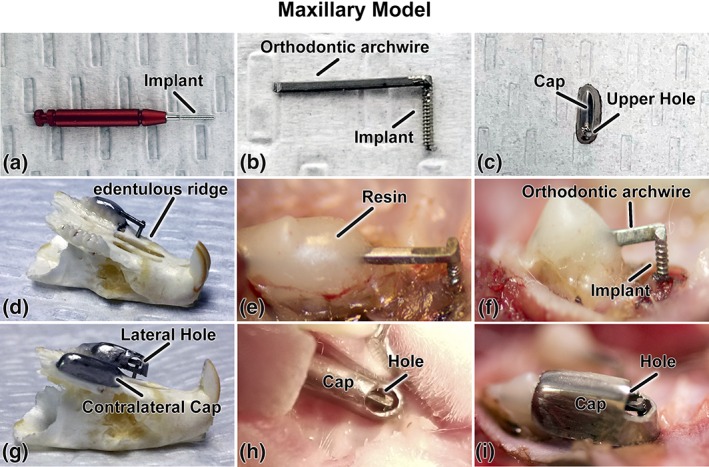
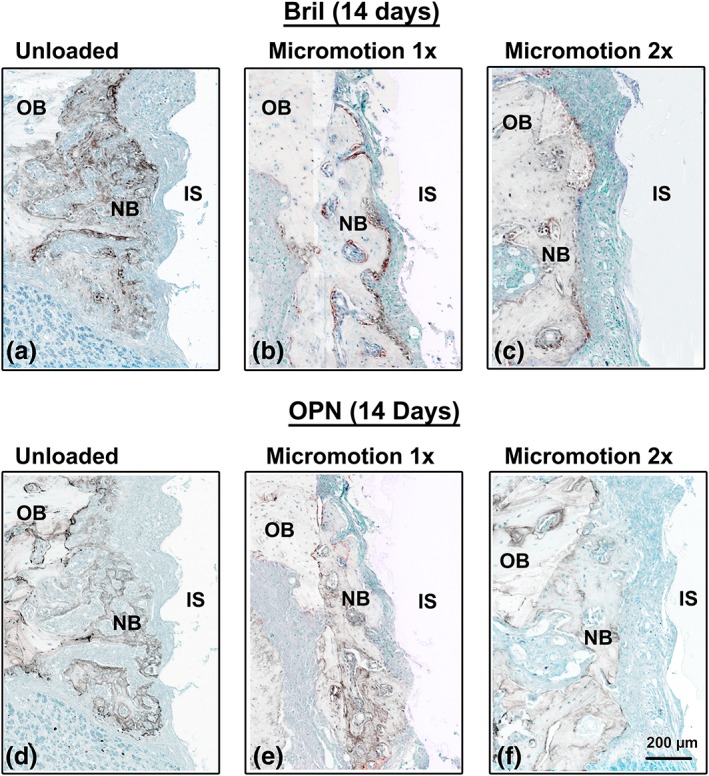
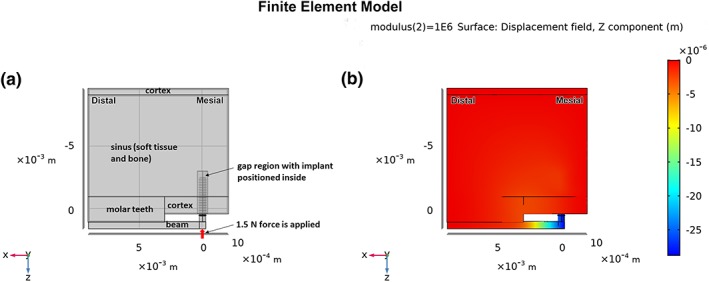
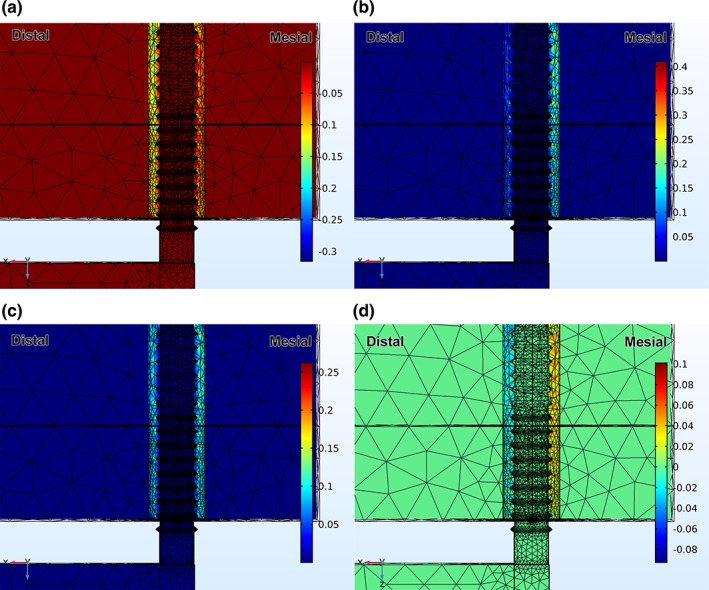
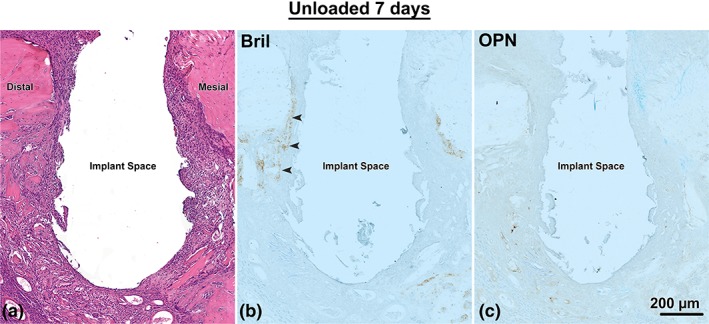
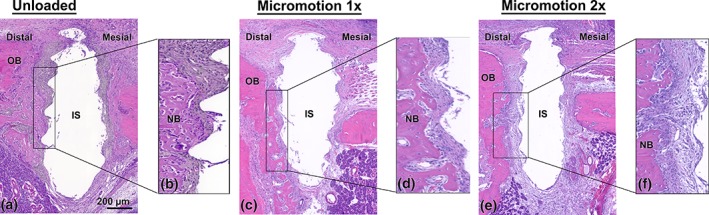
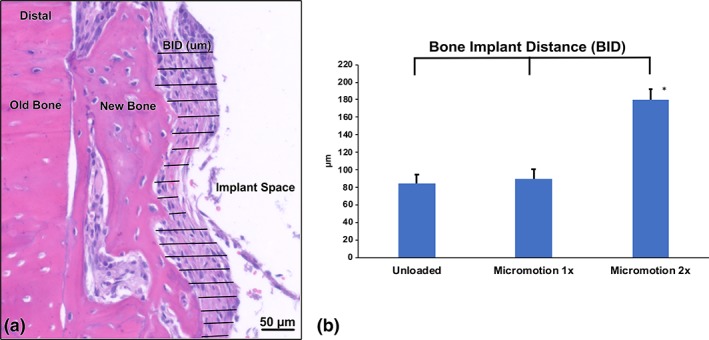
Experimental studies on the effect of micromotion on bone healing around implants are frequently conducted in long bones. In order to more closely reflect the anatomical and clinical environments around dental implants, and eventually be able to experimentally address load-management issues, we have developed a system that allows initial stabilization, protection from external forces, and controlled axial loading of implants. Screw-shaped implants were placed on the edentulous ridge in rat maxillae. Three loading regimens were applied to validate the system; case A no loading (unloaded implant) for 14 days, case B no loading in the first 7 days followed by 7 days of a single, daily loading session (60 cycles of an axial force of 1.5 N/cycle), and case C no loading in the first 7 days followed by 7 days of two such daily loading sessions. Finite element modeling of the peri-implant compressive and tensile strains plus histological and immunohistochemical analyses revealed that in case B any tissue damage resulting from the applied force (and related interfacial strains) did not per se disturb bone healing, however, in case C, the accumulation of damage resulting from the doubling of loading sessions severely disrupted the process. These proof-of-principle results validate the applicability of our system for controlled loading, and provide new evidence on the importance of the number of load cycles applied on healing of maxillary bone.
实验研究表明,微动对种植体周围骨愈合的影响经常在长骨中进行。为了更接近地反映牙科种植体周围的解剖学和临床环境,并最终能够在实验中解决负荷管理问题,我们开发了一种系统,该系统允许植入物的初始稳定、免受外力和控制轴向加载。螺旋形种植体被放置在上颌骨的无牙牙槽嵴上。应用三种加载方案来验证该系统;情况 A 为 14 天无负载(未加载植入物),情况 B 在最初的 7 天无负载,随后进行 7 天的单次每日加载(60 个周期,每个周期的轴向力为 1.5 N/周期),情况 C 在最初的 7 天无负载,随后进行 7 天的两次每日加载。种植体周围压缩和拉伸应变的有限元建模以及组织学和免疫组织化学分析表明,在情况 B 中,任何由施加力(和相关界面应变)引起的组织损伤本身并不会干扰骨愈合,但是,在情况 C 中,加载次数加倍所导致的损伤积累严重干扰了该过程。这些原理验证结果验证了我们的系统用于控制加载的适用性,并为上颌骨愈合过程中施加的加载循环次数的重要性提供了新的证据。