Chair of Plant Physiology and Biotechnology, Nicolaus Copernicus University, 1 Lwowska Street, 87-100 Toruń, Poland.
Department of Plant Physiology Warsaw, University of Life Sciences-SGGW (WULS-SGGW), Nowoursynowska 159 Street, 02-776 Warsaw, Poland.
Int J Mol Sci. 2019 Jul 31;20(15):3731. doi: 10.3390/ijms20153731.
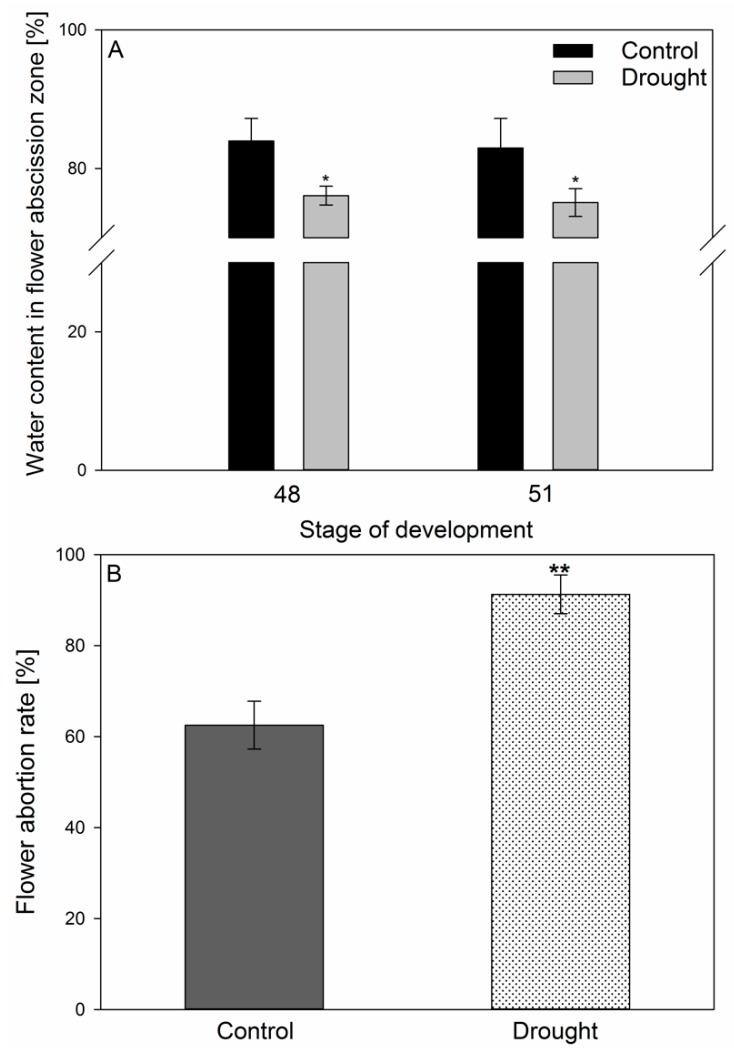
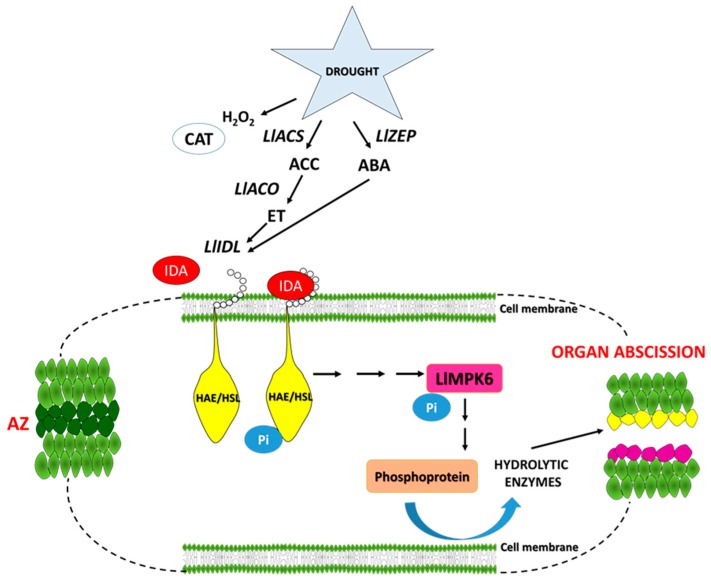
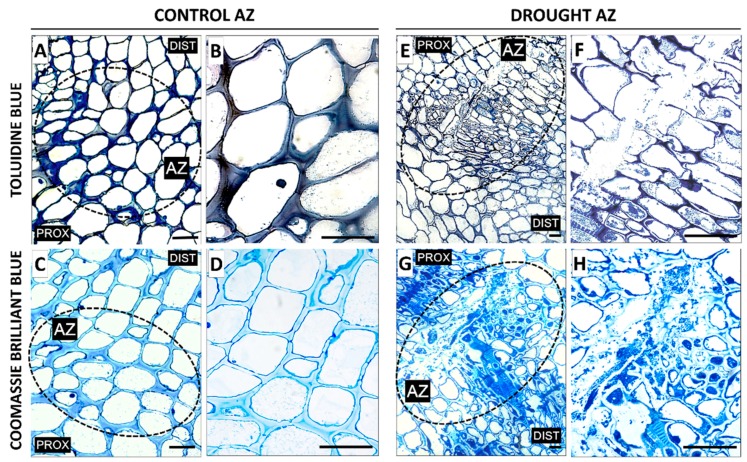
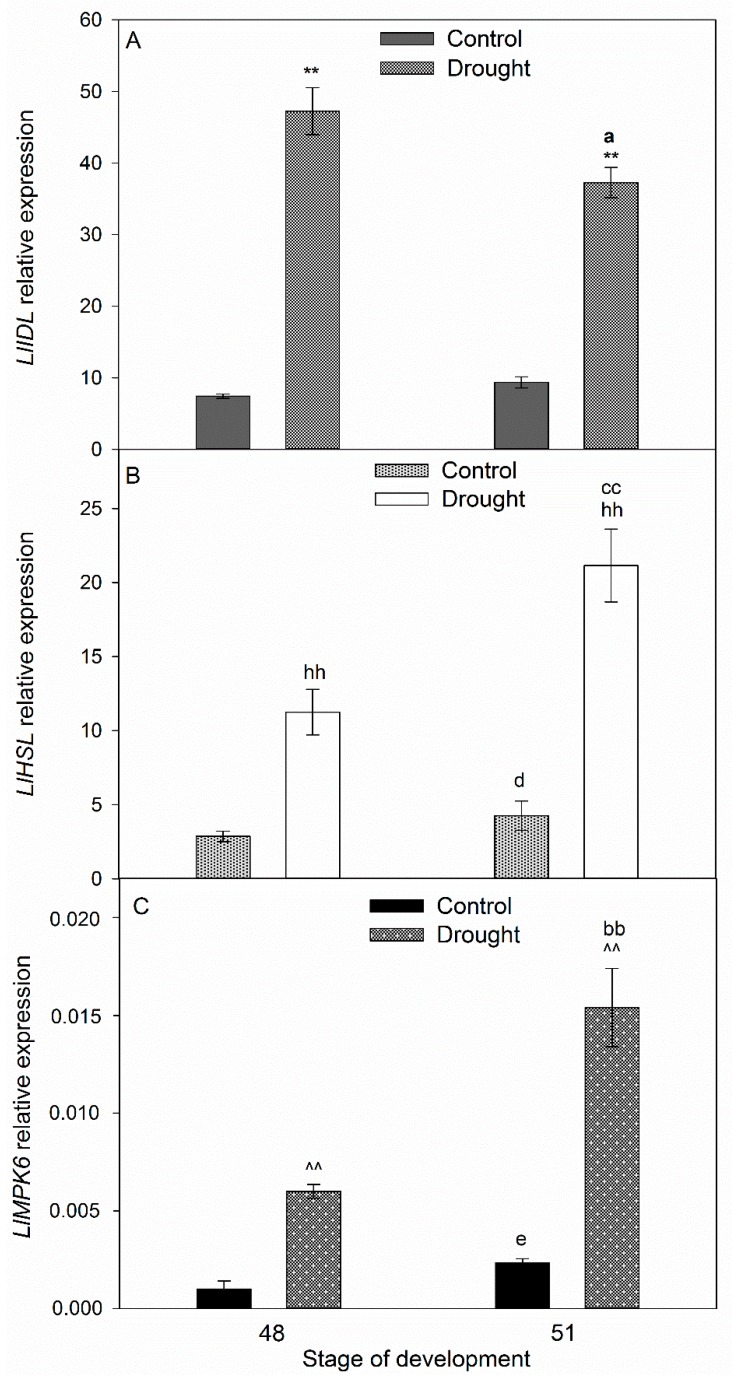
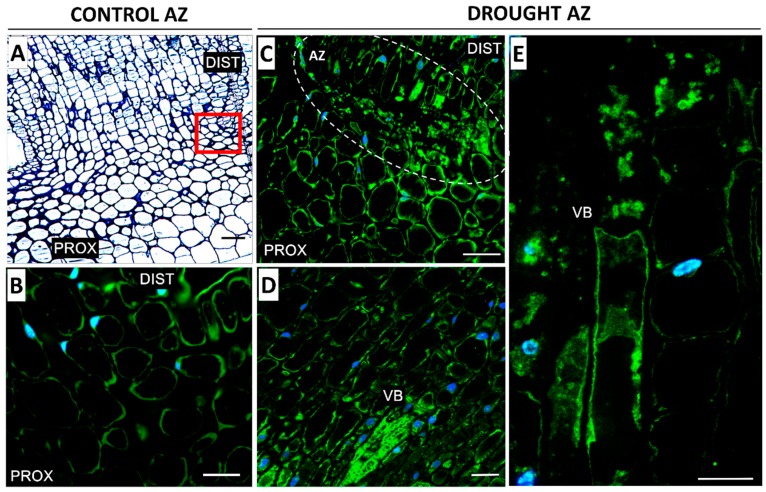
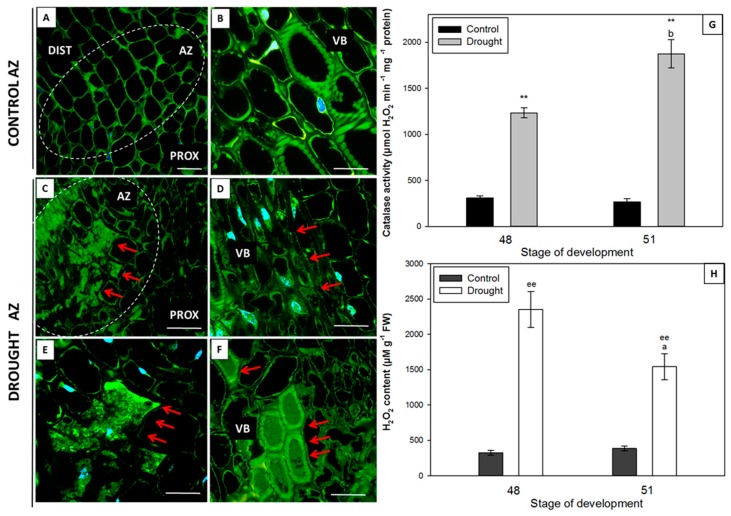
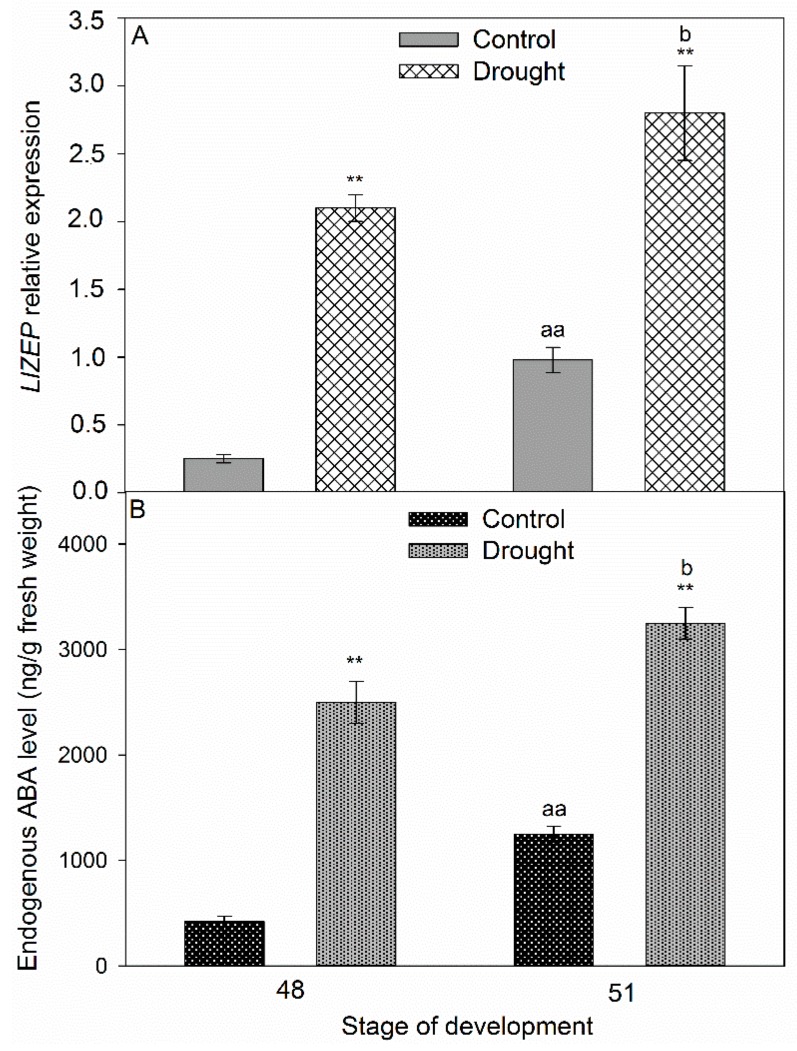
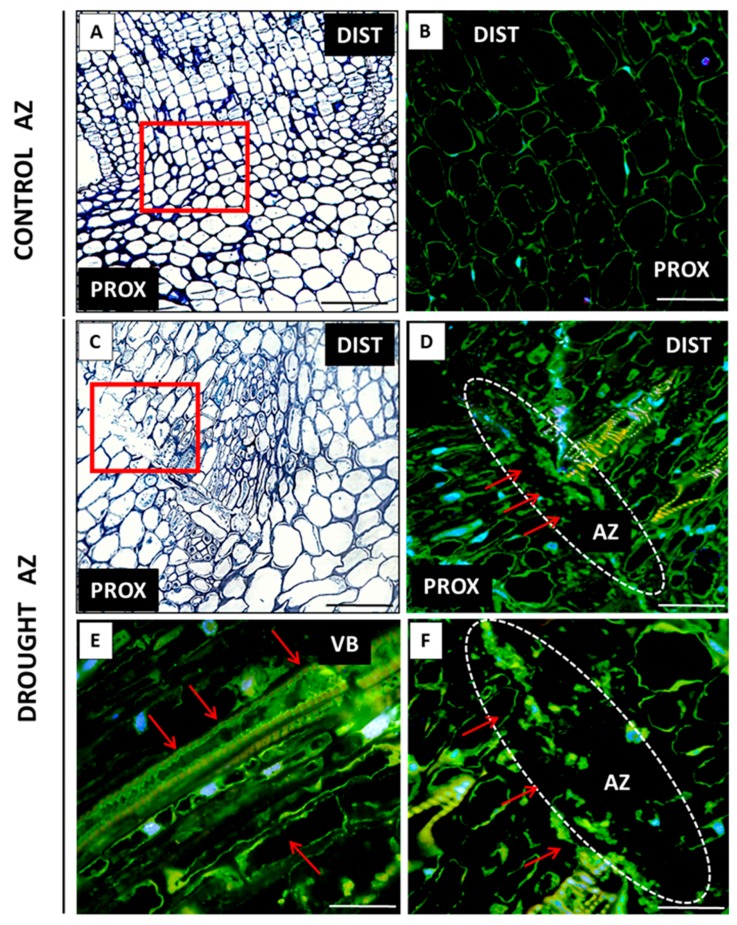
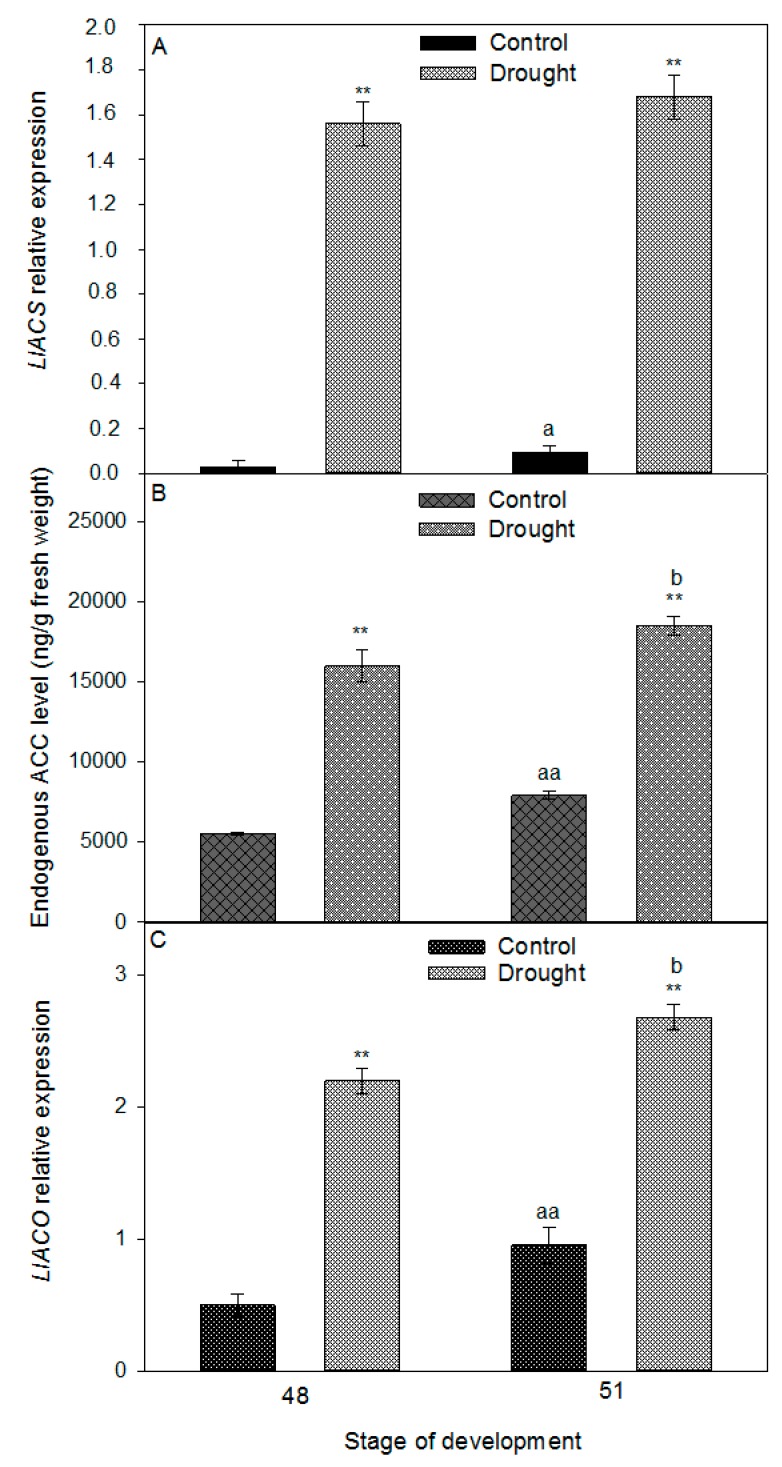
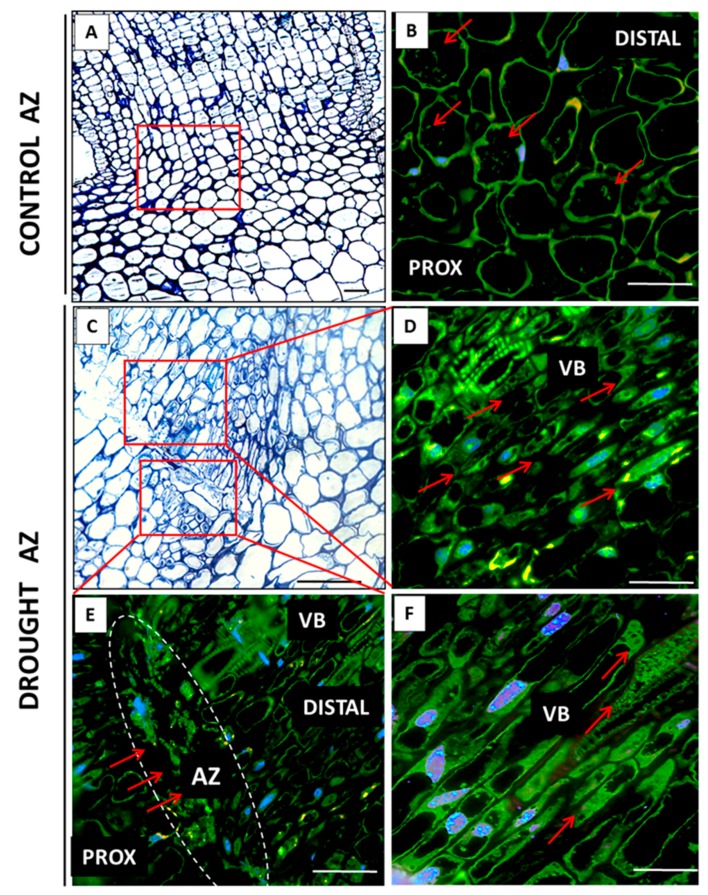
The drought is a crucial environmental factor that determines yielding of many crop species, e.g., , which are a source of valuable proteins for food and feed. Herein, we focused on the events accompanying drought-induced activation of flower abscission zone (AZ)-the structure responsible for flower detachment and, consequently, determining seed production in . Therefore, detection of molecular markers regulating this process is an excellent tool in the development of improved drought-resistant cultivars to minimize yield loss. We applied physiological, molecular, biochemical, immunocytochemical, and chromatography methods for a comprehensive examination of changes evoked by drought in the AZ cells. This factor led to significant cellular changes and activated AZ, which consequently increased the flower abortion rate. Simultaneously, drought caused an accumulation of mRNA of genes (), (), and (), encoding succeeding elements of AZ activation pathway. The content of hydrogen peroxide (HO), catalase activity, and localization significantly changed which confirmed the appearance of stressful conditions and indicated modifications in the redox balance. Loss of water enhanced transcriptional activity of the abscisic acid (ABA) and ethylene (ET) biosynthesis pathways, which was manifested by elevated expression of (), (), and () genes. Accordingly, both ABA and ET precursors were highly abundant in AZ cells. Our study provides information about several new potential markers of early response on water loss, which can help to elucidate the mechanisms that control plant response to drought, and gives a useful basis for breeders and agronomists to enhance tolerance of crops against the stress.
干旱是决定许多作物品种产量的关键环境因素,例如, ,它们是食物和饲料中宝贵蛋白质的来源。在此,我们专注于伴随干旱诱导的花脱落区 (AZ) 激活的事件-负责花朵脱落的结构,进而决定 在 的种子产量。因此,检测调节此过程的分子标记物是开发改良耐旱品种以最小化产量损失的极好工具。我们应用生理、分子、生化、免疫细胞化学和色谱方法对干旱在 AZ 细胞中引起的变化进行了全面检查。这个因素导致了显著的细胞变化并激活了 AZ,这反过来又增加了花朵的败育率。同时,干旱导致编码 AZ 激活途径后续元件的基因 ()、 ()和 ()的 mRNA 积累。过氧化氢 (HO) 的含量、过氧化氢酶活性和定位发生了显著变化,这证实了应激条件的出现,并表明氧化还原平衡发生了改变。水分流失增强了脱落酸 (ABA) 和乙烯 (ET) 生物合成途径的转录活性,这表现为 ()、 ()和 ()基因的表达升高。相应地,AZ 细胞中 ABA 和 ET 的前体含量都非常丰富。我们的研究提供了有关水分损失早期响应的几个新的潜在标记物的信息,这有助于阐明控制植物对干旱响应的机制,并为培育者和农学家增强作物对胁迫的耐受性提供了有用的基础。