Key Laboratory of Plant Cell Engineering and Germplasm Innovation, School of Life Sciences, Shandong University, Qingdao, 266237, Shandong, China.
Institute of Crop Sciences, Chinese Academy of Agricultural Sciences, Beijing, 100081, China.
BMC Plant Biol. 2019 Aug 1;19(1):335. doi: 10.1186/s12870-019-1941-5.
Drought is a serious causal factor of reduced crop yields than any other abiotic stresses. As one of the most widely distributed crops, maize plants frequently suffer from drought stress, which causes great losses in the final kernel yield. Drought stress response in plants showed tissue- and developmental stage-specific characteristics.
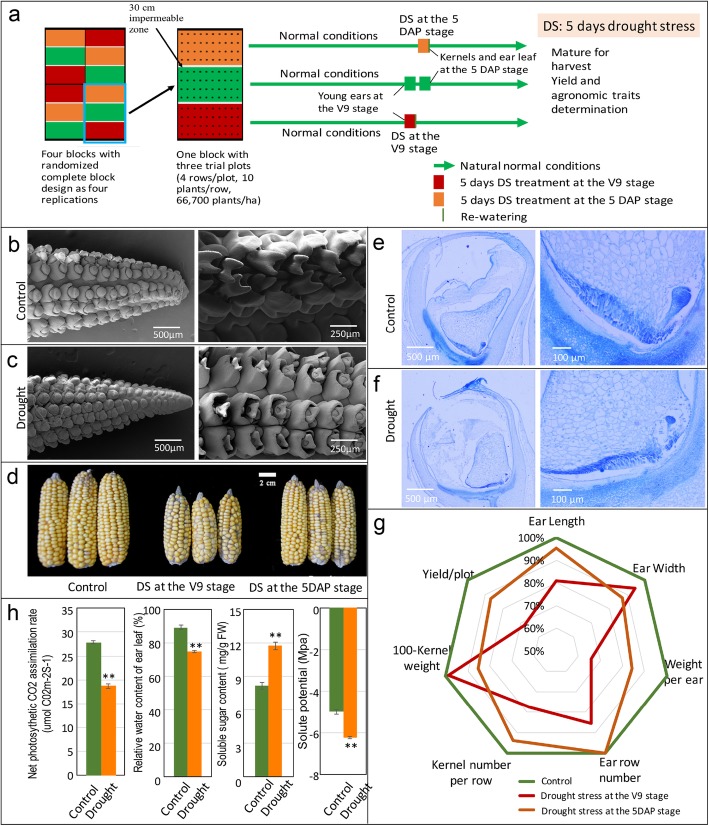
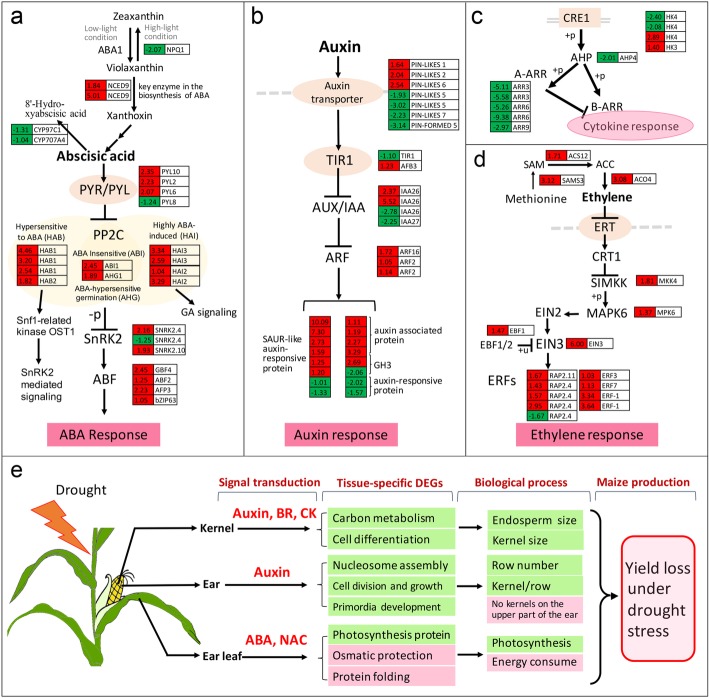
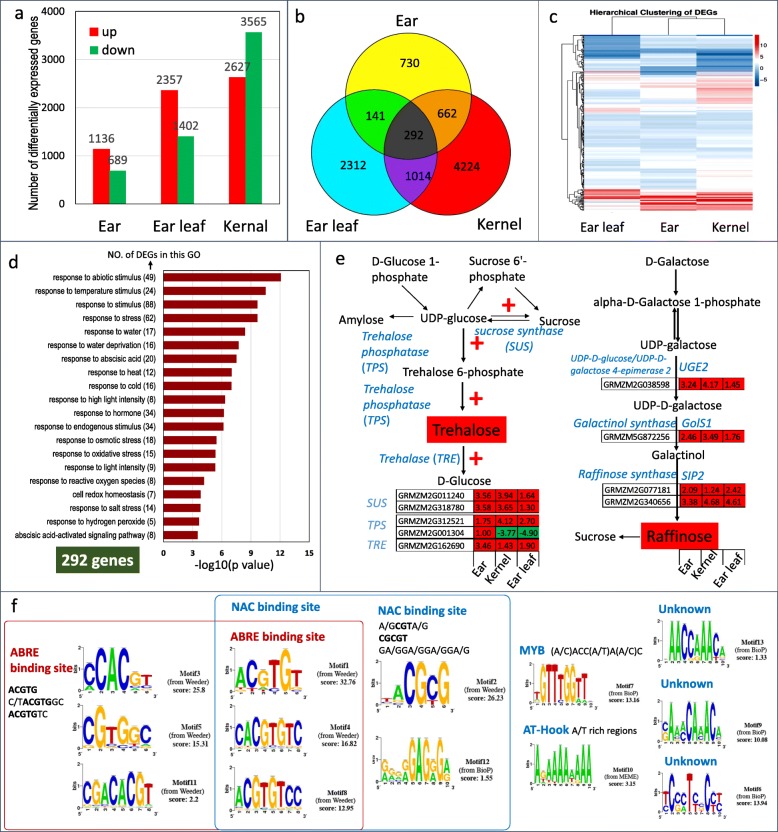
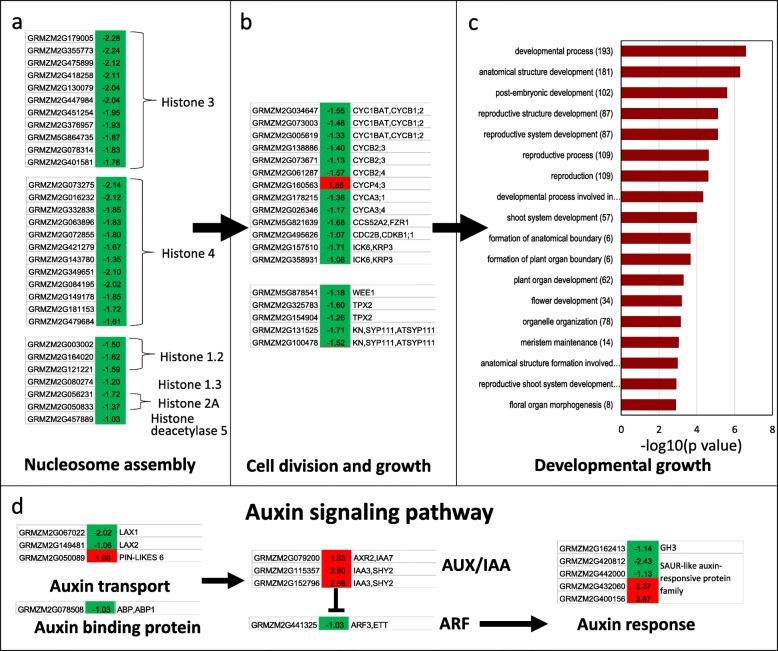
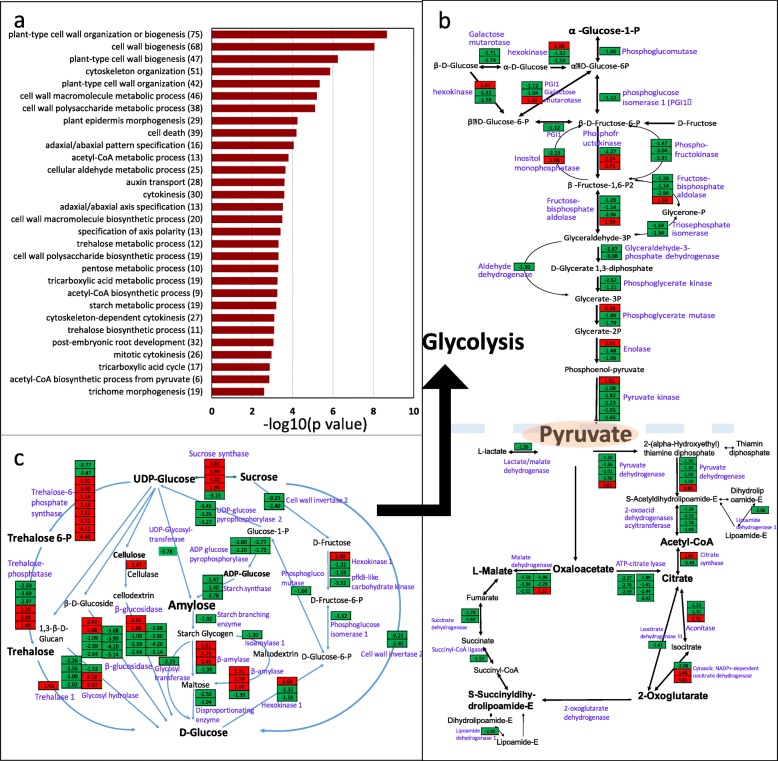
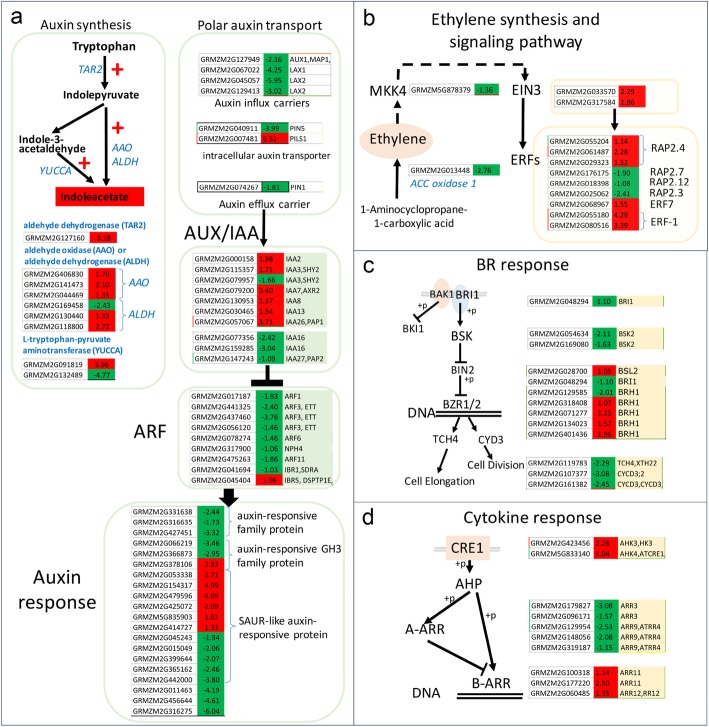
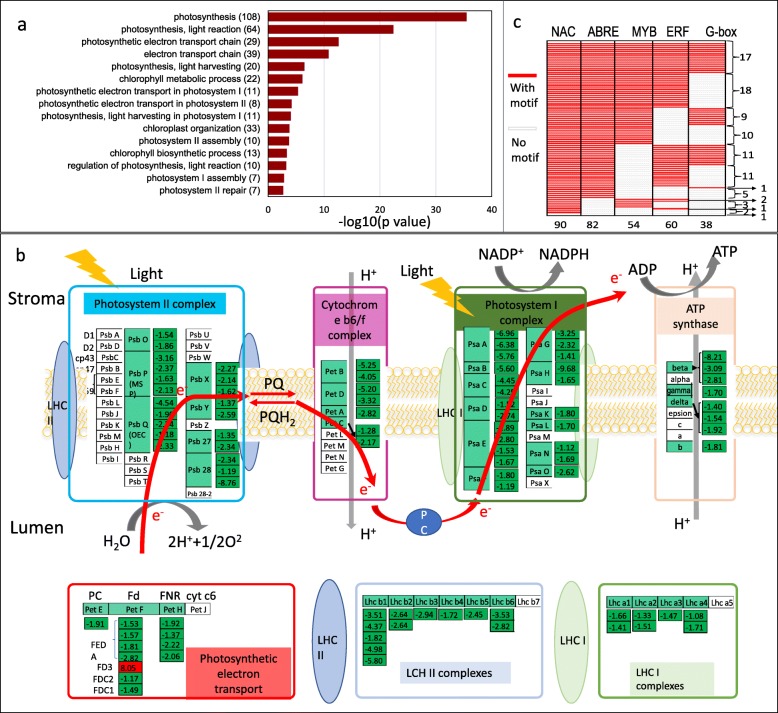
In this study, the ears at the V9 stage, kernels and ear leaf at the 5DAP (days after pollination) stage of maize were used for morphological, physiological and comparative transcriptomics analysis to understand the different features of "sink" or "source" organs and the effects on kernel yield under drought stress conditions. The ABA-, NAC-mediate signaling pathway, osmotic protective substance synthesis and protein folding response were identified as common drought stress response in the three organs. Tissue-specific drought stress responses and the regulators were identified, they were highly correlated with growth, physiological adaptation and yield loss under drought stress. For ears, drought stress inhibited ear elongation, led to the abnormal differentiation of the paired spikelet, and auxin signaling involved in the regulation of cell division and growth and primordium development changes. In the kernels, reduced kernel size caused by drought stress was observed, and the obvious differences of auxin, BR and cytokine signaling transduction appeared, which indicated the modification in carbohydrate metabolism, cell differentiation and growth retardation. For the ear leaf, dramatically and synergistically reduced the expression of photosynthesis genes were observed when suffered from drought stress, the ABA- and NAC- mediate signaling pathway played important roles in the regulation of photosynthesis.
Transcriptomic changes caused by drought were highly correlated with developmental and physiological adaptation, which was closely related to the final yield of maize, and a sketch of tissue- and developmental stage-specific responses to drought stress in maize was drafted.
干旱是导致作物减产的严重原因,甚于其他非生物胁迫因素。玉米作为分布最广的作物之一,常遭受干旱胁迫,导致最终籽粒产量损失巨大。植物对干旱胁迫的响应表现出组织和发育阶段特异性特征。
本研究以玉米 V9 期果穗、5DAP(授粉后天数)期籽粒和穗叶为材料,进行形态学、生理学和比较转录组学分析,以了解“源”或“库”器官在干旱胁迫下的不同特征及其对籽粒产量的影响。ABA、NAC 介导的信号通路、渗透保护物质合成和蛋白折叠响应被鉴定为三个器官共有的干旱胁迫响应。鉴定了组织特异性干旱胁迫响应及其调控因子,它们与干旱胁迫下的生长、生理适应和产量损失高度相关。对于果穗,干旱胁迫抑制果穗伸长,导致成对小穗异常分化,而生长素信号参与细胞分裂和生长以及原基发育变化的调控。在籽粒中,观察到干旱胁迫导致籽粒变小,生长素、BR 和细胞因子信号转导出现明显差异,表明碳水化合物代谢、细胞分化和生长迟缓的改变。对于穗叶,在遭受干旱胁迫时,光合作用基因的表达显著协同降低,ABA 和 NAC 介导的信号通路在光合作用调控中起重要作用。
干旱引起的转录组变化与发育和生理适应高度相关,这与玉米的最终产量密切相关,本文描绘了玉米对干旱胁迫的组织和发育阶段特异性响应的概要。