Cardiff School of Biosciences, Cardiff, Museum Avenue, Cardiff, CF10 3AX, UK.
BMC Biotechnol. 2019 Aug 1;19(1):55. doi: 10.1186/s12896-019-0549-z.
Loop mediated isothermal amplification of nucleic acid templates is a rapid, sensitive and specific method suitable for molecular diagnostics. However the complexity of primer design and the number of primers involved can lead to false positives from non-specific primer interactions. Standard methods of LAMP detection utilise the increasing concentrations of DNA or inorganic pyrophosphate and therefore lack specificity for identifying the desired LAMP amplification. Molecular beacons used in PCR reactions are target specific and may enhance specificity with LAMP.
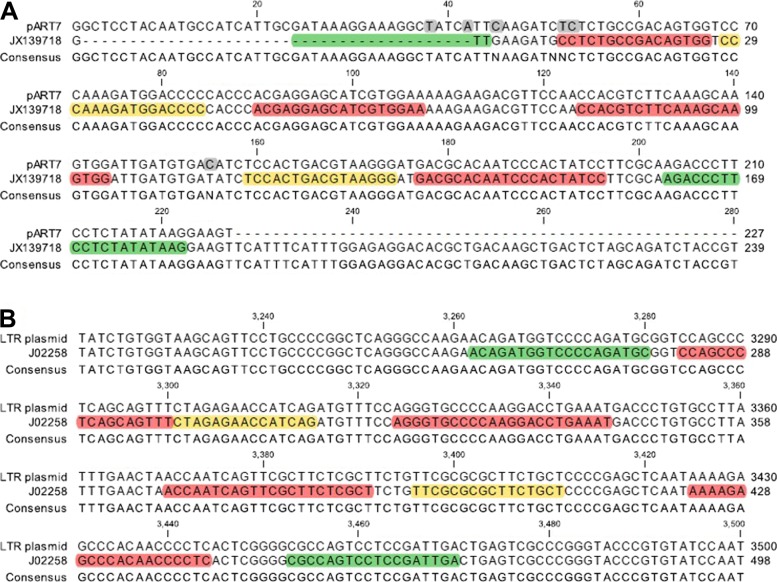
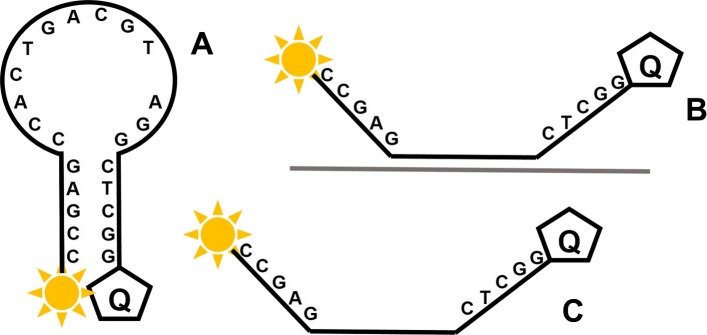
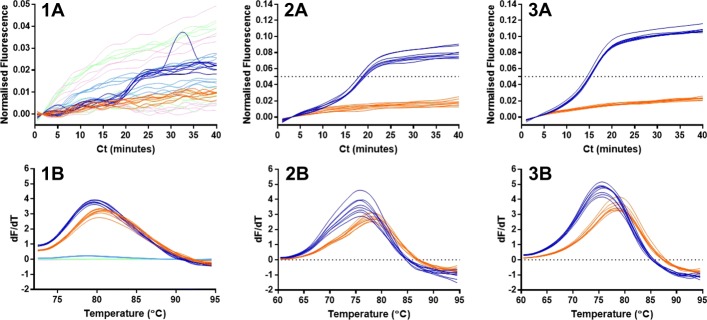
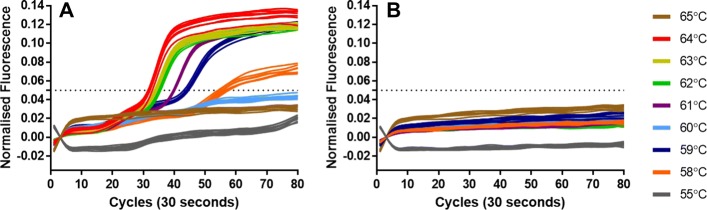
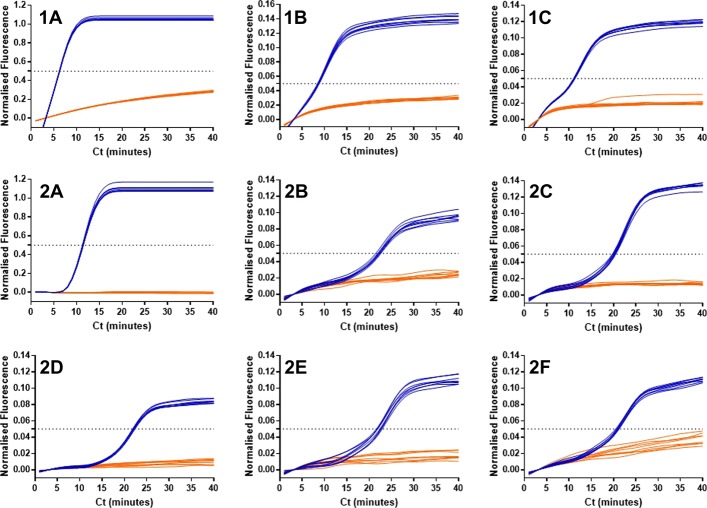
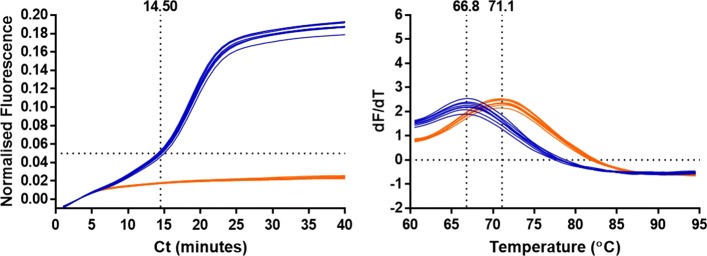
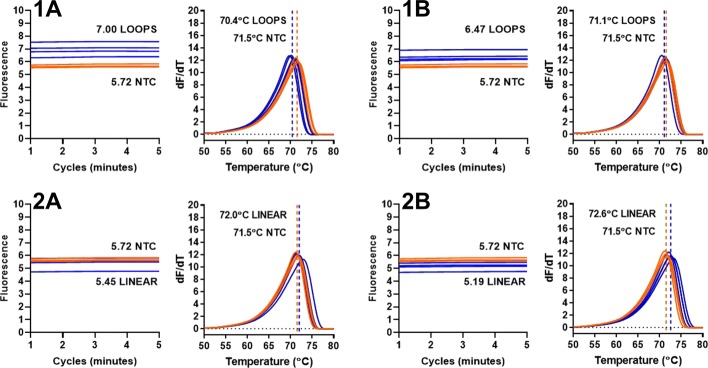
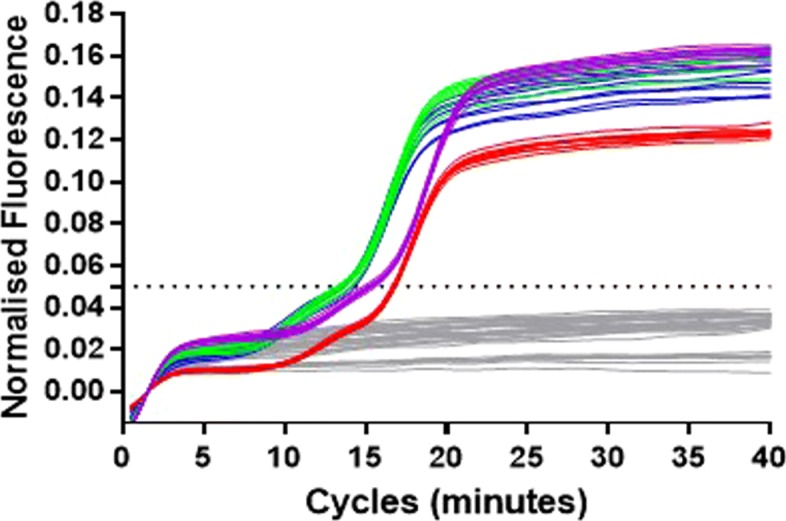
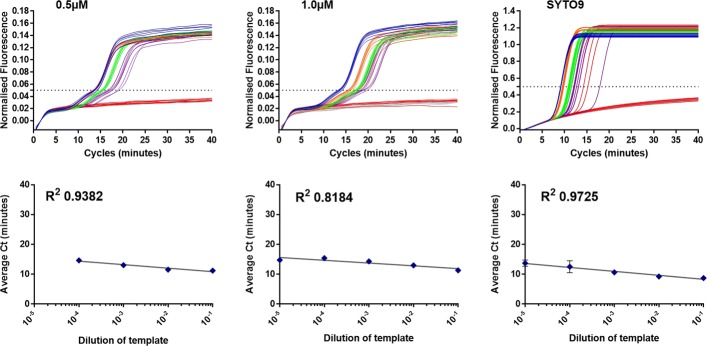
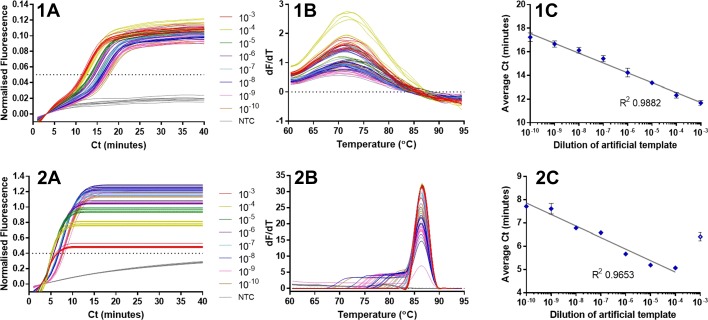
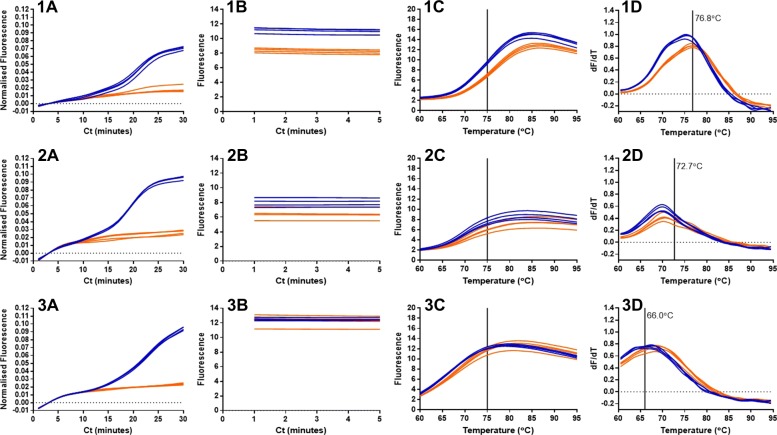
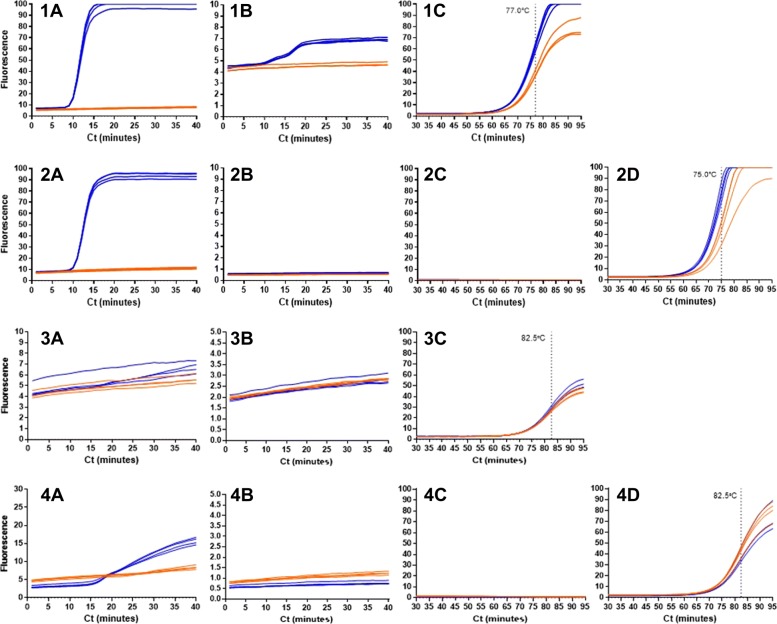
We present a potential molecular beacon approach to LAMP detection targeting the single stranded region between loops, and test this for LAMP molecular beacons targeting the 35S promoter and NOS terminator sequences commonly used in GM crops. From these studies we show that molecular beacons used in LAMP, despite providing a change in fluorescent intensity with amplification, appear not to anneal to specific target sequences and therefore target specificity is not a benefit of this method. However, molecular beacons demonstrate a change in fluorescence which is indicative of LAMP amplification products. We identify the LAMP loop structure as likely to be responsible for this change in signal.
Molecular beacons can be used to detect LAMP amplification but do not provide sequence specificity. The method can be used to determine effectively LAMP amplification from other primer-driven events, but does not discriminate between different LAMP amplicons. It is therefore unsuitable for multiplex LAMP reactions due to non-specific detection of LAMP amplification.
环介导等温扩增核酸模板是一种快速、敏感和特异的方法,适用于分子诊断。然而,引物设计的复杂性和涉及的引物数量可能导致非特异性引物相互作用产生假阳性。LAMP 检测的标准方法利用 DNA 或无机焦磷酸酯浓度的增加,因此缺乏识别所需 LAMP 扩增的特异性。PCR 反应中使用的分子信标是针对特定目标的,并且可以与 LAMP 一起增强特异性。
我们提出了一种针对环之间单链区域的潜在分子信标方法用于 LAMP 检测,并针对 GM 作物中常用的 35S 启动子和 NOS 终止子序列的 LAMP 分子信标进行了测试。从这些研究中,我们表明,尽管分子信标在扩增时提供了荧光强度的变化,但它们似乎不与特定的靶序列退火,因此该方法没有靶特异性的优势。然而,分子信标显示荧光的变化,表明存在 LAMP 扩增产物。我们确定 LAMP 环结构可能是导致这种信号变化的原因。
分子信标可用于检测 LAMP 扩增,但不能提供序列特异性。该方法可用于有效地确定来自其他引物驱动事件的 LAMP 扩增,但不能区分不同的 LAMP 扩增子。因此,由于非特异性检测 LAMP 扩增,它不适合用于多重 LAMP 反应。