Lilli Nicoletta L, Révy Delphine, Robelet Sandra, Lejeune Béatrice
Clinical Affairs, Labo'Life France, Moutiers-Sous-Chantemerle, F-79320, France.
Syncrosome, Campus Luminy - Luminy Entreprises, Marseille 13288, France.
Degener Neurol Neuromuscul Dis. 2019 Jul 8;9:79-88. doi: 10.2147/DNND.S202966. eCollection 2019.
Parkinson's disease (PD) is a neurodegenerative disease characterized by motor impairments and resulting from progressive degenerative loss of midbrain dopaminergic (DAergic) neurons in the substantia nigra. Although the main cause of the loss of DAergic neurons is still unknown, various etiopathogenic mechanisms are distinguished, including release and accumulation of endogenous excitotoxic mediators along with the production of oxidative free radicals. Several neurotrophic and growth factors are known to increase DAergic neuronal survival and enhance antioxidant mechanisms. In this context, the micro-immunotherapy (MI) approach consists to regulate the immune system in order to protect DAergic neurons and control oxidative stress.
The aim of the present study was to investigate the effect of the MI medicine (MIM), 2LPARK (Labo'Life), on oxidative stress and on the number of neurons positive for tyrosine hydroxylase (TH), in an in vitro model of PD.
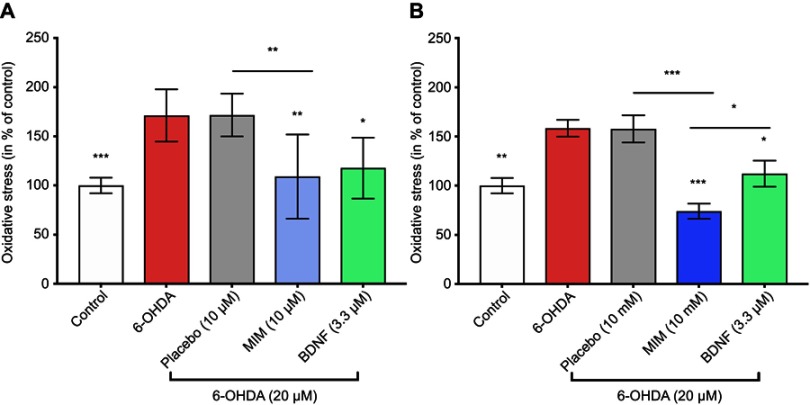
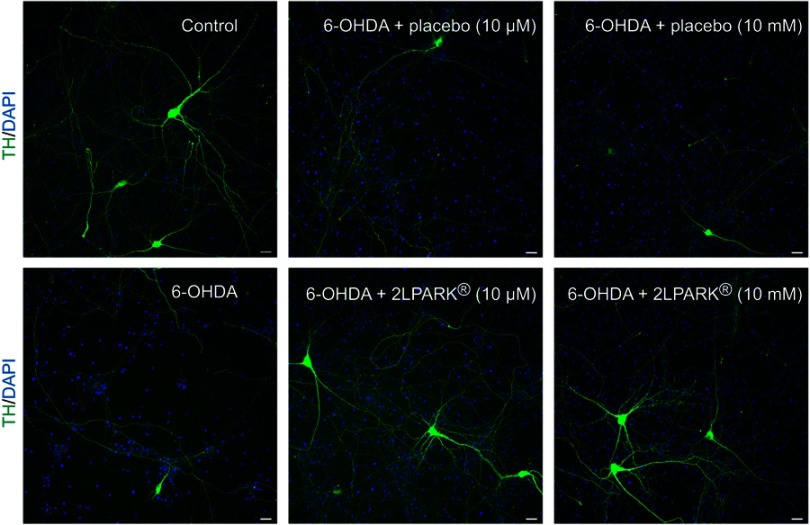
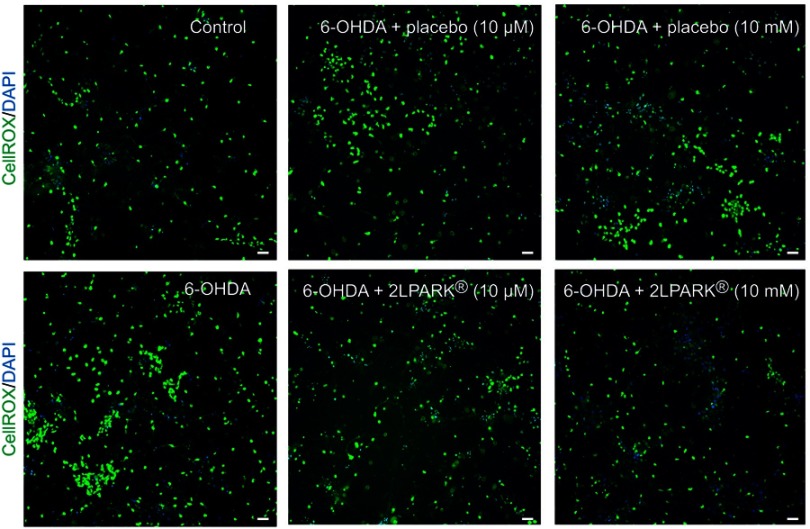
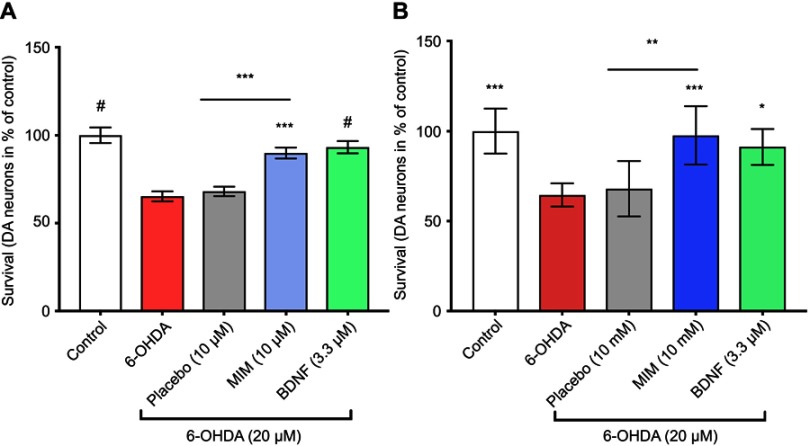
Rat primary mesencephalic DAergic neurons cultures were pre-treated for 1 hr with the MIM (10 μM and 10 mM), placebo (10 μM and 10 mM) or brain-derived neurotrophic factor (BDNF; 3.3 μM) and then intoxicated with 6-hydroxydopamine (6-OHDA; 20 μM) for 48 hrs. After incubation, cells were incubated 30 mins at 37°C with CellROX green reagent and number of labeled cells were quantified. Then, cells were fixed and incubated with anti-TH antibody and the number of TH neurons was evaluated.
We showed that, contrary to placebo, MIM was able to reduce oxidative stress and protect DAergic neurons from 6-OHDA-induced cell death.
Our results demonstrate the in vitro efficacy of MIM on two essential mechanisms of PD and propose the MI approach as a new ally in the regulation of neuroinflammation and in the treatment of this degenerative disease.
帕金森病(PD)是一种神经退行性疾病,其特征为运动障碍,由黑质中脑多巴胺能(DAergic)神经元的进行性退化性丧失所致。尽管DAergic神经元丧失的主要原因尚不清楚,但已区分出多种病因机制,包括内源性兴奋性毒性介质的释放和积累以及氧化自由基的产生。已知几种神经营养因子和生长因子可增加DAergic神经元的存活率并增强抗氧化机制。在此背景下,微免疫疗法(MI)旨在调节免疫系统以保护DAergic神经元并控制氧化应激。
本研究的目的是在PD的体外模型中研究MI药物(MIM)2LPARK(Labo'Life)对氧化应激和酪氨酸羟化酶(TH)阳性神经元数量的影响。
将大鼠原代中脑DAergic神经元培养物用MIM(10μM和10mM)、安慰剂(10μM和10mM)或脑源性神经营养因子(BDNF;3.3μM)预处理1小时,然后用6-羟基多巴胺(6-OHDA;20μM)中毒48小时。孵育后,将细胞与CellROX绿色试剂在37°C孵育30分钟,并对标记细胞的数量进行定量。然后,将细胞固定并用抗TH抗体孵育,并评估TH神经元的数量。
我们表明,与安慰剂相反,MIM能够降低氧化应激并保护DAergic神经元免受6-OHDA诱导的细胞死亡。
我们的结果证明了MIM在PD的两个基本机制上的体外疗效,并提出MI方法作为神经炎症调节和这种退行性疾病治疗的新帮手。