Nazar Elham, Khatami Fatemeh, Saffar Hiva, Tavangar Seyed Mohammad
Department of Pathology, Shariati Hospital, Tehran University of Medical Sciences, Tehran, Iran.
Chronic Diseases Research Center, Endocrinology and Metabolism Population Sciences Institute, Tehran University of Medical Sciences, Tehran, Iran.
Int J Hematol Oncol Stem Cell Res. 2019 Apr 1;13(2):72-82.
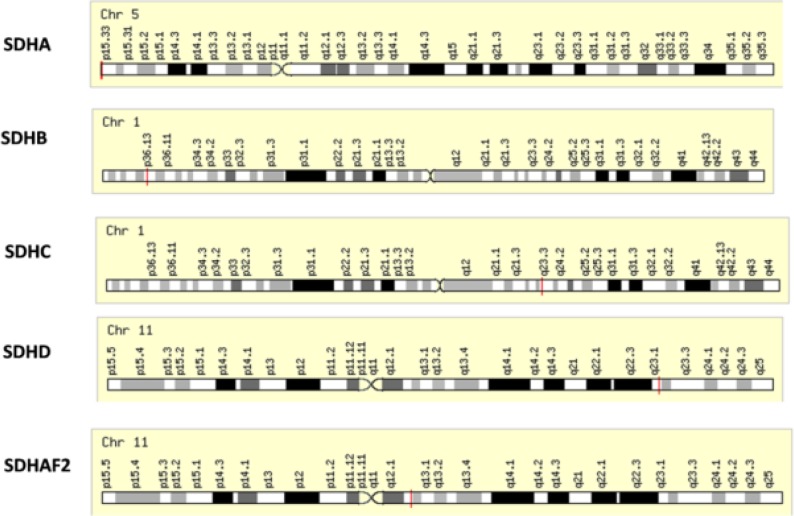
Transformation of a normal cell to cancerous one is dependent on the accumulation of several genetic and epigenetic alterations. One of the candidate driver genetic alterations can happen in succinate dehydrogenases (SDHx) coding gene include SDHA, SDHB, SDHC, SDHD, and SDHAF2. The most important SDH mutation is in the SDHD gene, which encodes the smallest subunit of mitochondrial complex II (SDH). It has key function both in familial and non-familial hereditary paraganglioma/phaeochromocytoma syndrome (HPGL/PCC). SDHx genes mutations can have resulted in genetic and epigenetic changes like histone hypermethylation. These properties can lead to succinate-mediated inhibition of α-ketoglutarate-dependent dioxygenases. So hypoxic conditions can generate subsequent neoplastic transformation, and in this review, we are presenting the role of SDHx in several malignancies.
正常细胞向癌细胞的转化取决于多种遗传和表观遗传改变的积累。候选驱动基因改变之一可能发生在琥珀酸脱氢酶(SDHx)编码基因中,包括SDHA、SDHB、SDHC、SDHD和SDHAF2。最重要的SDH突变发生在SDHD基因中,该基因编码线粒体复合物II(SDH)的最小亚基。它在家族性和非家族性遗传性副神经节瘤/嗜铬细胞瘤综合征(HPGL/PCC)中都具有关键作用。SDHx基因突变可能导致遗传和表观遗传变化,如组蛋白高甲基化。这些特性可导致琥珀酸介导的对α-酮戊二酸依赖性双加氧酶的抑制。因此,缺氧条件可引发随后的肿瘤转化,在本综述中,我们将阐述SDHx在几种恶性肿瘤中的作用。