Immunology Research Center, National Health Research Institutes, Zhunan, Miaoli, 35053, Taiwan.
Department of Medical Laboratory Science and Biotechnology, Asia University, Taichung, 41354, Taiwan.
J Exp Clin Cancer Res. 2024 Jun 17;43(1):169. doi: 10.1186/s13046-024-03094-9.
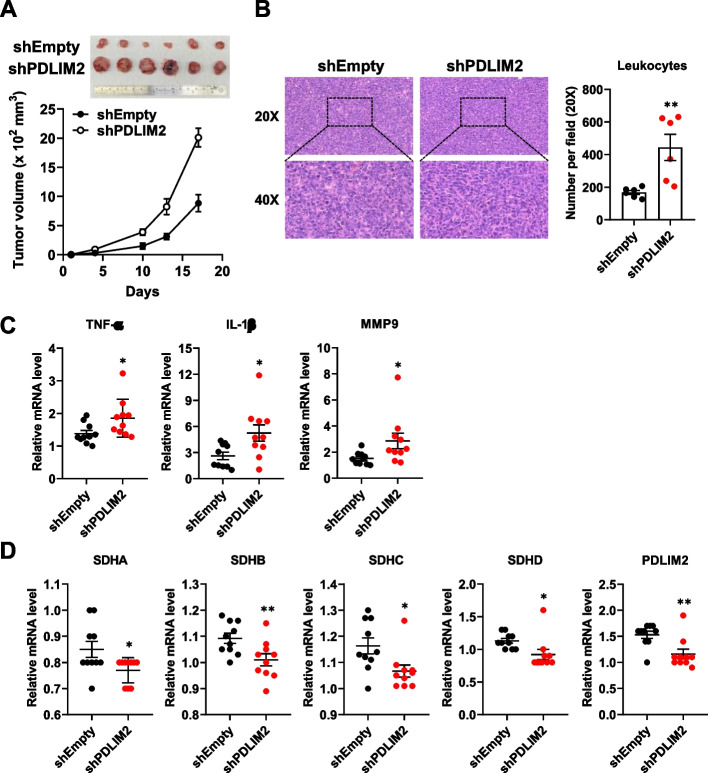
Cancer is characterized by dysregulated cellular metabolism. Thus, understanding the mechanisms underlying these metabolic alterations is important for developing targeted therapies. In this study, we investigated the pro-tumoral effect of PDZ and LIM domain 2 (PDLIM2) downregulation in lung cancer growth and its association with the accumulation of mitochondrial ROS, oncometabolites and the activation of hypoxia-inducible factor-1 (HIF-1) α in the process.
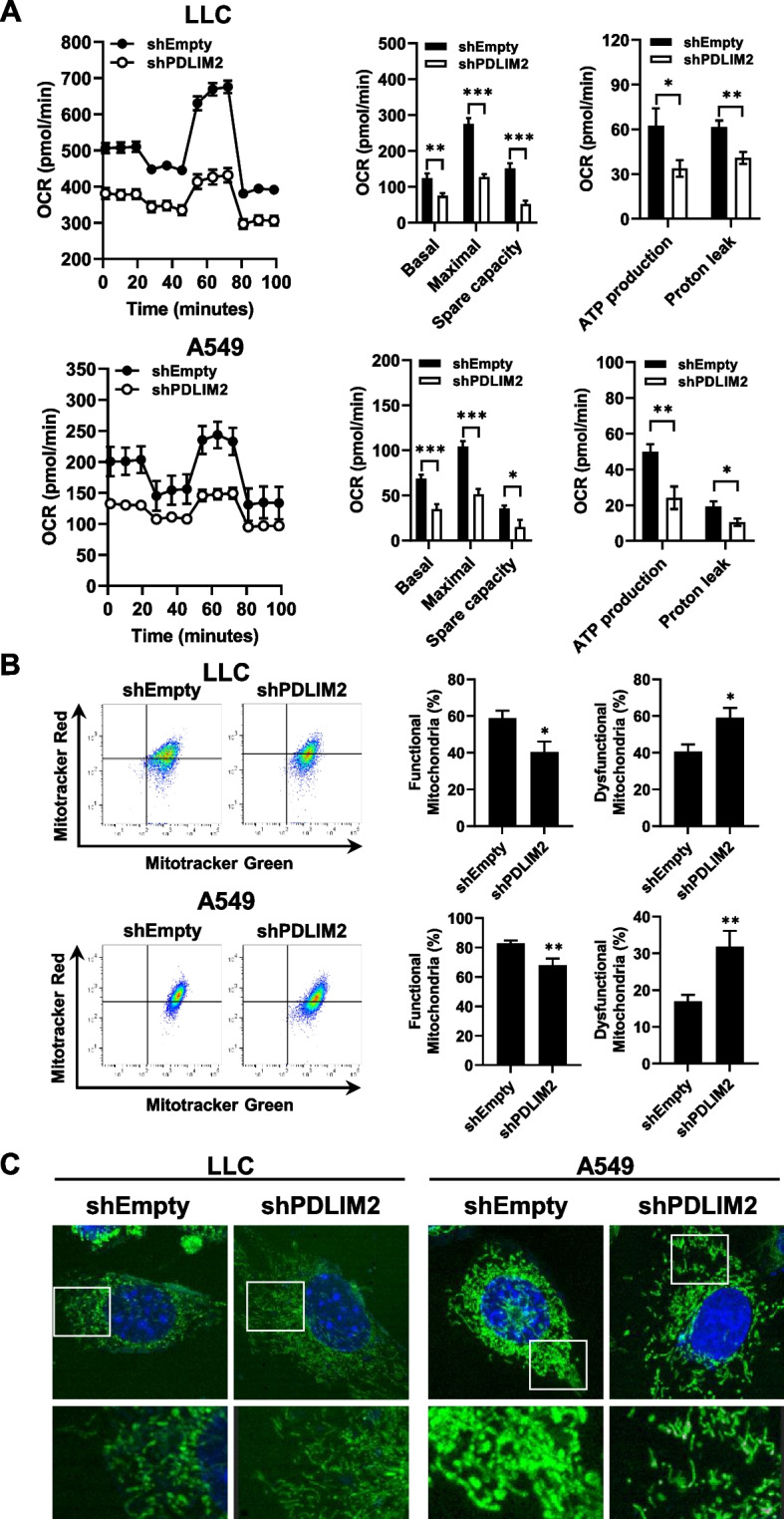
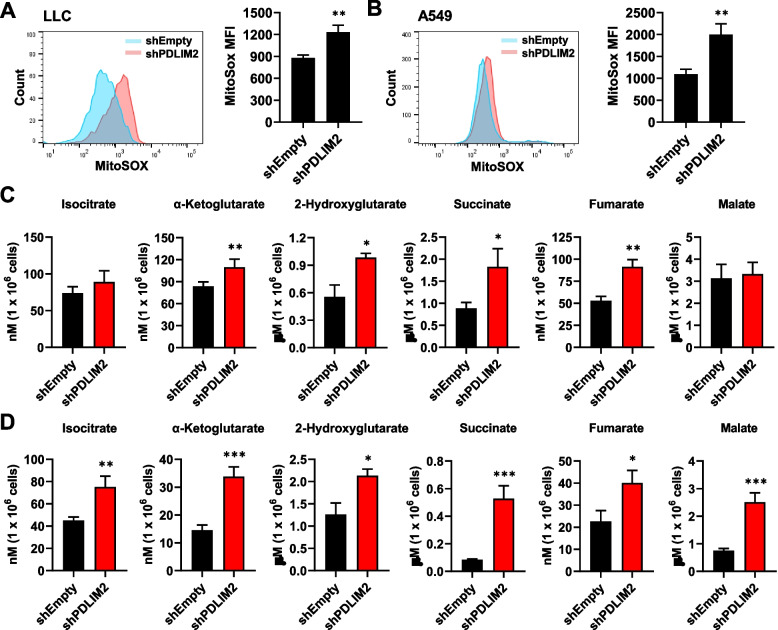
Databases and human cancer tissue samples were analyzed to investigate the roles of PDLIM2 and HIF-1α in cancer growth. DNA microarray and gene ontology enrichment analyses were performed to determine the cellular functions of PDLIM2. Seahorse assay, flow cytometric analysis, and confocal microscopic analysis were employed to study mitochondrial functions. Oncometabolites were analyzed using liquid chromatography-mass spectrometry (LC-MS). A Lewis lung carcinoma (LLC) mouse model was established to assess the in vivo function of PDLIM2 and HIF-1α.
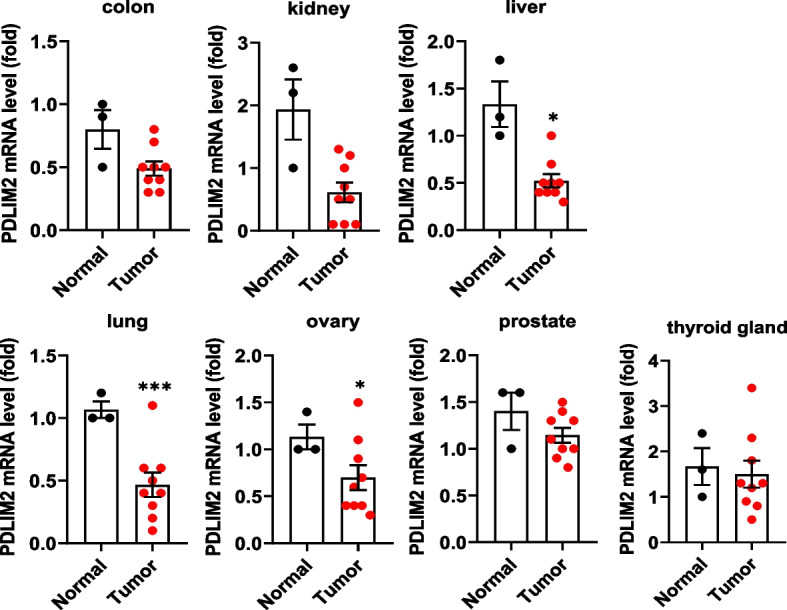
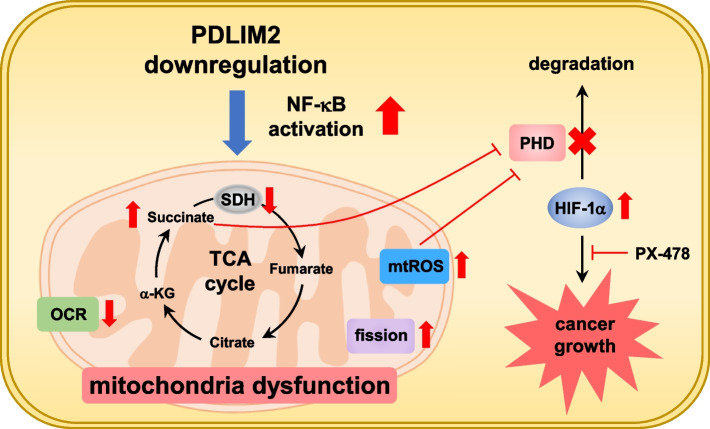
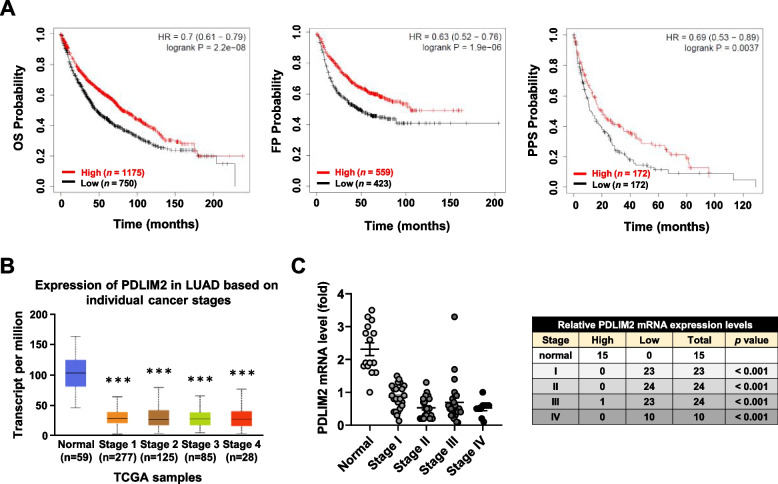
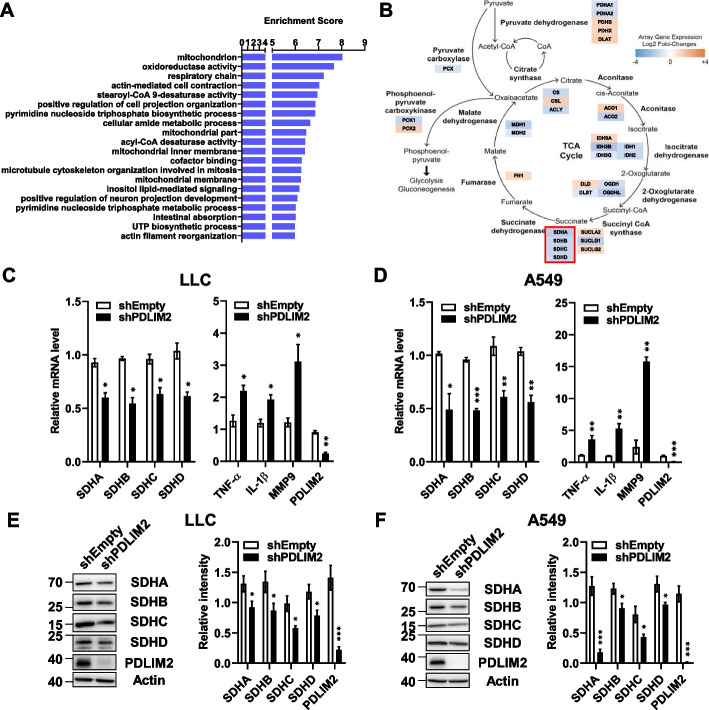
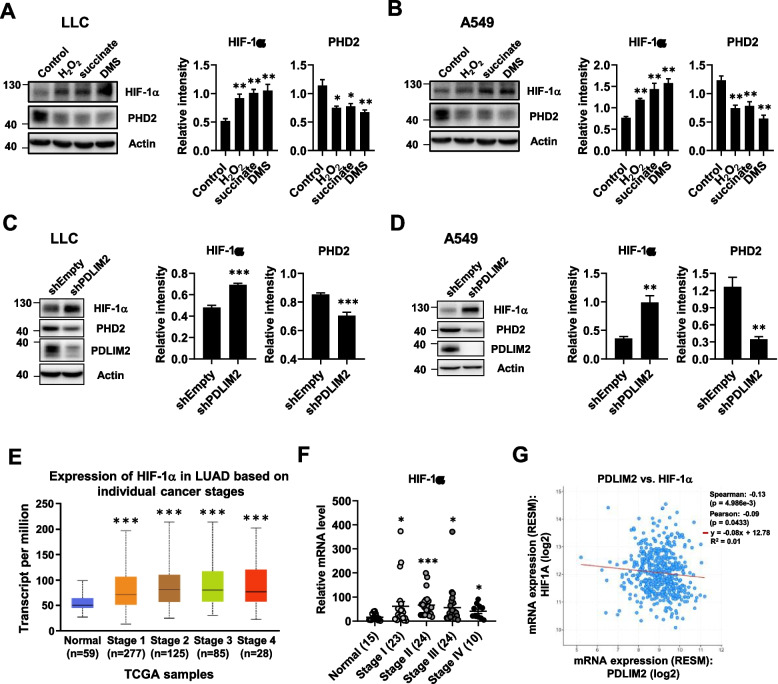
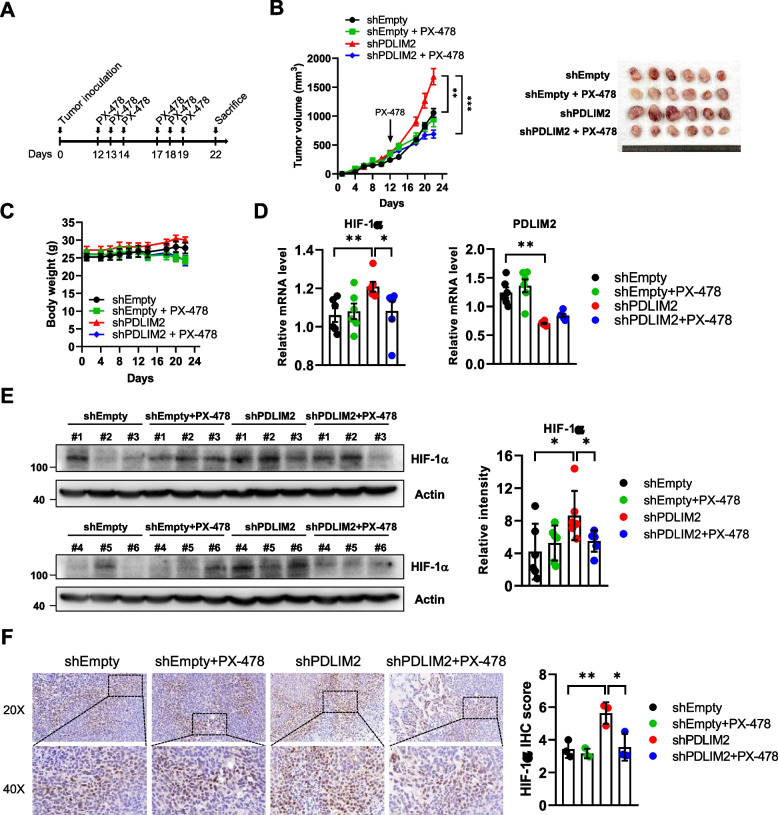
The expression of PDLIM2 was downregulated in lung cancer, and this downregulation correlated with poor prognosis in patients. PDLIM2 highly regulated genes associated with mitochondrial functions. Mechanistically, PDLIM2 downregulation resulted in NF-κB activation, impaired expression of tricarboxylic acid (TCA) cycle genes particularly the succinate dehydrogenase (SDH) genes, and mitochondrial dysfunction. This disturbance contributed to the accumulation of succinate and other oncometabolites, as well as the buildup of mitochondrial reactive oxygen species (mtROS), leading to the activation of hypoxia-inducible factor 1α (HIF-1α). Furthermore, the expression of HIF-1α was increased in all stages of lung cancer. The expression of PDLIM2 and HIF-1α was reversely correlated in lung cancer patients. In the animal study, the orally administered HIF-1α inhibitor, PX-478, significantly reduces PDLIM2 knockdown-promoted tumor growth.
These findings shed light on the complex action of PDLIM2 on mitochondria and HIF-1α activities in lung cancer, emphasizing the role of HIF-1α in the tumor-promoting effect of PDLIM2 downregulation. Additionally, they provide new insights into a strategy for precise targeted treatment by suggesting that HIF-1α inhibitors may serve as therapy for lung cancer patients with PDLIM2 downregulation.
癌症的特征是细胞代谢失调。因此,了解这些代谢改变的机制对于开发靶向治疗方法非常重要。在这项研究中,我们研究了 PDZ 和 LIM 结构域 2 (PDLIM2) 下调对肺癌生长的促肿瘤作用及其与线粒体 ROS、致癌代谢物积累和缺氧诱导因子-1 (HIF-1)α 激活的关联。
分析数据库和人类癌症组织样本以研究 PDLIM2 和 HIF-1α 在癌症生长中的作用。进行 DNA 微阵列和基因本体富集分析以确定 PDLIM2 的细胞功能。使用 Seahorse 测定、流式细胞术分析和共聚焦显微镜分析来研究线粒体功能。使用液相色谱-质谱联用 (LC-MS) 分析致癌代谢物。建立 Lewis 肺癌 (LLC) 小鼠模型以评估 PDLIM2 和 HIF-1α 的体内功能。
PDLIM2 在肺癌中表达下调,这种下调与患者的预后不良相关。PDLIM2 高度调节与线粒体功能相关的基因。从机制上讲,PDLIM2 下调导致 NF-κB 激活、三羧酸 (TCA) 循环基因特别是琥珀酸脱氢酶 (SDH) 基因表达受损,以及线粒体功能障碍。这种干扰导致琥珀酸和其他致癌代谢物的积累,以及线粒体活性氧 (mtROS) 的积累,导致缺氧诱导因子 1α (HIF-1α) 的激活。此外,HIF-1α 在肺癌的所有阶段均表达增加。肺癌患者中 PDLIM2 和 HIF-1α 的表达呈负相关。在动物研究中,口服 HIF-1α 抑制剂 PX-478 可显著减少 PDLIM2 敲低促进的肿瘤生长。
这些发现揭示了 PDLIM2 对肺癌中线粒体和 HIF-1α 活性的复杂作用,强调了 HIF-1α 在 PDLIM2 下调促肿瘤作用中的作用。此外,它们为通过提示 HIF-1α 抑制剂可能作为 PDLIM2 下调的肺癌患者的治疗方法提供了新的见解,为精确靶向治疗提供了新的思路。