Borges Thays Helena, Serna Adriana, López Luis Carlos, Lara Luis, Nieto Rosa, Seiquer Isabel
Departamento de Fisiología y Bioquímica de la Nutrición Animal, Estación Experimental del Zaidín, Consejo Superior de Investigaciones Científicas (CSIC), Camino del Jueves, Armilla, 18100 Granada, Spain.
Policlínica de Especialidades Médicas. Federico Medrano 620, San Francisco del Rincón, Guanajuato 36300, Mexico; .
Antioxidants (Basel). 2019 Jul 11;8(7):217. doi: 10.3390/antiox8070217.
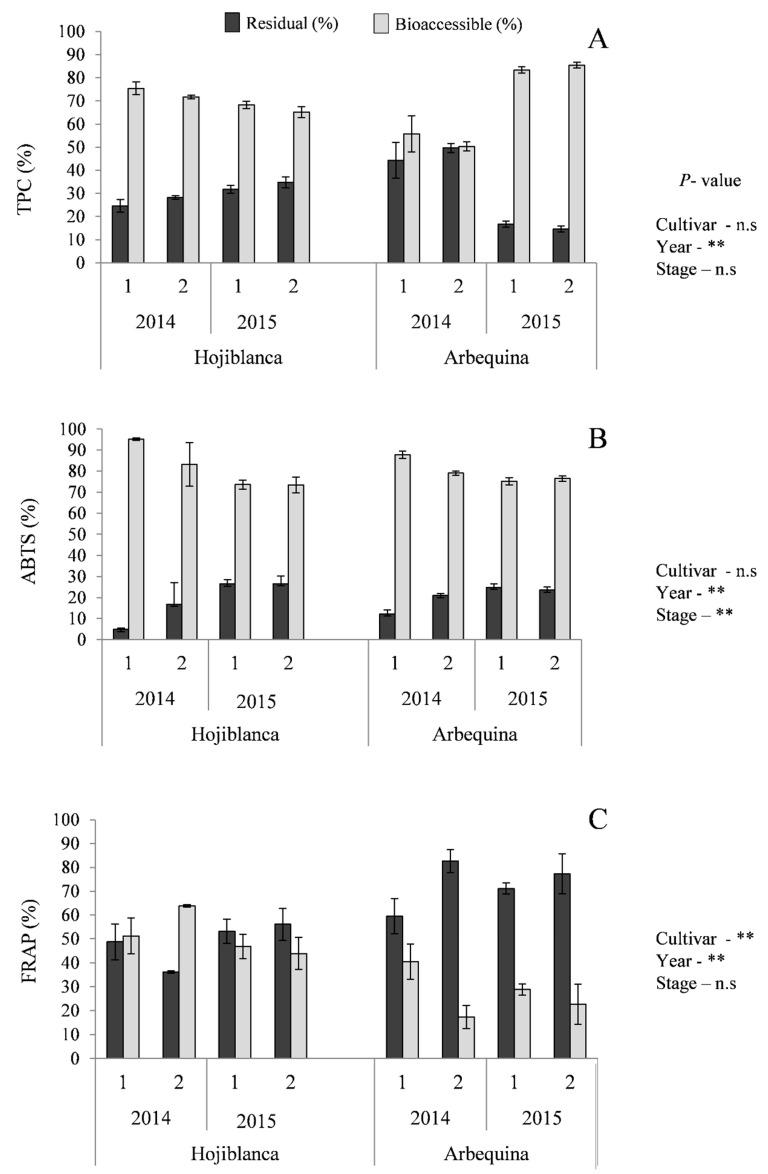
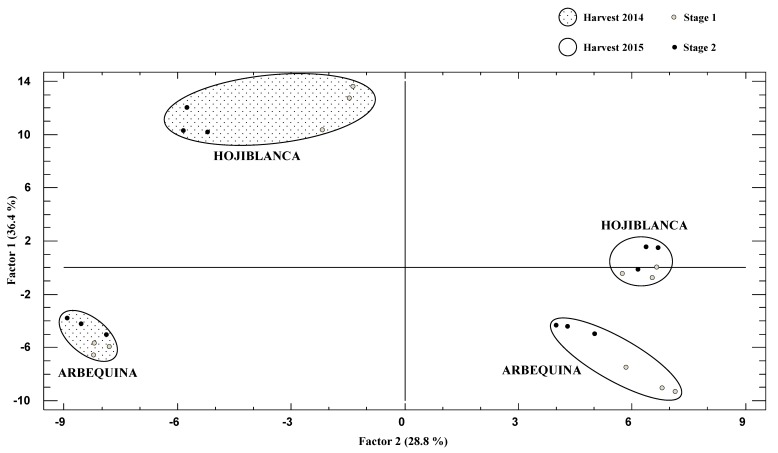
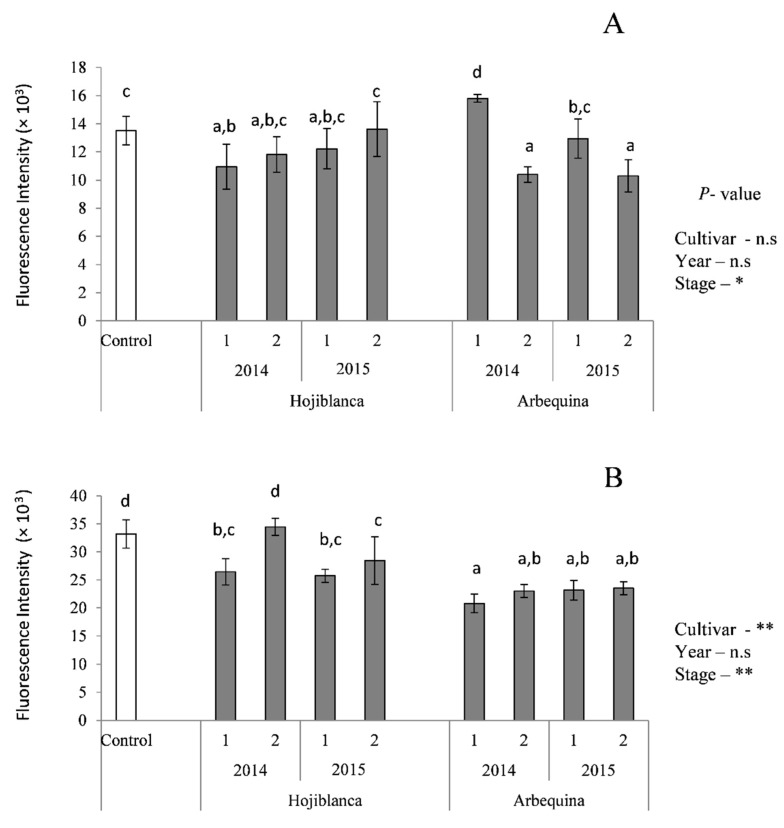
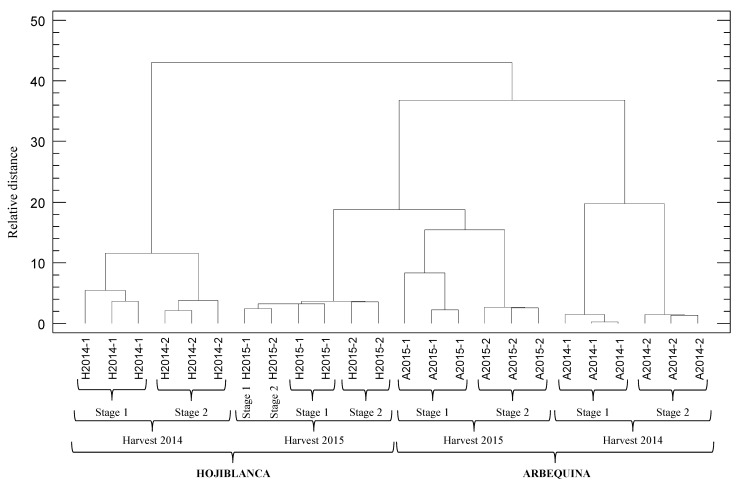
The health benefits of extra virgin olive oil (EVOO) are related to its chemical composition and the presence of bioactive compounds with antioxidant properties. The aim of this study was to evaluate antioxidant compounds (pigments, coenzyme Q (CoQ) and phenolic compounds) and antioxidant properties of EVOO from the same region comparing different cultivars (Hojiblanca and Arbequina), harvest year and crop stage. Antioxidant properties of oils were studied before and after a gastrointestinal digestion process, by in vitro assays (DPPH, ABTS and FRAP) and antioxidant markers in Caco-2 cells (reactive oxygen species production). The content of bioactive compounds measured was significantly affected by cultivar and harvest year (except for carotenoids) and by the crop stage (except for coenzyme Q). Higher amounts of coenzyme Q were observed in Hojiblanca than in Arbequina EVOO. Total phenol content and antioxidant properties were also different depending on cultivar and harvest year and the in vitro digestion process strongly improved antioxidant marker values. Antioxidant potential in bioaccessible fractions was mainly related to the content of coenzyme Q and phenolic compounds in EVOO. Chemometric analysis showed that the oils were clearly classified by cultivars, harvest and crop stage, according to the chemical composition and antioxidant activity analyzed in the present study.
特级初榨橄榄油(EVOO)的健康益处与其化学成分以及具有抗氧化特性的生物活性化合物的存在有关。本研究的目的是比较不同品种(霍吉布兰卡和阿贝基纳)、收获年份和作物生长阶段,评估来自同一地区的EVOO的抗氧化化合物(色素、辅酶Q(CoQ)和酚类化合物)及抗氧化特性。通过体外试验(DPPH、ABTS和FRAP)以及Caco-2细胞中的抗氧化标志物(活性氧生成),研究了油脂在胃肠道消化过程前后的抗氧化特性。所测定的生物活性化合物含量受品种和收获年份(类胡萝卜素除外)以及作物生长阶段(辅酶Q除外)的显著影响。霍吉布兰卡EVOO中观察到的辅酶Q含量高于阿贝基纳EVOO。总酚含量和抗氧化特性也因品种和收获年份而异,体外消化过程显著提高了抗氧化标志物的值。生物可利用部分的抗氧化潜力主要与EVOO中的辅酶Q和酚类化合物含量有关。化学计量分析表明,根据本研究分析的化学成分和抗氧化活性,这些油脂可按品种、收获和作物生长阶段进行明确分类。