Ma Xiaoshuang, Wu Penghai
Department of Resources and Environmental Engineering, Anhui University, Hefei 230601, China.
Anhui Province Key Laboratory of Wetland Ecosystem Protection and Restoration, Anhui University, Hefei 230601, China.
Sensors (Basel). 2019 Jul 11;19(14):3057. doi: 10.3390/s19143057.
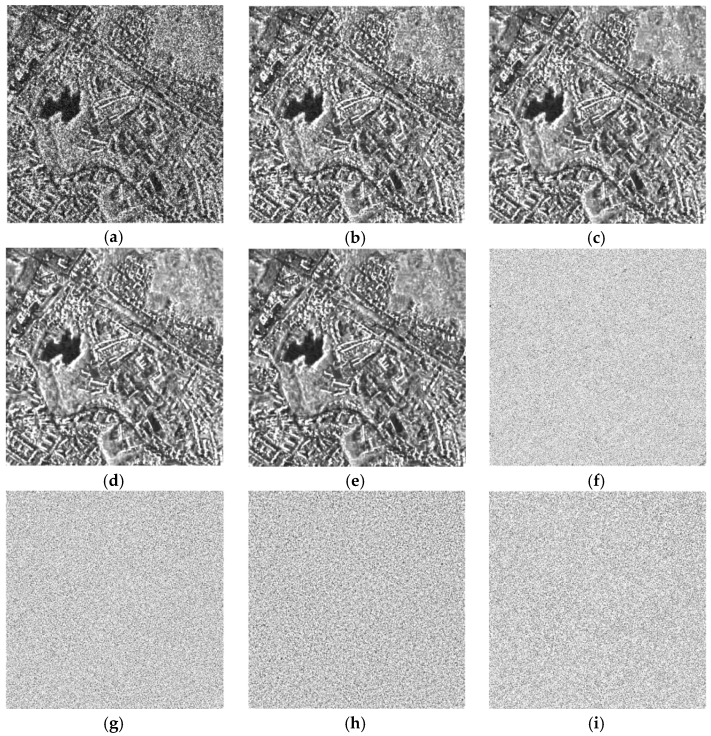
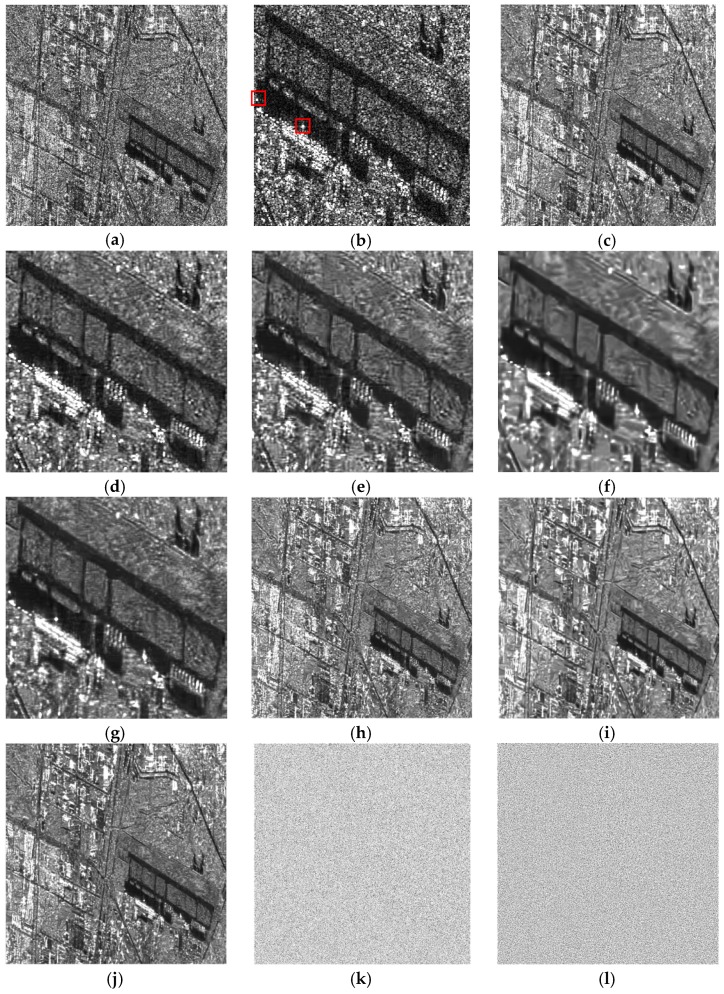
This paper presents a despeckling method for multitemporal images acquired by synthetic aperture radar (SAR) sensors. The proposed method uses a scattering covariance matrix of each image patch as the basic processing unit, which can exploit both the amplitude information of each pixel and the phase difference between any two pixels in a patch. The proposed filtering framework consists of four main steps: (1) a prefiltering result of each image is obtained by a nonlocal weighted average using only the information of the corresponding time phase; (2) an adaptively temporal linear filter is employed to further suppress the speckle; (3) the final output of each patch is obtained by a guided filter using both the original speckled data and the filtering result of step 3; and (4) an aggregation step is used to tackle the multiple estimations problem for each pixel. The despeckling experiments conducted on both simulated and real multitemporal SAR datasets reveal the pleasing performance of the proposed method in both suppressing speckle and retaining details, when compared with both advanced single-temporal and multitemporal SAR despeckling techniques.
本文提出了一种用于合成孔径雷达(SAR)传感器获取的多时间图像的去斑方法。所提出的方法使用每个图像块的散射协方差矩阵作为基本处理单元,该单元可以利用每个像素的幅度信息以及块中任意两个像素之间的相位差。所提出的滤波框架包括四个主要步骤:(1)仅使用相应时间相位的信息通过非局部加权平均获得每个图像的预滤波结果;(2)采用自适应时间线性滤波器进一步抑制斑点;(3)通过使用原始斑点数据和步骤3的滤波结果的引导滤波器获得每个块的最终输出;(4)使用聚合步骤来解决每个像素的多个估计问题。与先进的单时间和多时间SAR去斑技术相比,在模拟和真实多时间SAR数据集上进行的去斑实验表明,所提出的方法在抑制斑点和保留细节方面均具有令人满意的性能。