Department of Clinical Sciences of Companion Animals, Faculty of Veterinary Medicine, Utrecht University, Utrecht, The Netherlands.
Department of Orthopaedics, University Medical Centre Utrecht, Utrecht, The Netherlands.
J Orthop Res. 2019 Dec;37(12):2550-2560. doi: 10.1002/jor.24432. Epub 2019 Aug 13.
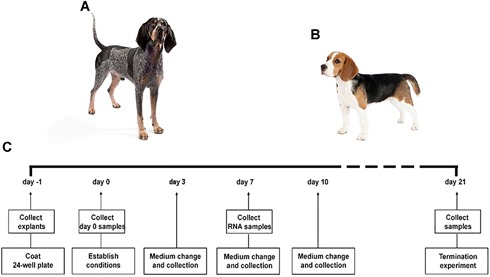
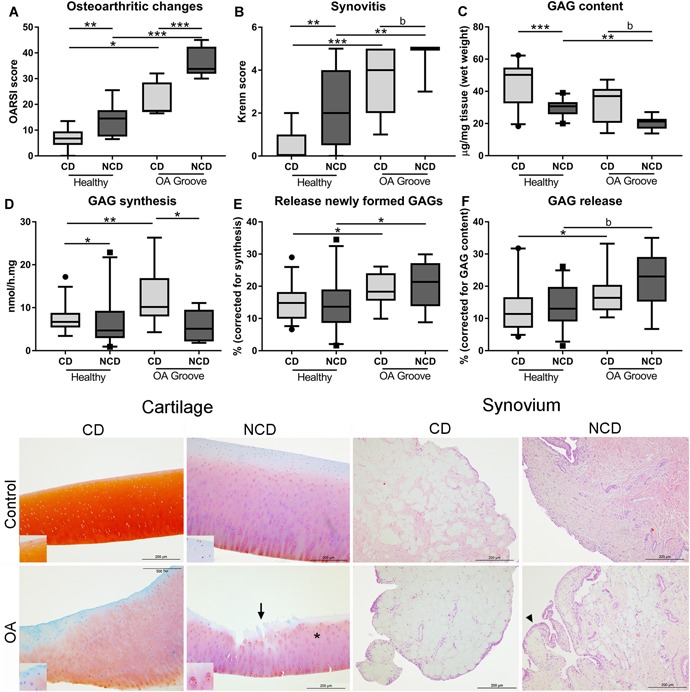
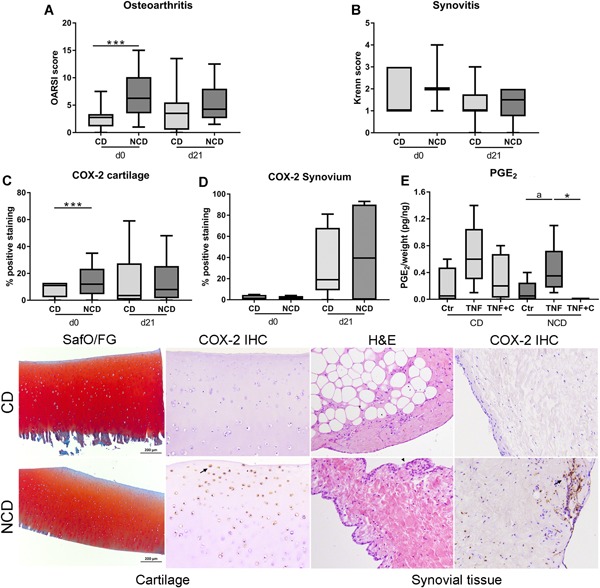
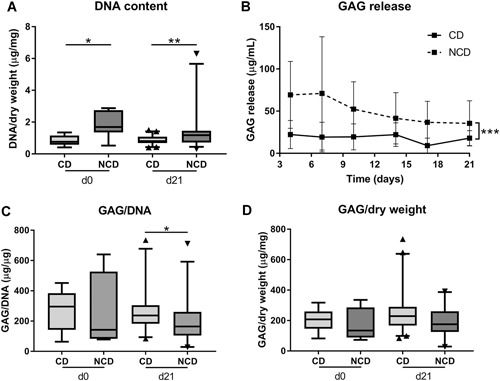
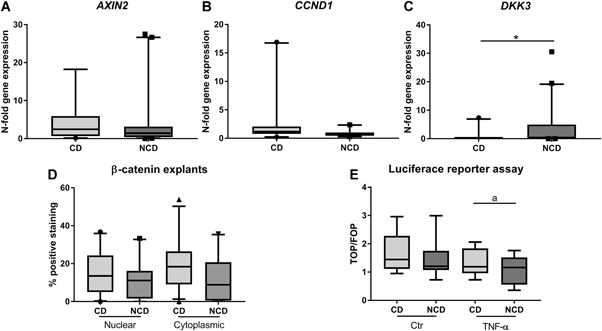
Osteoarthritis (OA) is a degenerative joint disease associated with chronic pain and disability in humans and companion animals. The canine species can be subdivided into non-chondrodystrophic (NCD) and chondrodystrophic (CD) dogs, the latter having disproportionally short limbs due to disturbance in endochondral ossification of long bones. This phenotype is associated with retrogene insertions of the fibroblast growth factor 4 (FGF4) gene, resulting in enhanced fibroblast growth factor receptor 3 (FGFR3) signaling. The effect on cartilage is unknown and in experimental studies with dogs, breeds are seemingly employed randomly. The aim of this study was to determine whether CD- and NCD-derived cartilage differs on a structural and biochemical level, and to explore the relationship between FGF4 associated chondrodystrophy and OA. Cartilage explants from CD and NCD dogs were cultured for 21 days. Activation of canonical Wnt signaling was assessed in primary canine chondrocytes. OA and synovitis severity from an experimental OA model were compared between healthy and OA samples from CD and NCD dogs. Release of glycosaminoglycans, DNA content, and cyclooxygenase 2 (COX-2) expression were higher in NCD cartilage explants. Healthy cartilage from NCD dogs displayed higher cartilage degeneration and synovitis scores, which was aggravated by the induction of OA. Dikkopf-3 gene expression was higher in NCD cartilage. No differences in other Wnt pathway read outs were found. To conclude, chondrodystrophy associated with the FGF4 retrogene seems to render CD dogs less susceptible to the development of OA when compared with NCD dogs. These differences should be considered when choosing a canine model to study the pathobiology and new treatment strategies of OA. © 2019 The Authors. Journal of Orthopaedic Research Published by Wiley Periodicals, Inc. J Orthop Res 37:2550-2560, 2019.
骨关节炎(OA)是一种退行性关节疾病,与人类和伴侣动物的慢性疼痛和残疾有关。犬种可分为非软骨发育不良(NCD)和软骨发育不良(CD)犬,后者由于长骨软骨内骨化的干扰,四肢不成比例地变短。这种表型与成纤维细胞生长因子 4(FGF4)基因的返座插入有关,导致成纤维细胞生长因子受体 3(FGFR3)信号增强。其对软骨的影响尚不清楚,在犬的实验研究中,似乎随机使用了不同品种。本研究旨在确定 CD 和 NCD 来源的软骨在结构和生化水平上是否存在差异,并探讨与 FGF4 相关的软骨发育不良和 OA 之间的关系。CD 和 NCD 犬的软骨外植体培养 21 天。评估原代犬软骨细胞中经典 Wnt 信号的激活情况。比较 CD 和 NCD 犬健康和 OA 样本中实验性 OA 模型的 OA 和滑膜炎严重程度。NCD 软骨外植体的糖胺聚糖、DNA 含量和环氧化酶 2(COX-2)表达更高。NCD 犬的健康软骨显示出更高的软骨退化和滑膜炎评分,OA 的诱导使其加重。NCD 软骨中的 Dikkopf-3 基因表达更高。其他 Wnt 通路读数没有差异。总之,与 FGF4 返座基因相关的软骨发育不良似乎使 CD 犬比 NCD 犬更不易发生 OA 的发展。在选择犬模型研究 OA 的病理生物学和新的治疗策略时,应考虑这些差异。© 2019 作者。发表于 Wiley 期刊的《骨科研究杂志》。J Orthop Res 37:2550-2560, 2019.