Laboratory of Molecular Neurobiology, Department of Neuroscience, Istituto di Ricerche Farmacologiche Mario Negri IRCCS, Milan, Italy.
IRCCS Fondazione Santa Lucia, Rome, Italy.
Brain Pathol. 2020 Mar;30(2):272-282. doi: 10.1111/bpa.12774. Epub 2019 Aug 18.
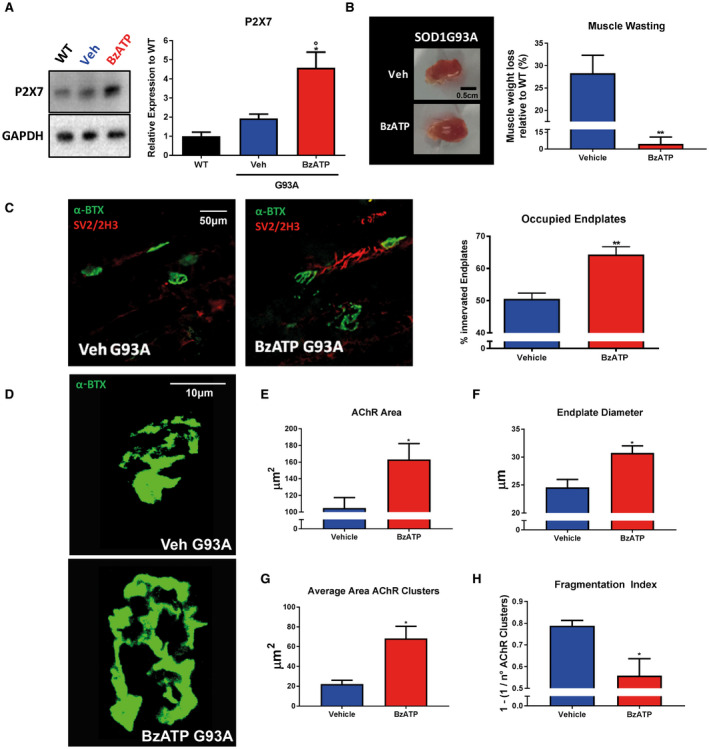
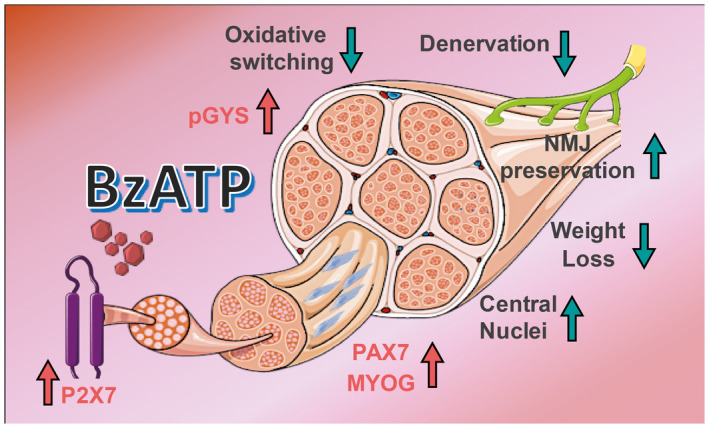
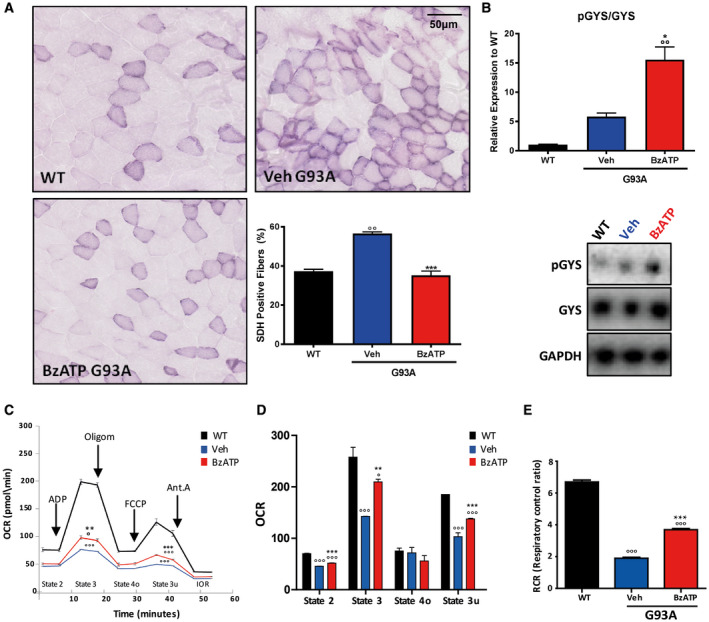
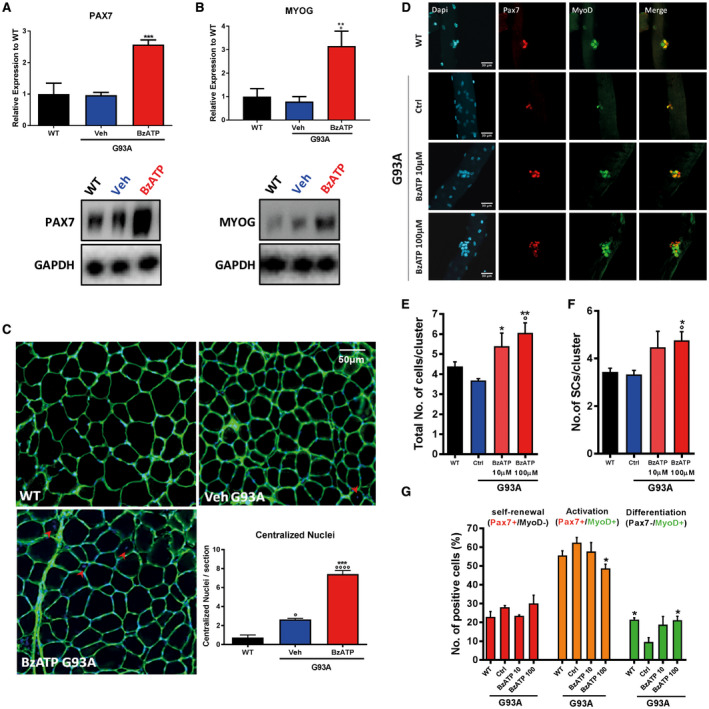
Muscle weakness plays an important role in neuromuscular disorders comprising amyotrophic lateral sclerosis (ALS). However, it is not established whether muscle denervation originates from the motor neurons, the muscles or more likely both. Previous studies have shown that the expression of the SOD1G93A mutation in skeletal muscles causes denervation of the neuromuscular junctions, inability to regenerate and consequent atrophy, all clear symptoms of ALS. In this work, we used SOD1G93A mice, a model that best mimics some pathological features of both familial and sporadic ALS, and we investigated some biological effects induced by the activation of the P2X7 receptor in the skeletal muscles. The P2X7, belonging to the ionotropic family of purinergic receptors for extracellular ATP, is abundantly expressed in the healthy skeletal muscles, where it controls cell duplication, differentiation, regeneration or death. In particular, we evaluated whether an in vivo treatment in SOD1G93A mice with the P2X7 specific agonist 2'(3')-O-(4-Benzoylbenzoyl) adenosine5'-triphosphate (BzATP) just before the onset of a pathological neuromuscular phenotype could exert beneficial effects in the skeletal muscles. Our findings indicate that stimulation of P2X7 improves the innervation and metabolism of myofibers, moreover elicits the proliferation/differentiation of satellite cells, thus preventing the denervation atrophy of skeletal muscles in SOD1G93A mice. Overall, this study suggests that a P2X7-targeted and site-specific modulation might be a strategy to interfere with the complex multifactorial and multisystem nature of ALS.
肌肉无力在包含肌萎缩侧索硬化症 (ALS) 的神经肌肉疾病中起着重要作用。然而,尚未确定肌肉失神经支配是否源自运动神经元、肌肉或更可能两者兼而有之。先前的研究表明,骨骼肌中 SOD1G93A 突变的表达导致神经肌肉接头失神经支配、无法再生和随之而来的萎缩,这些都是 ALS 的明显症状。在这项工作中,我们使用了 SOD1G93A 小鼠,这是一种最能模拟家族性和散发性 ALS 的一些病理特征的模型,我们研究了在骨骼肌中激活 P2X7 受体引起的一些生物学效应。P2X7 属于细胞外 ATP 的离子型嘌呤能受体家族,在健康的骨骼肌中大量表达,在那里它控制细胞复制、分化、再生或死亡。特别是,我们评估了在 SOD1G93A 小鼠中,在病理性神经肌肉表型出现之前,用 P2X7 特异性激动剂 2'(3')-O-(4-苯甲酰苯甲酰)腺苷 5'-三磷酸(BzATP)进行体内治疗是否可以对骨骼肌产生有益影响。我们的研究结果表明,P2X7 的刺激可改善肌纤维的神经支配和代谢,此外还可引发卫星细胞的增殖/分化,从而防止 SOD1G93A 小鼠的骨骼肌失神经支配萎缩。总的来说,这项研究表明,针对 P2X7 的靶向和特定部位的调节可能是一种干预 ALS 的复杂多因素和多系统性质的策略。