Zhang Zhou, Jin Yufang, Chen Bin, Brown Patrick
Department of Land, Air and Water Resources, University of California, Davis, Davis, CA, United States.
Biological Systems Engineering, University of Wisconsin-Madison, Madison, WI, United States.
Front Plant Sci. 2019 Jul 18;10:809. doi: 10.3389/fpls.2019.00809. eCollection 2019.
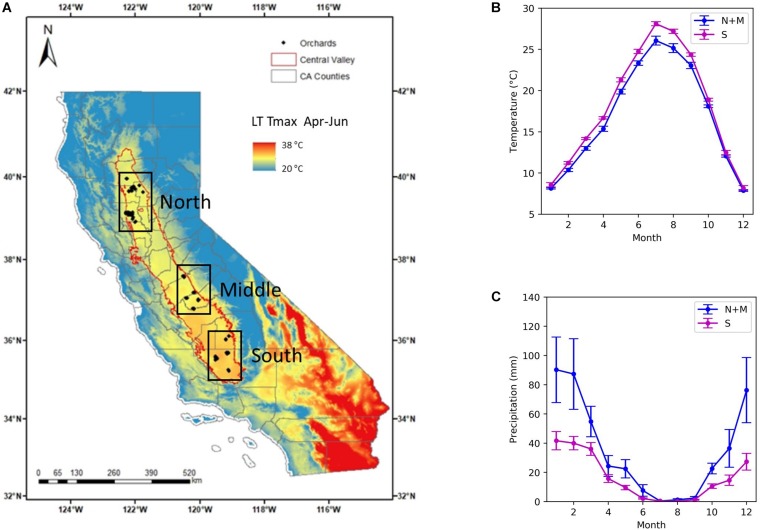
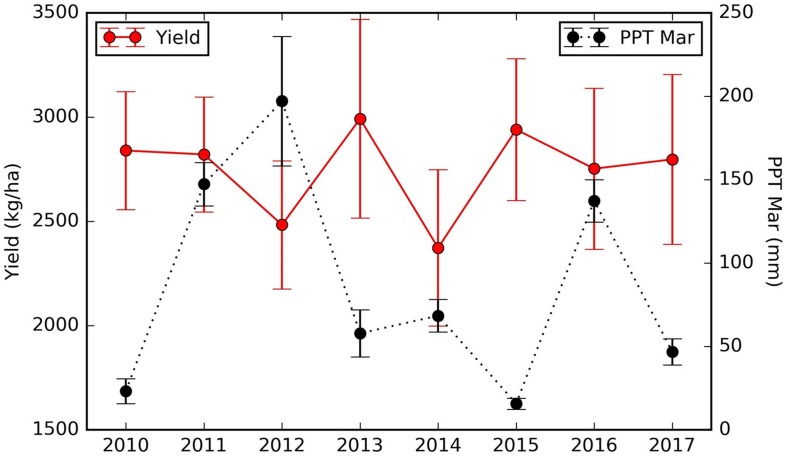
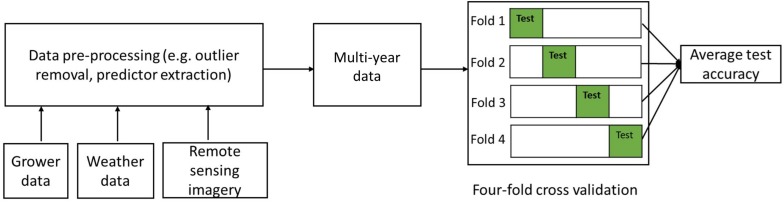
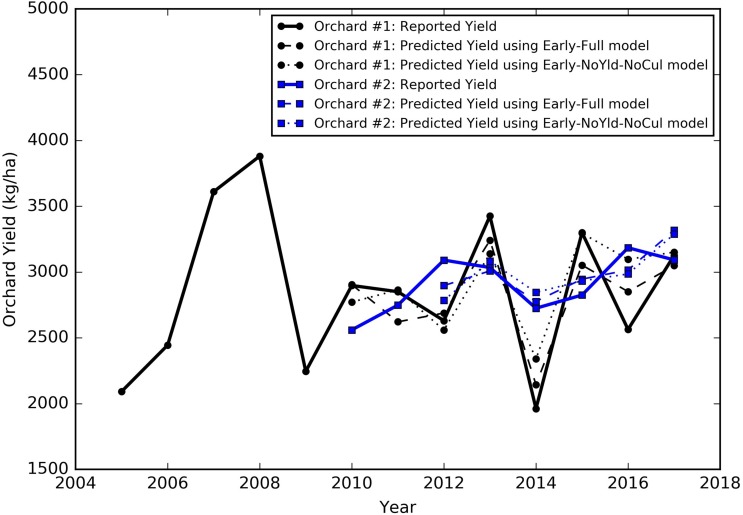
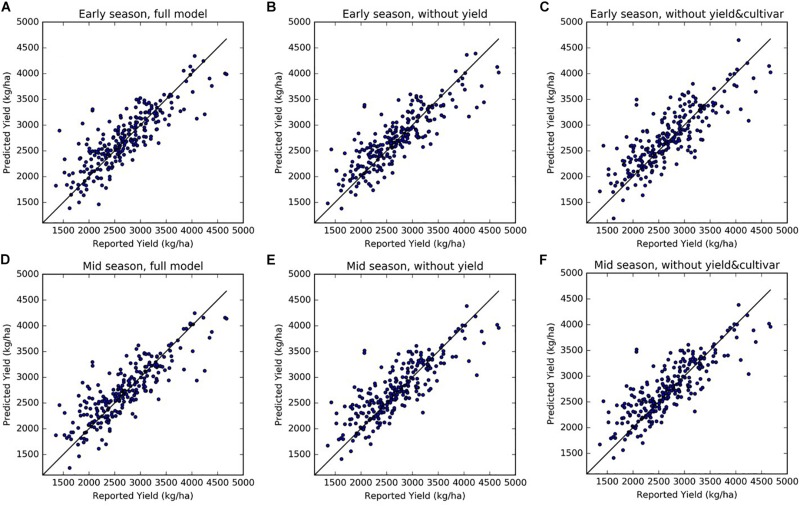
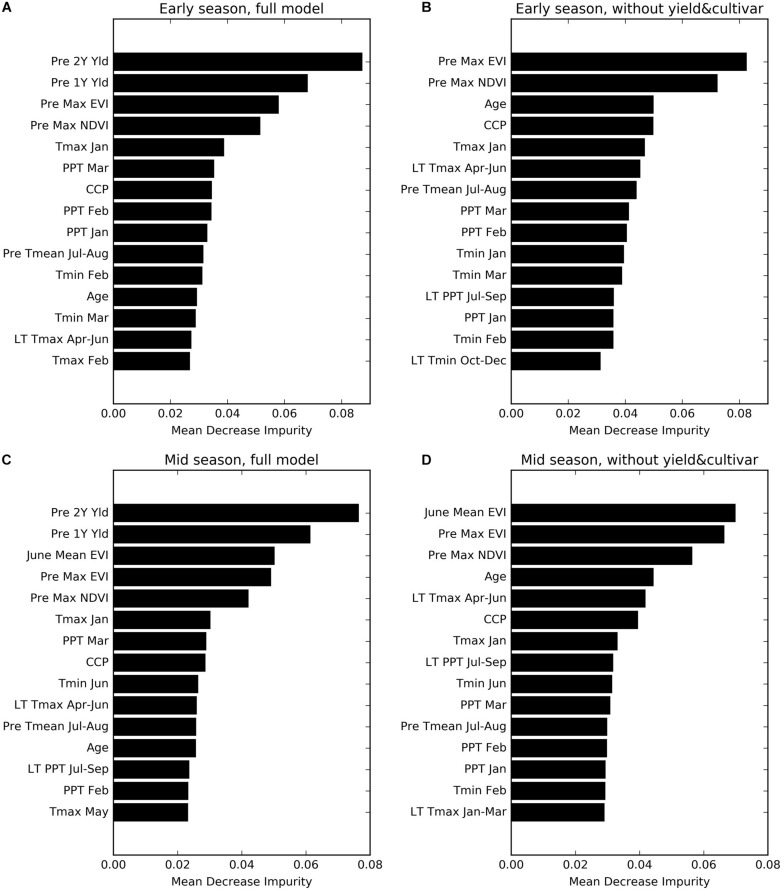
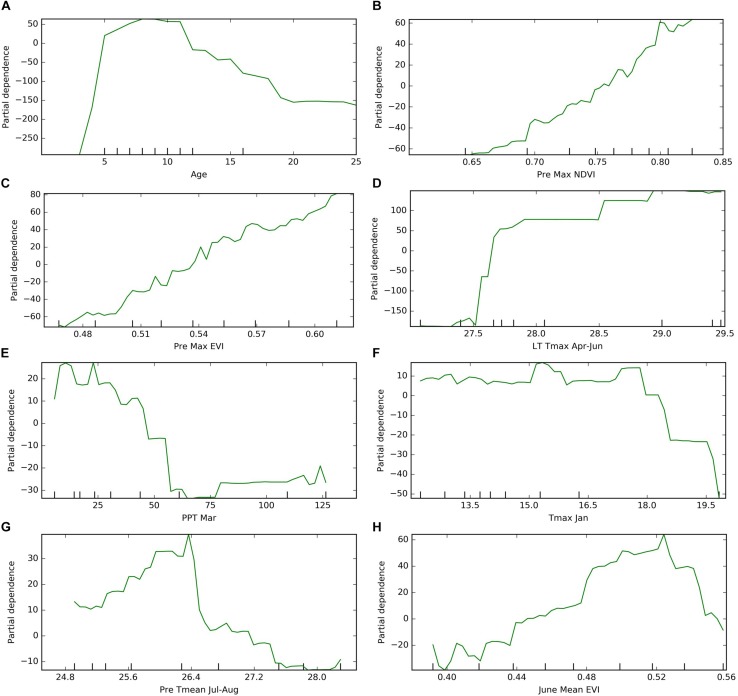
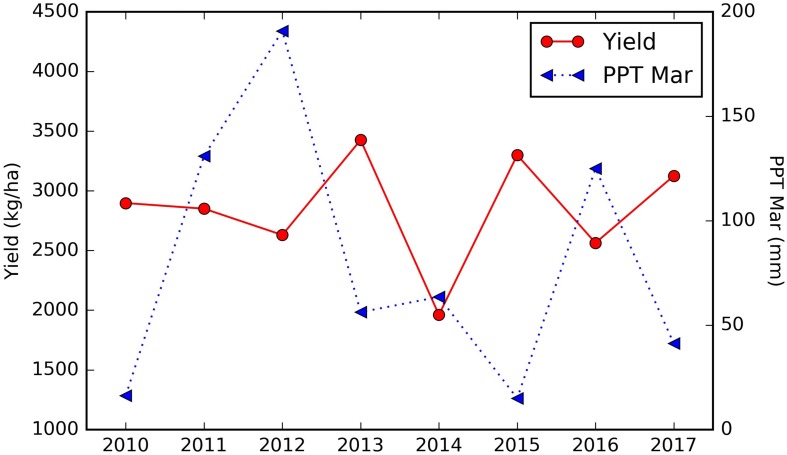
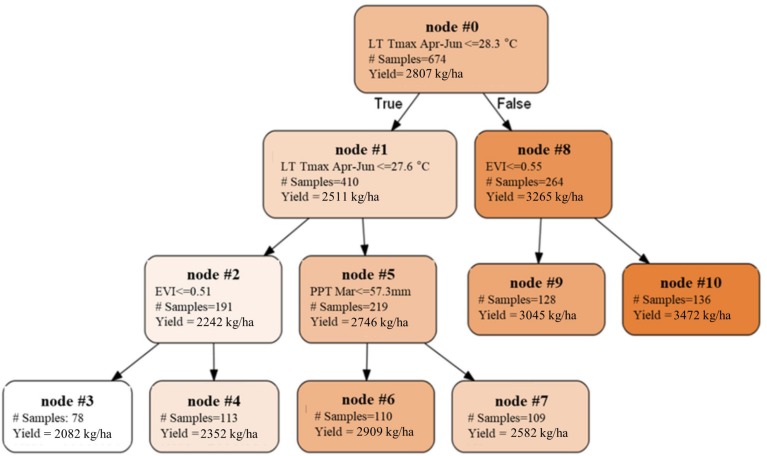
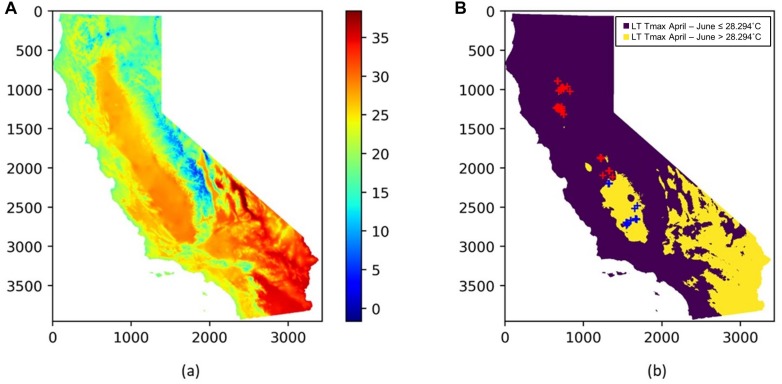
California's almond growers face challenges with nitrogen management as new legislatively mandated nitrogen management strategies for almond have been implemented. These regulations require that growers apply nitrogen to meet, but not exceed, the annual N demand for crop and tree growth and nut production. To accurately predict seasonal nitrogen demand, therefore, growers need to estimate block-level almond yield early in the growing season so that timely N management decisions can be made. However, methods to predict almond yield are not currently available. To fill this gap, we have developed statistical models using the Stochastic Gradient Boosting, a machine learning approach, for early season yield projection and mid-season yield update over individual orchard blocks. We collected yield records of 185 orchards, dating back to 2005, from the major almond growers in the Central Valley of California. A large set of variables were extracted as predictors, including weather and orchard characteristics from remote sensing imagery. Our results showed that the predicted orchard-level yield agreed well with the independent yield records. For both the early season (March) and mid-season (June) predictions, a coefficient of determination ( ) of 0.71, and a ratio of performance to interquartile distance (RPIQ) of 2.6 were found on average. We also identified several key determinants of yield based on the modeling results. Almond yield increased dramatically with the orchard age until about 7 years old in general, and the higher long-term mean maximum temperature during April-June enhanced the yield in the southern orchards, while a larger amount of precipitation in March reduced the yield, especially in northern orchards. Remote sensing metrics such as annual maximum vegetation indices were also dominant variables for predicting the yield potential. While these results are promising, further refinement is needed; the availability of larger data sets and incorporation of additional variables and methodologies will be required for the model to be used as a fertilization decision support tool for growers. Our study has demonstrated the potential of automatic almond yield prediction to assist growers to manage N adaptively, comply with mandated requirements, and ensure industry sustainability.
随着针对杏仁的新的法定氮管理策略的实施,加利福尼亚州的杏仁种植者在氮管理方面面临挑战。这些规定要求种植者施用氮肥以满足但不超过作物、树木生长和坚果生产的年度氮需求。因此,为了准确预测季节性氮需求,种植者需要在生长季节早期估算地块级别的杏仁产量,以便及时做出氮管理决策。然而,目前尚无预测杏仁产量的方法。为了填补这一空白,我们使用随机梯度提升(一种机器学习方法)开发了统计模型,用于在各个果园地块进行早期产量预测和中期产量更新。我们收集了加利福尼亚州中央山谷主要杏仁种植者自2005年以来185个果园的产量记录。提取了大量变量作为预测因子,包括来自遥感影像的天气和果园特征。我们的结果表明,预测的果园级产量与独立产量记录吻合良好。对于早期(3月)和中期(6月)预测,平均而言,决定系数( )为0.71,性能与四分位间距之比(RPIQ)为2.6。我们还根据建模结果确定了几个产量的关键决定因素。一般来说,杏仁产量随着果园树龄的增加而急剧增加,直到大约7岁,4月至6月期间较高的长期平均最高温度提高了南部果园的产量,而3月较多的降水量则降低了产量,尤其是北部果园。诸如年度最大植被指数等遥感指标也是预测产量潜力的主导变量。虽然这些结果很有前景,但仍需要进一步完善;需要更大的数据集以及纳入更多变量和方法,该模型才能用作种植者施肥决策支持工具。我们的研究证明了自动杏仁产量预测有助于种植者进行适应性氮管理、遵守法定要求并确保行业可持续性的潜力。