Rashid Iliyas, Pathak Ajey Kumar, Kumar Ravindra, Srivastava Prachi, Singh Mahender, Murali S, Kushwaha Basdeo
Molecular Biology and Biotechnology Division, ICAR-National Bureau of Fish Genetic Resources, Lucknow, India.
AMITY Institute of Biotechnology, AMITY University Uttar Pradesh, Lucknow, India.
Front Genet. 2019 Jul 16;10:659. doi: 10.3389/fgene.2019.00659. eCollection 2019.
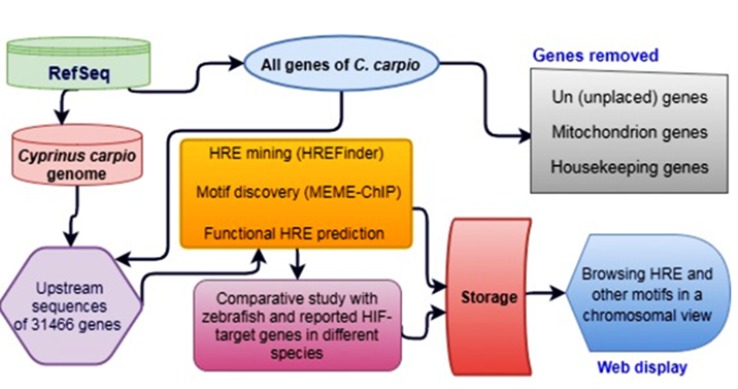
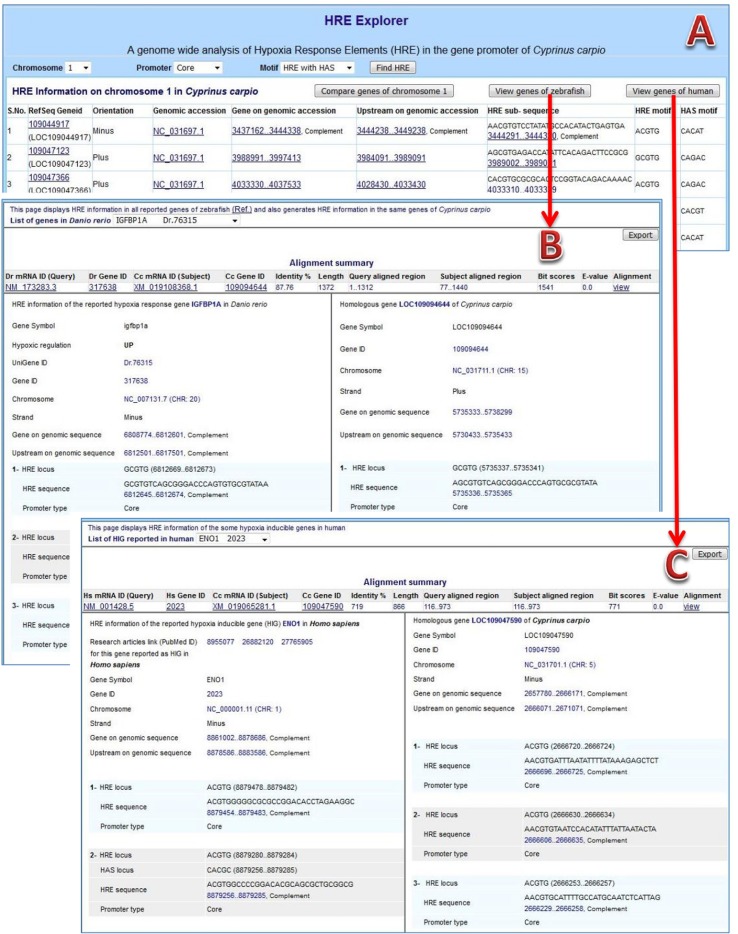
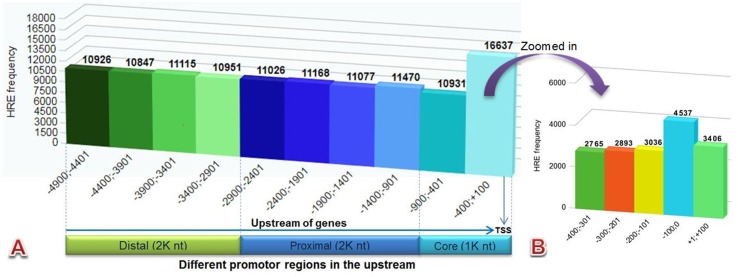
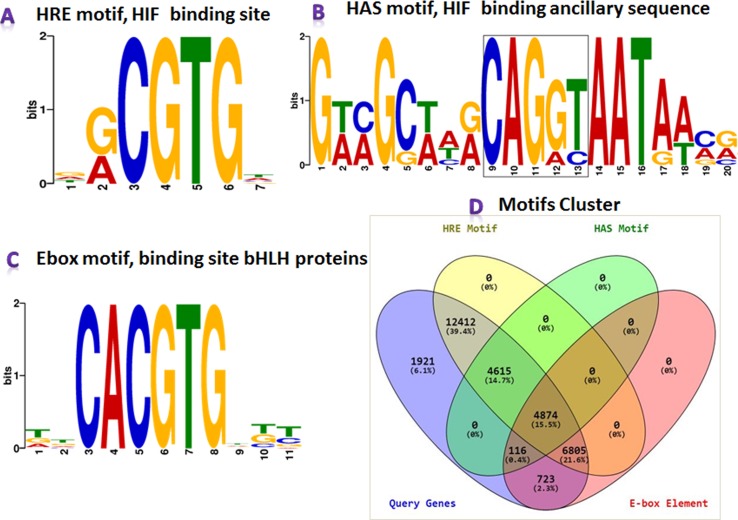
is world's most widely distributed freshwater species highly used in aquaculture. It is a hypoxia-tolerant species as it lives in oxygen-deficient environment for a long period. The tolerance potential of an animal against hypoxia relates it to induced gene expression, where a hypoxia-inducible factor (HIF) binds to a transcriptionally active site, hypoxia response element (HRE), a 5-base short motif that lies within the promoter/enhancer region of a certain gene, for inducing gene expression and preventing/minimizing hypoxia effects. HRE is functionally active when it contains another motif, the hypoxia ancillary sequence (HAS), which is typically adjacent to downstream of HRE within 7- to 15-nt space. Here, an attempt was made for mining HRE and identifying functional HIF binding sites (HBS) in a genome-wide analysis of . For this, gene information along with the 5,000-nt upstream (-4,900 to +100) sequences of 31,466 protein coding genes was downloaded from "Gene" and "RefSeq" databases. Analysis was performed after filtration of the impracticable genes. A total of 116,148 HRE consensus sequences were mined from 29,545 genes in different promoter regions. HRE with HAS consensus motifs were found in the promoter region of 9,589 genes. Further, the already reported genes for hypoxia response in humans and zebrafish were reanalyzed for detecting HRE sites in their promoters and used for comparative analysis with gene promoters of for providing support to identify functional HBS in the gene promoter of . An interactive user interface HREExplorer was developed for presenting the results on the World Wide Web and visualizing possible HBS in protein coding genes in and displaying the comparative results along with the reported hypoxia-responsive genes of zebrafish and reported hypoxia-inducible genes in humans. In this study, a set of Perl program was written for the compilation and analysis of information that might be used for a similar study in other species. This novel work may provide a workbench for analyzing the promoter regions of hypoxia-responsive genes.
是世界上分布最广的淡水物种,在水产养殖中被大量使用。它是一种耐缺氧物种,因为它长期生活在缺氧环境中。动物对缺氧的耐受潜力与诱导基因表达有关,其中缺氧诱导因子(HIF)与转录活性位点缺氧反应元件(HRE)结合,HRE是位于特定基因启动子/增强子区域内的一个5碱基短基序,用于诱导基因表达并预防/最小化缺氧影响。当HRE包含另一个基序缺氧辅助序列(HAS)时,它在功能上是活跃的,HAS通常在HRE下游7至15个核苷酸空间内相邻。在此,在全基因组分析中尝试挖掘HRE并识别功能性HIF结合位点(HBS)。为此,从“基因”和“RefSeq”数据库下载了31466个蛋白质编码基因的基因信息以及5000个核苷酸上游(-4900至+100)序列。在过滤掉不适用的基因后进行分析。在不同启动子区域的29545个基因中总共挖掘出116148个HRE共有序列。在9589个基因的启动子区域中发现了带有HAS共有基序的HRE。此外,对已报道的人类和斑马鱼缺氧反应基因进行重新分析,以检测其启动子中的HRE位点,并与 的基因启动子进行比较分析,以支持在 的基因启动子中识别功能性HBS。开发了一个交互式用户界面HREExplorer,用于在万维网上展示结果并可视化 中蛋白质编码基因中可能的HBS,并显示比较结果以及已报道的斑马鱼缺氧反应基因和人类缺氧诱导基因。在本研究中,编写了一组Perl程序用于编译和分析信息,这些信息可能用于其他物种的类似研究。这项新工作可能为分析缺氧反应基因的启动子区域提供一个工作平台。