Mohiuddin Ismail S, Kang Min H
Cancer Center, Department of Pediatrics, Pharmacology and Neuroscience, School of Medicine, Texas Tech University Health Sciences Center, Lubbock, TX, United States.
Front Oncol. 2019 Jul 17;9:635. doi: 10.3389/fonc.2019.00635. eCollection 2019.
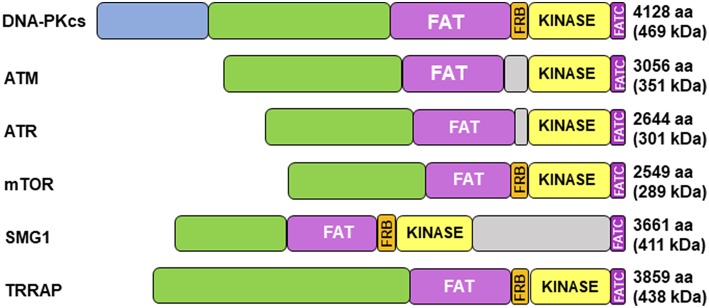
The DNA-dependent protein kinase (DNA-PK) plays an instrumental role in the overall survival and proliferation of cells. As a member of the phosphatidylinositol 3-kinase-related kinase (PIKK) family, DNA-PK is best known as a mediator of the cellular response to DNA damage. In this context, DNA-PK has emerged as an intriguing therapeutic target in the treatment of a variety of cancers, especially when used in conjunction with genotoxic chemotherapy or ionizing radiation. Beyond the DNA damage response, DNA-PK activity is necessary for multiple cellular functions, including the regulation of transcription, progression of the cell cycle, and in the maintenance of telomeres. Here, we review what is currently known about DNA-PK regarding its structure and established roles in DNA repair. We also discuss its lesser-known functions, the pharmacotherapies inhibiting its function in DNA repair, and its potential as a therapeutic target in a broader context.
DNA依赖性蛋白激酶(DNA-PK)在细胞的整体存活和增殖中发挥着重要作用。作为磷脂酰肌醇3-激酶相关激酶(PIKK)家族的一员,DNA-PK最为人所知的是作为细胞对DNA损伤反应的介质。在这种情况下,DNA-PK已成为治疗多种癌症的一个引人关注的治疗靶点,特别是当与基因毒性化疗或电离辐射联合使用时。除了DNA损伤反应外,DNA-PK活性对于多种细胞功能也是必需的,包括转录调控、细胞周期进程以及端粒的维持。在这里,我们综述了目前关于DNA-PK的结构及其在DNA修复中既定作用的已知信息。我们还讨论了其鲜为人知的功能、抑制其在DNA修复中功能的药物疗法以及它在更广泛背景下作为治疗靶点的潜力。